Table of Contents
Most of us can name a few famous women from history.
Far fewer of us were taught about the African women who led armies, challenged empires, defended their communities, transformed education, and inspired generations long before the world was ready to recognize their leadership.
Their names may not appear in every textbook, but their influence continues to shape history.
Here are five remarkable African women whose stories deserve to be known around the world.
1. Yaa Asantewaa (Ghana)
When British officials demanded possession of the Golden Stool—the sacred symbol of the Ashanti nation—in 1900, many leaders hesitated.
Yaa Asantewaa, the Queen Mother of Ejisu, did not.
She challenged the men around her with a speech that has echoed through history. If they would not defend their nation, she declared, the women would.
She led the War of the Golden Stool, becoming one of Africa’s most celebrated military leaders and a lasting symbol of courage and self-determination.
What She Saw
Yaa Asantewaa understood that symbols matter.
When a people lose the things that hold their identity together, they risk losing much more than land. They risk losing memory, dignity, and the confidence to shape their own future.
2. Kimpa Vita (Kingdom of Kongo)
Long before conversations about reclaiming cultural identity became common, Kimpa Vita was asking difficult questions about faith, power, and who had the authority to interpret them.
A gifted spiritual and political leader, she called for the reunification of the Kingdom of Kongo during a period of conflict and upheaval. She taught that Christianity could be understood through African experience rather than solely through European traditions.
Her growing influence threatened powerful interests.
She was executed in 1706 when she was still very young.
What She Saw
Kimpa Vita recognized that spiritual independence and political independence are often connected.
Ideas can be powerful enough to frighten those who benefit from the status quo.
3. Mekatilili wa Menza (Kenya)
Mekatilili wa Menza understood something colonizing powers often understood as well:
If you reshape a community’s traditions, language, and children, you reshape its future.
She organized the Giriama people against forced labor and colonial rule while encouraging her community to preserve its cultural identity.
After being arrested and exiled hundreds of miles from home, she reportedly found her way back and continued leading her people.
Whether every detail of that journey comes from documented history or oral tradition, her leadership inspired generations.
What She Saw
Protecting culture is not about resisting change.
It is about preserving the wisdom that helps a people know who they are.
4. Funmilayo Ransome-Kuti (Nigeria)
Teacher.
Organizer.
Writer.
Political leader.
Funmilayo Ransome-Kuti believed women deserved far more than a seat at the table. They deserved the power to help build the table itself.
She organized thousands of market women, challenged unfair taxation, advocated for girls’ education, and became one of Nigeria’s most influential voices for women’s rights.
Her activism continued well into her seventies.
What She Saw
She understood that when women carry communities but are excluded from decisions, society loses some of its greatest wisdom.
Organizing was not simply about protest.
It was about participation.
5. Charlotte Maxeke (South Africa)
Charlotte Maxeke believed education could change a nation.
As one of the first Black South African women to earn a university degree, she devoted her life to expanding educational opportunities, improving healthcare, and advocating for social justice.
She founded organizations, mentored young people, and demonstrated that education is not merely personal achievement—it is public service.
What She Saw
Knowledge is most powerful when it is shared.
Education becomes transformative when it opens doors for others, not just ourselves.
Why These Women Still Matter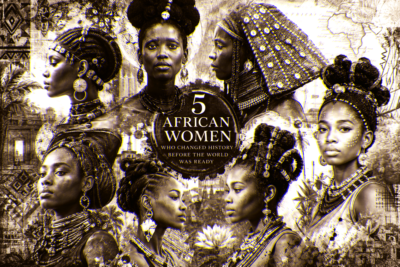
These five women lived in different countries, spoke different languages, and faced different challenges.
Yet they shared something remarkable.
Each recognized a pattern before many others did.
They understood that identity, education, community, faith, and political participation were not separate struggles. They were deeply connected.
Their lives remind us that history is often changed by people the world is slow to recognize.
Fortunately, recognition can begin today.
Continue the Journey
History is richer than the stories most of us were taught.
This article is part of an ongoing series highlighting women whose contributions deserve to be remembered—not because they were forgotten by their own communities, but because the wider world is still catching up.
Which woman’s story inspired you most? Share her name with someone else today. You never know whose understanding of history might change because you did.