
Table of Contents
Have you ever noticed how much patience people expect from someone they’re treating unfairly?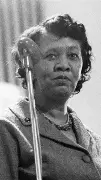
They can deny you something that rightfully belongs to you. Make you come back tomorrow. Humiliate you in front of everybody. Threaten your livelihood. And somehow, you’re still expected to be pleasant about the whole thing.
I think about that when I remember Annie Lee Cooper, the Black woman who punched an Alabama sheriff during the fight for voting rights.
Because the punch is what made her famous. But what happened before that punch tells us even more about the woman.
She Had Already Proven She Could Vote
Annie Lee Cooper was born in Selma, Alabama, in 1910. She eventually moved away and registered to vote while living outside Alabama.
When she returned to Selma in 1962 to care for her aging mother, she discovered that exercising the same right in her hometown was another matter entirely.
White officials used literacy tests, intimidation, and discriminatory registration practices to keep Black citizens from voting.
Annie kept trying.
She stood in those lines. She followed the procedures. She went back when officials turned her away.
In 1963, she lost her job after her employer saw her waiting to register to vote.
Now, think about that. A grown woman trying to care for her elderly mother lost her livelihood because she wanted to participate in the government that made decisions about her life.
And still, she kept going.
Then Came January 25, 1965
Annie was among the Black citizens gathered outside the Dallas County courthouse in Selma when Sheriff Jim Clark confronted them.
Clark was notorious for his treatment of civil rights demonstrators.
During the confrontation, Clark struck Annie, and she struck him back.
She punched the sheriff.
Deputies restrained her, and Clark beat her with his nightstick. Authorities arrested her, and photographs of the confrontation spread across the country.
I wonder how many people who saw those photographs knew what she had already endured.
How many knew about the years of trying to register? The lost job? The ordinary responsibilities waiting for her at home?
Sometimes people only become interested in what happened when the person enduring mistreatment finally resists.
There’s Something We Should Understand About Patience
I believe patience is a virtue. But I also believe we need to be careful about who we’re asking to practice it and why. Annie had been patient.
She had followed the rules of a system designed to deny her rights. And when those rules didn’t work, officials still had intimidation and violence available to them.
Her experience raises a question worth carrying into our own time.
When someone has the power to end an injustice, why is the person suffering expected to demonstrate endless patience instead?
That doesn’t mean every act of resistance is wise or safe. Annie herself paid a terrible price for that confrontation.
But we should be able to recognize the difference between someone creating trouble and someone responding to trouble that has been brought to their doorstep for years.
Black Women Were Never Just Standing in the Background
One thing I appreciate about learning these histories is discovering how much Black women were doing while the cameras focused elsewhere.
Women organized communities, attended meetings, raised money, challenged registrars, and kept movements going while managing families and jobs.
Some became household names. Many never did.
Annie Lee Cooper wasn’t asking anybody to admire her courage. She wanted to vote.
And she had every right to expect her government to respect that.
The Voting Rights Act passed later in 1965, helping dismantle the discriminatory barriers that had kept people like Annie from the ballot box. She eventually exercised her right to vote in Alabama.
She lived until 2010, reaching her 100th birthday.
Remember the Whole Woman
I don’t want us to remember Annie Lee Cooper only as the woman who punched Sheriff Jim Clark.
I want us to remember the woman who returned home to care for her mother. The woman who lost her job. The woman who kept showing up at the courthouse because she understood that her voice belonged in decisions about her community.
And I especially want women to consider something.
You can be a caring person without agreeing to endless mistreatment. You can believe in peace without pretending that injustice is peaceful. You can respect the law while recognizing when people in authority are using it to deny others their rights.
Annie Lee Cooper’s life reminds us that being a good woman does not require making yourself comfortable to mistreat.
Sometimes history remembers the moment a woman finally fought back.
We ought to remember everything she tried before that, too.
Historical sources: SNCC Digital Gateway: Annie Lee Cooper; Congressional Record, February 9, 1965; historical accounts of the Selma voting rights movement.
Meet Annie Lee Cooper, The Black Activist Who Punched A Racist Cop