
Table of Contents
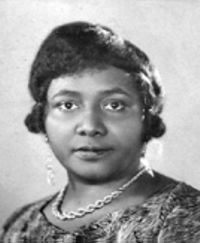
A 1920s photo portrait of Paulette Nardal. Wikimedia.
Long before many people had language for what we now call ‘Black feminism’, a Black woman from Martinique was sitting in France thinking about Black women, race, culture, belonging and the connections between Black people scattered across the world.
Her name was Paulette Nardal.
She was born in Le François, Martinique, on October 12, 1896, into an accomplished Black family. Her father, Paul Nardal, was an engineer. Her mother, Louise Achille Nardal, was a musician and teacher. Their daughters grew up in a household where education, music and intellectual curiosity were taken seriously.
That foundation would eventually travel with Paulette across the Atlantic.
In 1920, she went to Paris to continue her education. She studied English at the Sorbonne and became one of the earliest Black women, and according to several accounts the first Black woman, to enroll there.
Imagine the year.
Imagine the room.
Imagine being a Black woman from Martinique walking into one of Europe’s most prestigious universities in 1920, carrying your books and your own ideas about the world.
Paulette did more than enter the room. She began helping to create new ones.
There Was Another Black Paris
The Paris Paulette encountered between the world wars was becoming an extraordinary crossroads.
Black Americans were arriving. Musicians, performers, writers and artists crossed the Atlantic. Africans and Caribbean people were studying and working in France. People who had grown up under different colonial systems and racial arrangements suddenly had opportunities to meet one another.
They did not all think alike. They weren’t supposed to.
They compared.
That may have been one of the most powerful things happening.
What does being Black mean where you come from?
What happened to our people there?
What are Black Americans writing?
What is happening in Africa?
What are Caribbean people experiencing under French colonialism?
What survived from Africa?
What did slavery change?
What does freedom look like?
And where do women fit into all of this?
Some of those conversations happened not in a university lecture hall or government building but in a home in Clamart, outside Paris, where Paulette and her sisters welcomed an international circle of Black thinkers.
Their salon became a gathering place for people from Africa, the Caribbean and the United States.
People talked. They listened. They disagreed. Books, music, newspapers and ideas crossed languages.
The Black world was meeting itself.
Paulette Became a Bridge
Paulette’s study of English gave her an unusual position in this world. She could engage with African American writing and help bring ideas circulating in the English-speaking Black world into conversation with French-speaking Black intellectuals.
This is one reason her story changes the usual picture of Black intellectual history.
Ideas were not simply traveling from white Europe to colonized Black people.
Nor were ideas moving in only one direction from Black America to everyone else.
Black Americans were influencing Caribbean and African thinkers. Caribbean intellectuals were interpreting those ideas through their own experiences. Africans were bringing still other histories and political questions. People were translating, challenging and carrying those conversations elsewhere.
Black intellectual life was crossing the Atlantic in several directions at once.
Paulette stood at one of those crossings.
In 1931, she became deeply involved in La Revue du Monde Noir, or The Review of the Black World, a bilingual French-English publication. The very idea of such a publication tells us something about the world she was trying to build.
Black people separated by empire and language could read one another.
Then, in 1932, She Wrote Something Remarkable
Paulette published an essay called “L’Éveil de la conscience de race,” roughly, “The Awakening of Race Consciousness.”
She reflected upon the development of racial consciousness among Black people in France.
But she also did something history has too often done in reverse.
She noticed the women.
Paulette argued that Black women had experienced their racial awakening in particular ways and suggested that women had, in some respects, arrived at this consciousness before some of the men who would become associated with the great Black intellectual movements of the period.
Think about what that means.
This was 1932.
A Black Caribbean woman living in France was already examining Black experience while refusing to make Black women invisible inside it.
She did not need the twenty-first century to tell her that race and sex could shape the same life.
She had a life.
She could observe.
She could think.
That is something worth remembering when women’s history is told as though women needed modern terminology before they could understand what was happening to them.
Women have always been capable of studying the conditions of their own lives.
Before Négritude Had Its Famous Fathers
Today, the Négritude movement is usually associated with three brilliant Black men: Aimé Césaire of Martinique, Léopold Sédar Senghor of Senegal and Léon-Gontran Damas of French Guiana.
They deserve their place in history.
But their greatness does not require women’s disappearance.
Before Négritude became famous under that name, Paulette, Jane and other Black women were already helping create an intellectual environment in which Black people from different parts of the world could think collectively about race, Africa, colonialism and Black identity.
The Nardal salon was part of that environment.
Their journalism was part of that environment.
Their translation and interpretation were part of that environment.
Their ability to connect people was part of that environment.
Sometimes history remembers the person who names the movement and forgets the women who prepared the ground beneath it.
We can remember both.
Paulette Went Home
Her story did not end when the famous Paris years did.
During World War II, Paulette was injured when the ship on which she was traveling was attacked. She eventually returned to Martinique.
There, she continued organizing.
After French women finally obtained national voting rights in 1944, Paulette became involved in preparing Martinican women for political participation. She founded the Rassemblement féminin, a women’s organization, and later published La Femme dans la Cité, or Woman in the City.
That part of her life deserves far more attention.
The woman who had spent years thinking about Black international consciousness also understood something very local and practical:
Women needed political education.
Women needed information.
Women needed to understand their new rights.
Women needed places to gather and participate in public life.
Ideas were not enough.
Women had to be equipped to use their citizenship.
Women’s Resistance Did Not Begin When Somebody Named It
Paulette Nardal complicates the tidy stories we are sometimes given about women’s liberation.
Black women were not simply waiting on the sidelines until feminism found them.
They were thinking.
Writing.
Publishing.
Organizing.
Building institutions.
Comparing their experiences with those of women elsewhere.
Questioning what freedom meant when race and sex could both determine how a person moved through society.
Paulette’s life also reminds us to resist another historical habit: believing that a woman must perfectly resemble today’s politics before we can learn from her.
She was a woman of her own time, culture, Catholic faith, class and political development. There are tensions and limitations in her thought worth studying rather than hiding.
That makes her more interesting, not less.
We do not need ancestors to predict us.
We need to let them speak from where they actually stood.
The Room Was Part of the Revolution
Perhaps one of the most beautiful things Paulette Nardal teaches us is that intellectual history does not happen only at podiums.
Sometimes somebody makes tea.
Someone brings a newspaper.
Someone translates an essay.
Someone introduces two people who would never otherwise have met.
Someone says, “You should read this.”
Someone asks the question everybody carries home.
Someone makes a room safe enough for unfinished ideas.
Years later, the world remembers the books, movements and famous names that emerged.
It may forget the woman who kept opening the door.
We should not.
Paulette Nardal helped open a door through which the Black world could meet itself.
And Black women were already inside the room.
Sources for further reading
The Bibliothèque nationale de France records Paulette Nardal as secretary-general of La Revue du Monde Noir in 1931–32 and president of the Rassemblement féminin in 1946. Its collection also includes a modern anthology of her writings from 1928–1939.
Recent scholarship describes the Nardal salon as an important space for Black politics, international Black solidarity and discussion of Black women’s experiences globally.