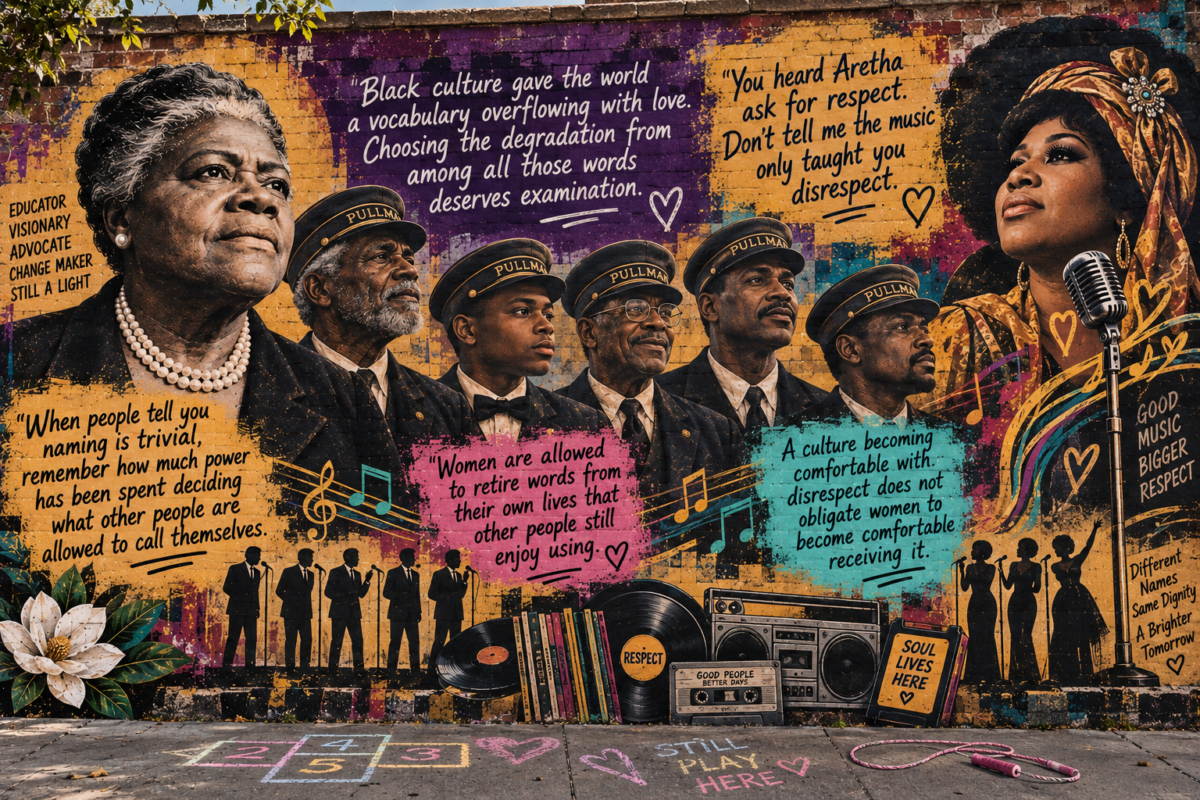
Follow the Story This story does not end with this article or podcast episode. If something here made you curious, please k
 Follow the Story
 Follow the Story
This story does not end with this article or podcast episode. If something here made you curious, please keep going. Read the historians. Listen to oral histories. Visit the archives. Look at the original records when they are available.
I want this work to be one resource among many, never the final word.
Start Here: Pullman Porters and the Brotherhood
National Park Service — Pullman Porters
This is one of the best accessible starting points. The National Park Service explains the history of Pullman porters, their importance within Black communities, and the founding of the Brotherhood of Sleeping Car Porters in 1925 under A. Philip Randolph.
Best for: A reliable overview before going deeper.
Access: Free online.
Go Deeper: The Historic Pullman Record
National Park Service — Historic Resource Study of Pullman National Monument
For readers who want considerably more than an overview, look for the National Park Service’s full historic resource study of Pullman. This is particularly important to our story because the historical study documents the degrading ways porters were addressed and records the expression used to describe such indignities: being “called out of one’s name.”
The study’s notes are valuable too. Follow them. A good historical source can lead you to several more.
Best for: Detailed history, documentation, citations, and following the source trail backward.
Access: Free through the National Park Service.
Explore the Original Union Records
Library of Congress — Brotherhood of Sleeping Car Porters Records
The Library of Congress holds records of the Brotherhood of Sleeping Car Porters. The collection came from A. Philip Randolph and the Brotherhood itself and includes organizational records connected to this extraordinary Black labor movement.
This is where history begins moving closer to the people who actually made it.
Best for: Researchers, students, writers, and anyone who wants to move beyond summaries into archival material.
Access: Collection information and selected materials are available through the Library of Congress.
An Excellent Book
Larry Tye — Rising from the Rails: Pullman Porters and the Making of the Black Middle Class
Larry Tye tells the larger story of the Pullman porters, their families, working conditions, organizing and enormous influence upon Black American life. He drew upon extensive research and interviews with former porters and their descendants.
One chapter bears a title particularly relevant to our story: My Name’s Not George.
Best for: Readers who want the history told as a human story rather than simply a collection of dates.
Published: 2004, Henry Holt and Company.
Hear More of the Story
Fresh Air — Larry Tye on the Pullman Porters
Tye also discussed his research in an interview for Fresh Air. For people who would rather listen than begin with a book, this provides another doorway into the history.
Best for: Podcast and audio listeners.
Access: Search the Fresh Air archive for Larry Tye and Rising from the Rails.
Let the Workers Speak
David D. Perata — Those Pullman Blues: An Oral History of the African American Railroad Attendant
This is especially valuable because it centers oral history. Perata gathered the experiences of Black railroad attendants rather than treating them merely as background figures in railroad history.
The book is also cited in historical scholarship about the Pullman porters, making it a useful place to move closer to lived experience.
Best for: Readers interested in testimony, memory, working conditions, and the everyday experiences of Black railroad workers.
An Archival Audio Trail
Studs Terkel Radio Archive — David Perata and Those Pullman Blues
The Studs Terkel archive catalogs a 1997 discussion with David Perata and guests about Those Pullman Blues. The archival record identifies the original broadcast and recording, although the digital audio is not currently publicly available there.
That distinction is worth making. An archive can establish that a recording exists even when we cannot immediately listen to it online.
Best for: Researchers following the oral-history trail.
Mary McLeod Bethune: Follow Her Story
National Park Service — Mary McLeod Bethune and the National Council of Negro Women: Historic Resource Study
This is an important source behind the Bethune section of our story. The historical study preserves accounts of the racial etiquette Bethune confronted, including the famous encounter in which a Pullman conductor addressed her as “Auntie.”
When he persisted, Bethune reportedly asked him which of her sister’s sons he was.
The same study discusses another episode in which Bethune objected to inappropriate first-name familiarity while receiving medical care.
These anecdotes should be presented as historical accounts preserved in the study rather than embellished into scenes for which we do not possess a transcript.
Best for: Bethune’s life, Black women’s organizing, racial etiquette, and the National Council of Negro Women.
Access: Free through federal/National Park Service historical collections.
Something Even Closer to Bethune
Mary McLeod Bethune Papers — Johns Hopkins University Libraries
Johns Hopkins holds a Bethune Foundation collection containing writings, diaries, scrapbooks, biographical materials and organizational files.
Whenever an archive containing a historical woman’s own papers is available, it deserves a place on our research trail. Her life is larger than the handful of anecdotes for which she has become famous.
Best for: Researchers who want to move toward Bethune’s own documentary record.
A Remarkable Contemporary Confirmation
Eleanor Roosevelt — My Day, May 20, 1955
There is another reason to take the Bethune “Auntie” story seriously. Eleanor Roosevelt herself recounted the story in her syndicated My Day column in 1955, describing Bethune responding to the presumptuous form of address by asking which of her sister’s sons the man was.
A contemporary account from someone who personally knew Bethune gives us a valuable additional breadcrumb.
Best for: Corroborating the Bethune anecdote through a historical source close to her lifetime.
Access: Free through the George Washington University Eleanor Roosevelt Papers Project.
Women, Names and “Ms.”
University of Southern Mississippi — Sheila Michaels Collection
Sheila Michaels became an important advocate for using “Ms.” as a form of address that did not identify a woman according to whether she was married.
The University of Southern Mississippi preserves her writings, photographs, diaries and other materials.
Best for: Women’s naming history, civil rights activism, feminism and the history of “Ms.”
Access: University of Southern Mississippi Special Collections.
Listen to Sheila Michaels Herself
Civil Rights Digital Library — Oral History with Sheila Michaels
There is also an oral history with Michaels preserved through the University of Southern Mississippi and discoverable through the Civil Rights Digital Library.
This is exactly the kind of source I love finding. After reading what historians say someone believed, sometimes we can go one step farther and listen to the person explain her life herself.
Best for: Moving from biography toward first-person testimony.
Visit the History
Pullman National Historical Park — National Park Service
The Pullman story also has a physical home. Pullman National Historical Park in Chicago preserves and interprets the community, company, labor history and people connected to Pullman.
Best for: Photographs, objects, place-based history, educational materials and understanding the larger Pullman world.
A Museum Dedicated to the Porters
National A. Philip Randolph Pullman Porter Museum — Chicago
The museum is dedicated to A. Philip Randolph, the Brotherhood of Sleeping Car Porters and the Black railroad workers whose organizing became part of the larger struggle for civil and labor rights.
Best for: Continuing specifically into Black labor history, Randolph and the Brotherhood.
A Note About Sources
Historical sources do not all do the same job.
An oral history tells us what someone remembered. A contemporary newspaper tells us what was reported at the time. A personal letter can tell us what somebody privately wrote. A government historic-resource study may bring many earlier sources together. A biography interprets a life through the author’s research. A documentary may combine scholarship, interviews and storytelling. A dramatized film can introduce us to history, but it should never quietly become evidence for what actually happened.
That is why I encourage you to follow more than one trail.
If a detail in my work fascinates you, go looking.
If something surprises you, check it.
If you find a book because of something you heard here, read it.
If an archive leads you somewhere I never went, keep walking.
History belongs to more than the storyteller who introduced you to it.
I am happy to be one of your breadcrumbs.