Table of Contents
We spend so much time trying to prepare girls for the world that we sometimes forget to watch what they do when the world challenges them.

And some young women in Washington state have given us something to think about. At some point, you have to get off the ropes.
Now, anybody who has watched a boxing match knows what I’m talking about. A boxer can get backed into a corner, hands up, trying to protect herself from the next punch.
She’s watching. She’s blocking. She’s doing everything she can to stay on her feet.
And sometimes that’s exactly what survival requires.
But those ropes are not where she wants to spend the entire fight.
And for many Survivors, that is a lesson worth carrying home.
These Young Women Decided to Get Their Own Representation
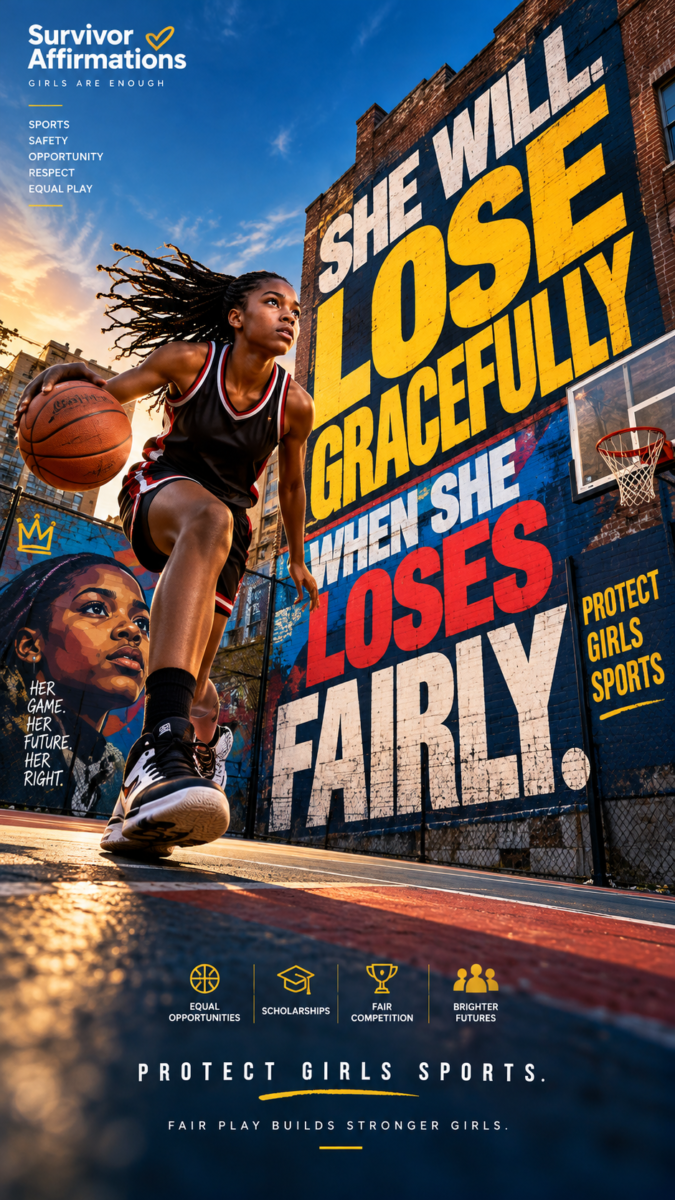
On November 3, 2026, Washington voters approved Initiative 638, a measure intended to reserve girls’ school sports competitions for female athletes.
The initiative also establishes medical sex-verification requirements for students seeking to participate in girls’ sports. Those requirements, along with the exclusion of trans identified males, are being challenged in court on constitutional and privacy grounds.
Then something happened that caught my attention.
On November 13, attorneys with Alliance Defending Freedom filed a motion on behalf of Female Athletes United, asking a Washington court to allow the organization to join the lawsuit and defend the initiative.
The organization includes young female athletes who say the existing sports policies have affected their opportunities to compete fairly. They have legal representation. And rather than depending entirely on state officials to present their interests, they are seeking a place in the proceedings themselves. You get tired of waiting for people to see and hear you.
The judge has not yet granted their request to intervene. The legal battle is far from over.
But I see a victory in their willingness to organize and take action.
You can read the legal case information from Alliance Defending Freedom and the lawsuit challenging the initiative.
These young women are not simply waiting for somebody else to decide whether their concerns deserve attention. They are seeking a way to make their own case.
1. You Cannot Spend Your Whole Life Explaining Why You Deserve Fair Treatment
Some of us know this routine by heart. You explain why something is unfair. You explain how it affects you. You try to be reasonable, patient, and understanding. Then you explain it again.
And before long, you find yourself defending your tone, your intentions, your choice of words, and whether you have shown enough consideration for everybody else.
Meanwhile, the original problem is still sitting there, untouched.
You do not have to make explaining yourself your life’s work.
There comes a time when the next useful question isn’t, How can I make them understand?
It’s, What can I do about this? That is a different question. And sometimes it opens doors that another ten rounds of explaining never would.
2. You Do Not Have to Disappear
Something else has bothered me about public discussions of girls’ sports.
There is plenty of attention for politicians, organizations, attorneys, commentators, and institutions. But sometimes you could listen to an entire discussion and barely hear anything about the girls themselves. Not even the word, “girl.”
The girls who practice after school.
The girls who wake up early to train.
The girls who want to compete, improve, make friends, earn scholarships, and discover what their bodies can do.
They have interests of their own.
And they should not have to disappear from the conversation just because adults disagree about how sports should be organized.
How did we manage to have an entire conversation about her life without making room for her?
We should be asking that question a lot more often.
3. Being Heard Is Not the Same as Being Represented
A woman can tell her story at a meeting and still have no meaningful influence over what happens next.
A Survivor can submit a complaint and discover that the institution is primarily concerned with protecting itself.
A girl can explain what she needs and still watch adults make decisions without her.
That is why representation matters.
It is not merely about having permission to speak.
It is about having someone whose responsibility is to advance your interests, explain your options, and help you navigate the process.
The Washington athletes have sought legal representation for their position. They have not left every argument to the state.
And that ought to make us think about our own lives.
Who is speaking for you?
Who is advising you?
And when a decision affects your safety, your opportunities, or your future, do you know how to participate in the process?
You deserve more than a polite invitation to tell your story before everybody goes back to business as usual.
4. Sometimes You Have to Stop Trying to Win Everybody Over
We can become so accustomed to trying to keep the peace that we start treating other people’s approval as a requirement for taking action.
But sometimes people disagree with you even after they understand exactly what you’re saying.
Sometimes the answer is no.
Sometimes the criticism keeps coming.
And sometimes the only thing left to do is decide what your next responsible step will be.
You can be respectful without making somebody else’s approval the price of your own self-advocacy.
You are allowed to have interests that do not revolve around making other people comfortable.
5. There Is a Difference Between Fighting Back and Moving Forward
We often tell Survivors to fight back.
But fighting back isn’t always the safest choice. And it certainly isn’t the only way to reclaim control over your life.
Sometimes moving forward means getting legal advice.
Sometimes it means quietly collecting important documents, making a safety plan, or finding someone who understands the system you’re dealing with.
Sometimes it means leaving a conversation that has gone nowhere for years.
And sometimes it means recognizing that you have been so busy defending yourself that you haven’t had much time to think about what you actually want.
What would you like to build?
Where would you like to go?
What kind of life would you choose if you weren’t spending so much energy managing somebody else’s behavior?
Those questions deserve your attention, too.
For Survivors facing ongoing abuse, please remember that changing your approach does not require confronting a dangerous person. Your safety comes first. Private planning and confidential support may be the strongest next move.
The National Domestic Violence Hotline offers confidential support and safety-planning information. If someone monitors your devices, consider using a safer way to reach help.
A Little Something to Carry With You
I don’t know how the Washington lawsuit will end.
Courts have to examine the law, the evidence, and the constitutional questions. The athletes seeking to intervene will have to wait for the judge’s decision about their participation.
But I know what I learned from watching these young women take their next step.
You don’t have to remain on defense forever. And you don’t have to wait until everybody agrees with you before you begin considering your options.
For some Survivors, getting off the ropes will mean taking a big, visible step.
For others, it will be something quiet that nobody else knows about yet.
Both can be acts of courage.
And if you’ve spent years just trying to get through the day, please don’t turn this lesson into another reason to criticize yourself. Surviving took strength. The skills that helped keep you safe deserve respect.
Now, when it is safe and possible, you can begin making room for something else.
Your plans. Your interests. Your peace. Your future.
Because, you have somewhere you want to go.
And you cannot spend your whole life on the ropes.
A question for reflection: Where in your life have you been spending more energy defending your decisions than pursuing what you actually need?
You don’t have to solve it all today. Just notice where a different kind of support, a different question, or one carefully chosen next step might give you more room to move.