Table of Contents
There is something particularly sad about a woman becoming one of the world’s great symbols of female sexuality while privately struggling with an illness rooted in her reproductive health, enduring terrible pain, pregnancy loss, and wanting children. I’m talking about one of the most sexualized women in the world. Ever. Marilyn Monroe.
Marilyn Monroe had endometriosis, and the evidence indicates that it was a serious, recurring medical problem, not simply a retrospective rumor.
She experienced severe menstrual and pelvic pain and underwent procedures related to endometriosis. In 1961, she underwent surgery for the condition; that same period of her life also included gallbladder surgery. Biographical accounts describe her endometriosis as severe enough to interfere with work, and she reportedly had contractual accommodations for debilitating menstrual pain.
What makes her story especially striking is the fertility piece. Monroe desperately wanted children. She experienced an ectopic pregnancy in 1957 and a miscarriage in 1958, and endometriosis is considered a likely contributor to her reproductive difficulties. Reports also say she resisted a hysterectomy because she still hoped to become a mother.
No one ever seems to say, “Don’t reduce the legendary Marilyn Monroe to her beauty, her curves, her hair, or her sex appeal.” And yet, in some circles today, women are lectured about the supposed danger of reducing womanhood to the female body.
Marilyn’s life reminds us why that conversation deserves more care.
As beautiful as she was, her body was not merely something for the world to admire. It was also where she experienced pain. She lived with endometriosis, struggled with reproductive health problems, and endured pregnancy loss. These were not trivial details of her life. They affected her happiness, her work, her hopes for motherhood, and the way she moved through the world.
Everything I have read about Marilyn points to a beautifully complicated, magnetic, intelligent, ambitious, vulnerable, and talented woman. Yet decades after her death, she is still routinely flattened into an image: the dress, the curves, the breathy voice, the blonde hair.
There is a difference between reducing a woman to her body and recognizing that a woman lives through her body. Her health, hormones, fertility, pain, strength, aging, sexuality, and physical safety can profoundly shape her experience of being alive.
Marilyn Monroe was always more than her body. But what happened to her body was part of her life, too. We should be able to hold both truths at once.
We remember the dresses, marriages, sexuality, pills, depression, and death. Far fewer people are taught that this extraordinarily famous woman spent years dealing with severe gynecological pain, reproductive loss, and a disease that medicine still struggles to diagnose promptly today. It complicates that old description of her as “difficult.” Sometimes a woman who couldn’t get out of bed wasn’t being temperamental. She was in pain. A lot of it.
There is a strange thing that happens when women talk about equality in medicine. Too often, somebody hears the word woman and immediately thinks the conversation is only about anatomy.
It isn’t.
A female human being can live eight or nine decades. Across that lifetime, hormones rise, fall, surge, disappear, interact with other systems and sometimes go terribly wrong. Ovaries, breasts, the uterus and reproductive hormones are not embarrassing little side notes attached to an otherwise generic human body. They can affect pain, bleeding, fertility, bones, muscles, metabolism, cardiovascular health, sexual health, sleep and quality of life.
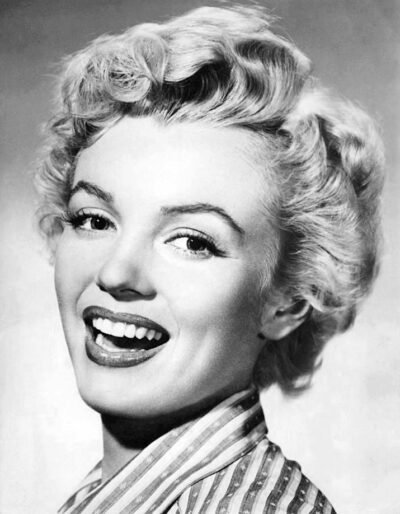
Marilyn Monroe, 1952. RKO publicity photograph. Public domain, via Wikimedia Commons.
That is why women keep asking medicine to listen.
We aren’t asking to be reduced to our reproductive anatomy. We are asking medicine not to pretend our reproductive biology stops affecting us simply because talking about it has become uncomfortable.
And history gives women good reason to be watchful.
The National Institutes of Health now requires women to be included in NIH-funded clinical research unless there is a compelling scientific reason not to include them. Researchers conducting certain Phase III trials must also consider and analyze differences by sex. Those rules did not fall out of the sky. They exist because women historically were underrepresented in clinical research. Even the NIH’s current strategic plan acknowledges that women and girls have historically been underrepresented in clinical studies.
So when women say, “Study us,” that isn’t paranoia.
It is memory.
1. Sometimes the problem isn’t that medicine has no answer. The problem is that nobody has looked hard enough for our answer.
One of the great stories in pharmaceutical history involves sildenafil, better known as Viagra.
There is a popular story that Viagra was accidentally discovered while scientists were trying to develop a medicine for women. That isn’t true.
Researchers at Pfizer were investigating sildenafil as a treatment for angina, a cardiovascular condition. The drug wasn’t particularly successful for that purpose, but researchers noticed something interesting: men taking it were experiencing erections.
Medicine did not respond, “Well, that’s just aging.”
Researchers followed the clue.
Eventually sildenafil became a revolutionary treatment for erectile dysfunction.
Good.
That is exactly what science is supposed to do.
The question women are entitled to ask is:
Where is that level of curiosity about us?
When women repeatedly report changes in weight, pain, menstruation, body composition, sexual function, energy or metabolism, the scientific response should not begin and end with, “Try harder.”
Investigate. As a woman, I deserve a doctor who is curious about what is happening in my body, not merely critical of what my body looks like.
2. Telling a woman to lose weight is not the same thing as treating what is making weight regulation difficult.
The answer to centuries of reducing women to our bodies cannot be pretending our bodies no longer matter.
Consider PCOS.
Women with polycystic ovary syndrome have heard “lose weight” for generations. Yet PCOS can involve significant metabolic dysfunction, including insulin resistance.
Now researchers are investigating GLP-1 medications and other anti-obesity medicines in women with PCOS.
That changes the question.
Instead of asking only:
“Why can’t she lose weight?”
medicine can ask:
“What is happening metabolically inside her body, and can we treat it?”
Those are profoundly different ways of seeing a woman.
If a woman’s weight is contributing to joint strain, cardiovascular risk, diabetes risk, sleep problems, limited mobility or declining quality of life, she deserves medical investigation.
Maybe the answer is nutrition.
Maybe it is movement.
Maybe it is medication.
Maybe it is treatment of an underlying endocrine condition.
Maybe it is several things at once.
But “You’re fat. Lose weight.” is not a diagnosis.
Women deserve access to the advances being made in obesity medicine. They also deserve research specifically examining how those treatments work in female bodies, including women with PCOS and women moving through perimenopause and menopause.
I can ask why. I can ask what else. I can ask what has been studied. I can ask what has not.
My hormones are part of my health. I do not have to apologize for discussing them.
3. Menopause does not turn a woman into a generic aging human.
Ovaries are organs. Breasts are organs and tissue. Hormones are biology. Menopause is biology. Studying these things is healthcare, not an insult to womanhood.
A woman can notice that something has changed before anyone else does.
Her body composition changes. Fat begins accumulating differently. Muscle becomes harder to maintain. Sleep may deteriorate. Her hormones are changing dramatically.
That doesn’t mean every pound gained during menopause is caused by hormones. Human metabolism is more complicated than that.
But neither should women be told that hormones have nothing to do with their health.
This is precisely why research across the female lifespan matters.
What happens when a 55-year-old woman takes a medication primarily studied through broader obesity populations?
Does menopause affect the response?
What happens to muscle?
What happens to bone?
What happens to visceral fat?
Does hormone therapy alter the response?
What happens after five or ten years?
These aren’t fringe questions. They are women’s-health questions.
My changing body deserves investigation, not ridicule.
4. A girl’s breasts can become a medical problem long before anyone takes her pain seriously.
A girl’s breasts are part of her body, not public decoration. If their size causes pain, her healthcare needs deserve serious consideration. As well as coverage by insurance.
It doesn’t matter which party. I’m telling you that procedures are prioritized to accommodate male human beings that may be denied insurance coverage for the health of female human beings. Like how breasts are treated.
Imagine a teenage girl whose breasts are disproportionately large for her frame.
Her shoulders hurt. Her back hurts. Bra straps dig painfully into her skin.
Sports become difficult. And as she moves and the weight accumulates, she’s still told to “eat better and exercise.”
Finding properly fitting clothes becomes difficult.
She may develop rashes underneath her breasts. She may begin changing the way she stands or moves because carrying that weight hurts. Her family seeks a breast reduction.
And suddenly they may enter an insurance maze over whether surgery is sufficiently “medically necessary,” what conservative treatments must be attempted first, and whether she satisfies the insurer’s particular requirements.
This is exactly the kind of situation women mean when we talk about medical equity.
We should be able to ask a very simple question:
Is this girl’s body causing her pain or impairing her health and functioning, and is there a medically appropriate intervention that could help her?
Her breasts are not decoration.
They are part of her body. Her back is part of her body. Her pain belongs in the medical equation.
And when families see other forms of breast or chest-related care receiving significant institutional attention while girls struggling with symptomatic macromastia still have to prove that their suffering counts, they are going to ask questions about priorities.
They are entitled to ask those questions.
The answer should be better healthcare for everyone who needs it, not less care for somebody else.
5. “Don’t reduce women to anatomy” cannot mean “ignore female anatomy.”
A woman is infinitely more than her anatomy, but medicine had better understand her anatomy when her life depends upon it.
There is something deeply confused about saying that recognizing female biology reduces women to their bodies.
Recognizing lungs doesn’t reduce someone to lungs.
Recognizing kidneys doesn’t reduce someone to kidneys.
Recognizing the prostate doesn’t reduce a man to his prostate.
And recognizing ovaries, breasts, menstruation, pregnancy, endometriosis, PCOS or menopause does not reduce a woman to reproductive organs.
It recognizes that she has a body.
Women are thinking human beings with personalities, ambitions, relationships, histories, and dreams.
And we are embodied human beings.
Both things are true.
Our humanity should be the reason medicine studies our bodies carefully, not the reason medicine becomes afraid to name them.
6. Women have learned that when we stop naming ourselves, our particular problems can disappear with us.
Do not shame a woman for a health problem while placing the treatment behind a locked door she can’t afford.
Medical research requires categories.
Researchers need to know who experienced a disease, who received a treatment, who suffered an adverse reaction and whether outcomes differed between populations.
Sex can matter.
Age can matter.
Pregnancy can matter.
Menopause can matter.
Hormonal status can matter.
Race and ethnicity can matter.
Disability can matter.
Researchers do not have to pretend these characteristics are interchangeable to treat every participant with dignity.
In fact, sometimes good medicine requires noticing differences.
NIH policy recognizes this principle. Women are supposed to be included in federally funded clinical research, and researchers conducting applicable studies are expected to examine whether important treatment differences exist by sex.
That isn’t discrimination.
That is how we learn whether medicine actually works for everybody it is supposed to serve.
7. Women are not asking to stand ahead of everyone else in the medical line.
Equality does not require medicine to pretend our bodies are identical. Sometimes equality requires studying the difference.
We are asking not to perpetually stand at the back of it.
That distinction keeps getting lost.
When women argue about sports, privacy, medical research, reproductive healthcare or sex-based data, people sometimes treat each controversy as though it sprang into existence yesterday.
Women hear something older underneath it.
Will you listen to us when we tell you something affects our bodies?
That question is much older than today’s political arguments.
It was there when women described pain that wasn’t taken seriously.
It was there when female symptoms of disease were poorly understood.
It was there when women were underrepresented in clinical research.
It is there when a woman with PCOS is repeatedly told to lose weight without receiving adequate investigation into the metabolic condition making that extraordinarily difficult.
It is there when a menopausal woman says, “Something has changed in my body,” and is treated as though aging means she should quietly accept whatever follows.
It is there when a girl says, “My breasts are hurting my back,” and somebody sees appearance before they see pain.
Women recognize the pattern because women have lived inside it.
8. Medical progress should reach women while we are still well enough to benefit from it.
If a treatment works differently in female bodies, women deserve to know. If a disease behaves differently in female bodies, doctors deserve to know. That knowledge can save lives.
This may be the most important part.
We should not have to wait until insulin resistance becomes diabetes.
We should not have to wait until weight-related joint pain becomes immobility.
We should not have to wait until metabolic disease damages the heart.
We should not have to wait until a girl’s back pain becomes years of chronic pain.
We should not have to wait until a woman has spent ten years saying, “Something is wrong,” before somebody decides to investigate.
If obesity is a disease, investigate and treat it like one.
If PCOS has metabolic consequences, study them.
If menopause changes women’s metabolic health, study it.
If medications developed through the extraordinary advances of modern obesity science can safely help particular groups of women, find out which women benefit, what the risks are, how long treatment should continue and how we can make appropriate treatment accessible.
And if something doesn’t work for women, we need to know that too.
That is what equity in medicine looks like.
It doesn’t guarantee us a particular prescription.
It guarantees that our questions are worthy of investigation.
Our pain is worthy of attention.
Our biology is worthy of study.
Our diseases are worthy of funding.
Our quality of life is worthy of protecting.
And medical discoveries that could relieve human suffering should not somehow become less urgent when the human being suffering is a woman or a girl.
We have spent enough centuries being told what women ought to tolerate.
Medicine can do something much better.
If women are human, then the full promise of modern medicine belongs to us too
Listen to us. Study us. Include us. And when science finds something that can safely help us, do not leave us standing outside the door.
Why Female Suffering Deserves Its Own Language, Its Own Care, and Its Own Honor – WE Survive Abuse
🚨 25 Items & Systems That Risk Women’s Lives Because They Don’t Accommodate Women – WE Survive Abuse
Halle Berry Did Something Rare for These Days — She Spoke Directly for Women – WE Survive Abuse
12 Things About the Female Body Many Men Do Not Understand – WE Survive Abuse