Table of Contents
Amongst Gen X, Boomers, and those blessed with more years, we have been having a conversation for a few years. About gender.
When do we remember hearing that term first, and what did it mean to us?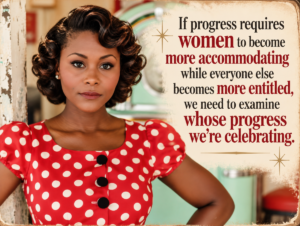
And one thing that keeps coming up is how excited many of us were to finally have language for things we had been experiencing all our lives. We could name what was happening. We could talk about the expectations placed on women, the authority men were assumed to have, and the ways women were taught to accommodate, obey, and remain silent.
There was something liberating about that.
But I remember something else. I remember sitting at a table the very day I learned these conversations about gender were beginning to reach the masses. I remember where I was sitting. And I remember the uneasy feeling that came over me.
I wasn’t sure how this was going to go.
Because it’s one thing for women to sit together and examine the expectations we’ve lived under. It’s another thing to take those questions into a society where many people have never seriously questioned those expectations at all. We were talking about power. About who was expected to submit. Who was allowed to say no. Who was expected to tolerate violence, disrespect, and unequal treatment to keep everybody else comfortable.
Those are not always comfortable conversations.
And I knew then that people don’t always welcome the truth simply because somebody has finally found the words to explain it. Some people have built their entire understanding of the world around arrangements that benefit them. Others have lived with those arrangements for so long that they mistake familiarity for fairness.
I didn’t know exactly what would happen. I certainly couldn’t have predicted every direction the conversations would take.
But I remember that feeling and I would never forget it. Something didn’t feel right. Our fellow human beings had not yet demonstrated basic level proficiency with understanding a woman’s or child’s “no.” Uh oh.
And looking back, I think part of my concern was whether the public would understand that questioning gender roles was supposed to help us examine unfair expectations, not simply give those expectations new language.
Let me tell you what we were NOT doing. We weren’t learning to recognize women’s submission so we could become better at demanding it.
We were learning to question WHY it was expected in the first place.
Because one thing I learned during those years has stayed with me.
You can change the language of an expectation without changing who is expected to carry its burden.
And that is something I will always pay attention to.
Remember that old Virginia Slims cigarette slogan, “You’ve Come a Long Way, Baby”? It started in 1968 and was still familiar throughout the 1970s and 1980s. They used the language of women’s liberation to sell cigarettes, a product that was harming women’s health while advertisers celebrated our supposed freedom. Language and imagery was used. Did you catch that?
That slogan was selling a lie then, and women are still being sold lies today.
Women really had fought for greater independence, but progress was being used as a marketing tool. And that’s something I learned to watch carefully. Just because somebody uses the language of empowerment, equality, or liberation doesn’t mean what they’re offering is good for women.
We’ve come a long way in some respects. But we’ve also had to come a long way in learning how to recognize when somebody is selling us the same old expectations in a shiny new package. (We are not there yet.)
And I’m not buying everything they’re selling.
Look at how many of those expectations have followed women from one generation to another.
The 1950s: Know Your Place, Woman

Photo by The New York Public Library
Women were commonly expected to:
- Submit to male authority. Husbands were considered the heads of households.
- Be agreeable and accommodating. A good woman was pleasant, obedient, and not argumentative.
- Put men’s needs before their own. His career, comfort, and ambitions came first.
- Keep quiet about violence and abuse. Family problems were supposed to remain private.
- Take responsibility for men’s behavior. Women were often blamed for provoking anger, infidelity, or violence.
- Forgive men and preserve relationships. Keeping the family together could take priority over a woman’s well-being.
- Accept restrictions on their independence. Marriage, motherhood, and financial dependence were widely promoted as women’s proper roles.
- Protect men’s reputations. Speaking publicly about mistreatment could be considered shameful or disloyal.
The 1990s: Be Independent, But Don’t Go Too Far
Women had gained significant legal rights and opportunities. Yet many familiar expectations remained.
Women were still expected to:
- Defer to male authority. Women could lead, but were often criticized for challenging men or appearing too powerful.
- Be agreeable and accommodating. Assertive women could be labeled angry, bitter, or difficult.
- Put men’s needs before their own. Women’s careers and ambitions were still expected to accommodate husbands and families.
- Keep quiet about violence and abuse. Women who spoke out risked being accused of destroying families or reputations.
- Take responsibility for men’s behavior. Why didn’t she leave? Why did she trust him? What did she do to provoke him?
- Forgive men and preserve relationships. Women were still encouraged to reconcile, even when trust had been seriously damaged.
- Prove they deserved independence. Women could pursue careers and financial freedom while remaining primarily responsible for domestic work.
- Protect men’s reputations. Women reporting harassment or abuse could be accused of ruining a man’s future.
Today: Be Empowered, But Don’t Make Anybody Uncomfortable
Women have more opportunities than earlier generations could have imagined. But listen closely to some of the expectations that remain.
Women can still be expected to:
- Defer to male authority or demands. Women’s objections to certain policies affecting sex-based rights, opportunities, privacy, and safety may be dismissed rather than examined.
- Be agreeable and accommodating. Women who establish boundaries can be described as hateful, selfish, or intolerant.
- Put men’s needs before their own. Women may still be expected to prioritize men’s feelings, comfort, or circumstances over their own concerns.
- Keep quiet about violence and abuse. Women reporting harm can face public hostility, disbelief, or pressure to remain silent.
- Take responsibility for men’s behavior. Why didn’t she protect the children? Why didn’t she leave? Why didn’t she recognize the warning signs?
- Forgive men and preserve relationships. Women who refuse reconciliation may be criticized for being unforgiving or cruel.
- Justify their independence and boundaries. Women can still be expected to explain why they want privacy, equal opportunities, financial independence, or freedom from unwanted access.
- Protect men’s reputations. Public conversations about alleged misconduct can become more concerned with a man’s future than with thoroughly examining the allegations and their impact.
What Changed? And What Didn’t?
The wording has changed. Women’s legal rights and opportunities have expanded. Many people reject the old expectations entirely.
But the recurring demands are worth noticing.
Be agreeable. Accommodate. Forgive. Don’t embarrass him. Don’t make people uncomfortable. Think about his future. Explain why you said no.
I remember women in the 1990s being excited to finally have language for these patterns. We were learning to recognize how expectations about gender could be used to limit women’s choices and excuse unequal treatment.
And I remember wondering how those conversations would go once they reached the wider public.
Because challenging deeply rooted expectations was never going to be easy.
We didn’t spend generations questioning women’s expected submission just to stop recognizing it when the language changed.
And I think that’s something worth remembering whenever women are told that our questions, boundaries, or concerns are standing in the way of progress.
If the same people are repeatedly expected to sacrifice, accommodate, remain silent, and explain themselves, we ought to ask how much the underlying expectation has really changed.
Notice that the pattern doesn’t apply to the human beings who dress a particular way or wear their makeup a certain way. It applies to sex. Female human beings. From the cradle to the grave.
https://www.youtube.com/watch?v=-eKiHEIMwd8
When Niceness Becomes a Trap: Why Women Deserve the Bottom Line, Not Confusion – WE Survive Abuse