One of the reasons I started this blog in the early 2000s was because of something I kept seeing after serving in many different roles within the move
One of the reasons I started this blog in the early 2000s was because of something I kept seeing after serving in many different roles within the movement to end violence against women.
There was a persistent narrative that Black communities needed to be “saved”—that Black Americans were primarily recipients of advocacy rather than leaders, innovators, and builders of it.
That never matched what I had witnessed.
I knew Black women, Black advocates, Black organizers, and Black communities had long been creating pathways to healing, protection, and justice. I knew the story being told was incomplete, even if I didn’t yet have all of the historical evidence to explain why.
So I starting searching.
Over time, I discovered that our history was far richer than many people had been taught to believe. Generation after generation, Black Americans have shaped the work of preventing violence, supporting Survivors, building community responses, and advancing justice—often without recognition and sometimes despite deliberate erasure.
This blog began as part of that search for truth. It became a place to document what I was learning, to honor the people whose work came before us, and to help make visible a legacy that had always existed.
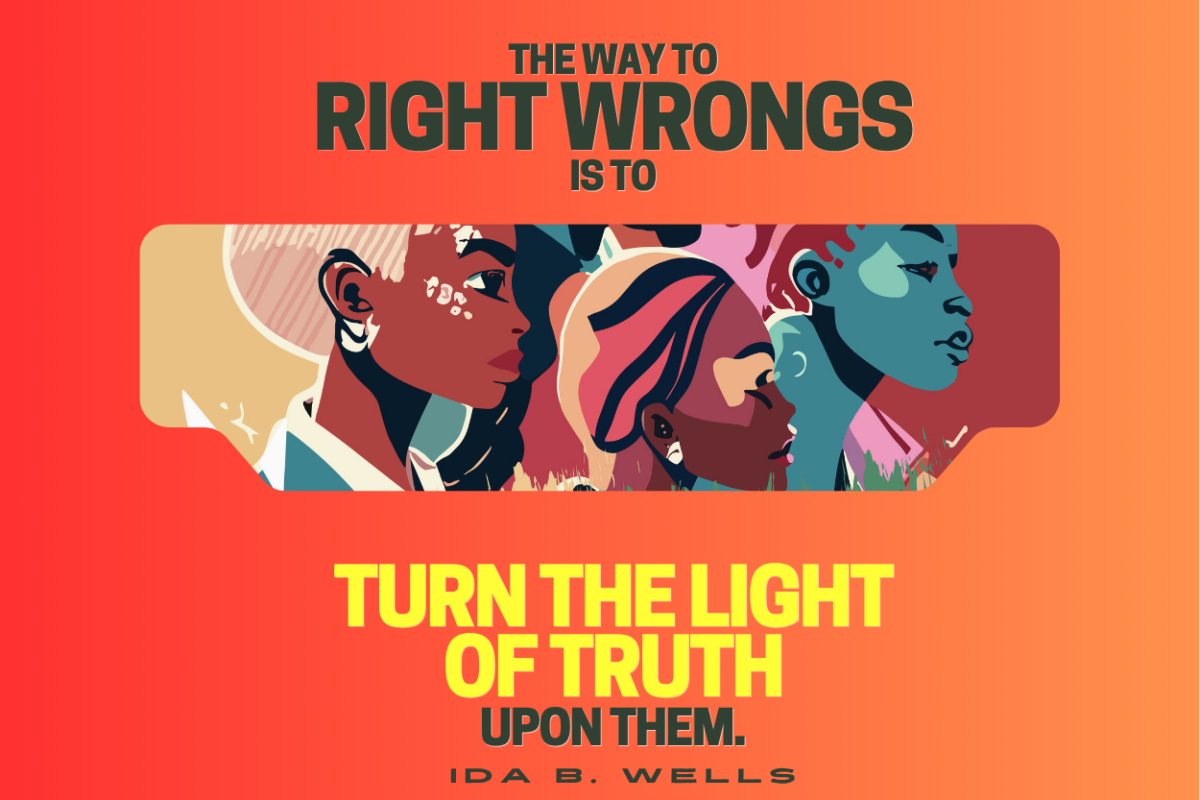
Ida B. Wells Was a Pioneer in Exposing the “Rape” Narrative Itself
One of the most challenging parts of being a Black woman in this area is this dichotomy that existed long before your existence. On the one hand, you know that Black men, women, and children deserve justice when it comes to sexual and domestic violence. You ALSO know and live how this country has used this pursuit of justice as a weapon against Black men, women, and children.
I can’t even imagine what that must have been like for Ida B. Wells.
After studying dozens of lynchings, Wells began noticing a disturbing pattern.
Newspapers routinely claimed Black men had raped white women.
When she investigated, she often found something very different.
Sometimes there had been consensual relationships between Black men and white women that became “rape” only after the relationship was discovered.
Sometimes there was little evidence that any sexual assault had occurred.
Sometimes the alleged offense had nothing to do with sex at all.
She wrote one of the most explosive sentences of the nineteenth century:
That statement was extraordinary. For then and now.
She investigated claims instead of accepting the official story. She challenged myths about who commits sexual violence and who deserves belief. She documented the near-impunity white men enjoyed when they assaulted Black women. She exposed how society could loudly invoke the protection of white women while abandoning Black women and girls. And she showed that accusations of rape could be manipulated to justify unrelated violence, economic retaliation, and racial control.
She was not saying rape never happened. She did not deny that there were victims of sexual assault.
She was challenging the widespread use of rape allegations as propaganda to justify racial terror.
It was so controversial that white mobs destroyed the offices of her newspaper, the Memphis Free Speech. She was out of town at the time, and friends warned her that returning to Memphis could cost her life.
In modern language, Ida B. Wells was the blueprint. She was among the first American journalists to ask questions we now recognize as investigative reporting:
Who benefits from this story?
What evidence actually exists?
What are the newspapers leaving out?
Whose testimony is automatically believed?
Whose suffering disappears?
What happens to Black women who report sexual violence?
She wasn’t just exposing one injustice.
She was exposing how a society manufactures a story about sexual violence to protect some people while abandoning others.
In many ways, Wells was one of the first Americans to investigate not only violent acts, but also the narratives surrounding violence—how myths, media, race, and power could shape public understanding as much as the facts themselves.
When most people hear the name Ida B. Wells, they think of lynching.
They should.
She devoted her life to exposing one of the greatest terrors in American history.
But if we stop there, we miss something equally extraordinary.
Ida B. Wells was also one of America’s earliest and most courageous voices against sexual violence.
Not because she opened a rape crisis center.
Not because she used the language we use today.
Because she saw something almost no one else was willing to see.
She followed the truth wherever it led.
And the truth kept leading her back to sexual violence.
1. She refused to let rape become political theater.
Wells noticed that accusations of rape were often treated very differently depending on who was accused and who was harmed.
When Black men were accused, newspapers could demand blood before the facts were known.
When Black women were raped by white men, newspapers often looked away.
She challenged both injustices at the same time.
That takes remarkable moral courage.
Justice is no justice at all when it depends on the race of the victim.
2. She investigated instead of repeating rumors.
Long before investigative journalism became a profession with formal standards, Wells gathered evidence.
She interviewed witnesses.
She studied court records.
She compared newspaper stories with what actually happened.
She understood that fear spreads quickly.
Truth takes work.
Today, Survivor advocates call for careful investigations that neither ignore victims nor accept convenient myths without evidence.
Ida B. Wells practiced that principle more than a century ago.
3. She recognized that false accusations and real sexual violence can both exist.
Many people still struggle to hold these two truths together.
Wells did not.
She exposed false rape allegations used to justify lynching.
She also insisted that the rape of Black women deserved justice.
She refused to sacrifice one truth in order to defend another.
That remains one of the hardest ethical challenges in violence prevention.
A commitment to truth does not choose between innocent people. It protects them all.
4. She demanded that Black women be recognized as victims worthy of justice.
This should not have been revolutionary.
Yet it was.
American society often treated violence against Black women as unimportant or inevitable.
Wells rejected that lie.
She insisted that Black women possessed dignity that no court, newspaper, or mob could erase.
That conviction echoes through today’s Survivor movement.
5. She exposed the connection between sexual violence and power.
Wells understood something that modern advocates continue to teach.
Sexual violence is rarely only about sex.
It is often about domination.
Control.
Humiliation.
Punishment.
Intimidation.
She recognized that racial terror and sexual violence frequently worked together to enforce power.
She refused to separate them.
6. She challenged the stories society told about victims.
Every culture creates stories.
Some stories protect people.
Others protect power.
In Wells’s time, one false story portrayed Black men as perpetual predators.
Another portrayed Black women as women whose suffering did not matter.
She dismantled both.
Changing public understanding is one of the most powerful forms of prevention.
7. She understood that newspapers could either protect people or protect injustice.
Wells knew words have consequences.
A headline can inflame violence.
A lie repeated often enough can become accepted history.
A journalist can either strengthen harmful myths or expose them.
Her reporting reminds us that truth-telling is an act of protection.
Sometimes the first shelter a Survivor needs is the truth finally being spoken aloud.
8. She believed that exposing systems mattered as much as exposing individuals.
Many people can recognize one violent person.
Fewer recognize a violent system.
Wells asked harder questions.
Why were certain crimes ignored?
Why were some victims believed immediately while others were dismissed?
Why did institutions reward silence?
Those questions remain essential for anyone seeking to prevent abuse today.
9. She expanded the definition of courage.
Courage is not always standing in front of a crowd.
Sometimes courage is opening another court record.
Reading another newspaper.
Interviewing another witness.
Publishing another uncomfortable fact.
Truth can be painstaking work.
Wells never stopped doing it.
10. She helped lay the moral foundation for today’s Survivor advocacy.
The language has changed.
The tools have changed.
The laws have changed.
But many of the questions have not.
Who gets believed?
Who gets ignored?
Whose pain counts?
Who benefits when the truth is hidden?
Those questions live at the heart of modern anti-sexual-violence advocacy.
Ida B. Wells was asking them generations ago.
We Should Remember Her More Completely
History remembers Ida B. Wells as an anti-lynching crusader.
She absolutely was.
History remembers her as a journalist.
She absolutely was.
History remembers her as a civil-rights leader.
She absolutely was.
But she also deserves to be remembered as one of America’s earliest pioneers in anti-sexual-violence advocacy.
She investigated violence.
She challenged harmful myths.
She insisted that Black women’s suffering mattered.
She demanded accountability.
She connected the dots others refused to see.
That is not a footnote to her legacy.
It is one of its brightest lights.
Survivor Affirmations
I do not have to choose between truth and compassion. I can hold both.
My voice matters, even when powerful people wish it did not.
Seeking evidence is an act of respect, not betrayal.
Every person deserves equal protection under the law.
Truth is one of the oldest forms of protection.
A Thought to Carry With You
Some people change history by making speeches. Ida B. Wells changed history by refusing to look away until the whole story could finally be seen.
Southern Horrors: Lynch Law in All Its Phases by Ida B. Wells (1892) – Encyclopedia Virginia
Ida B. Wells-Barnett, “Lynch Law in America” (1900) | The American Yawp Reader
Rosa Parks: A Stealth Strategist Against Deceit, Manipulation, and Violence – WE Survive Abuse
The Old Lies That Still Harms Black Women – WE Survive Abuse