
Table of Contents
A history of women who demanded privacy, dignity, and the right to meet their own needs, whether anyone sympathized with them or not.
A few years ago, I watched a celebrated Black male historian laugh off women’s concerns about restroom privacy.
His response was something like, “lol.”
Interesting, I thought.
This is funny to you?
Especially given Black American history with public restrooms. Especially knowing how often Black women had to organize, petition, complain, and fight to secure something as basic as a clean, private place to use the toilet.
But women’s concerns about privacy are not new. And the idea that women never complained about these conditions before is historically indefensible.
Sometimes people frame an old battle as a new problem so they can pretend to be astonished that women are objecting.
Why is this suddenly an issue? Nobody complained before. Why are women making such a big deal out of it?
Well, let’s visit American history.
1. Men Were Often the Public That Cities Planned Around
In nineteenth-century America, many places offering toilets were establishments that primarily served men: saloons, taverns, workplaces, and public gathering places.
Women were also working, traveling, shopping, and participating in community life. But cities were not always prepared to accommodate their most basic needs.
Women could find themselves depending on department stores, railway stations, hotels, or private establishments simply to use a toilet.
And that depended on whether they were welcome.
A city can welcome your money while failing to accommodate your body.
2. New York City, 1869: Women Received Two Toilet Stalls
One of New York City’s early public comfort stations opened at Astor Place in 1869.
The women’s section had two stalls and a washbasin. Historical accounts describe a facility that attracted nearly 1,000 male users daily, compared with no more than 25 women.
The women’s accommodations were also poorly suited to the bulky clothing of the period.
The facility was removed in 1872.
Simply building a facility for women does not mean it has been designed well enough for women to use.
And when women do not use an inadequate facility, their absence should not automatically be treated as evidence that they never needed one.
3. Chicago, 1893: America Celebrated Progress While Women Struggled to Find Free Toilets
The World’s Columbian Exposition was supposed to showcase American ingenuity.
Millions of people visited Chicago to see remarkable architecture, machinery, inventions, and visions of the future.
Yet women were having trouble locating free toilets.
Organizers had promised approximately 1,500 free toilets, alongside paid facilities offering additional comforts. But free facilities were not always easy to find.
Women complained.
On June 14, 1893, the Chicago Daily Tribune published a report titled “Free Closets Too Scarce.”
Even landscape architect Frederick Law Olmsted raised concerns about whether visitors could locate free facilities and whether women’s toilets were being properly maintained.
Imagine celebrating the future of civilization while women are asking where they can use the bathroom without paying.
Women were not inventing a problem. They were reporting one.
4. Meet Nannie Helen Burroughs. 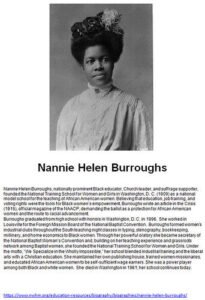
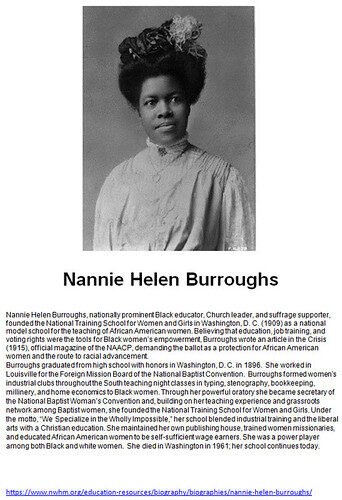
Nannie Helen Burroughs was born in Virginia in 1879, the daughter of formerly enslaved parents.
She became an educator, Baptist leader, suffragist, labor organizer, and civil rights advocate.
She believed Black women deserved education, economic opportunity, political influence, and a meaningful voice in the institutions that shaped their lives.
In 1900, she delivered a speech titled “How the Sisters Are Hindered from Helping.” Her organizing helped establish the Woman’s Convention Auxiliary of the National Baptist Convention, where she served in leadership for decades.
In 1909, Burroughs founded the National Training School for Women and Girls in Washington, D.C.
The school educated Black girls and women in academic subjects, trades, public speaking, and practical skills. It welcomed students from beyond the United States and relied on support from Black communities.
Burroughs also helped organize Black working women and advocated for voting rights, labor protections, and civil rights.
She was a woman who built institutions because she believed Black women and girls deserved opportunities that society had failed to provide.
And in 1908, she had something to say about railroad toilets.
5. Nannie Helen Burroughs Did Not Ask White Women to Protect Black Women. She Went to the Authorities.
This is the part of the story I want people to pay particular attention to.
In 1908, Nannie Helen Burroughs spoke publicly about the unacceptable toilet arrangements Black women encountered while traveling by railroad.
Her words were preserved in the National Baptist Convention proceedings.
She declared:
“We pay the same fare and are entitled to the same treatment.”
Notice what she did not say.
She did not ask white women to feel sorry for Black women.
She did not ask white women to stand guard outside a bathroom.
She did not demand that white women surrender their facilities or reorganize their own lives to accommodate Black women.
She demanded separate toilet facilities for Black women, equal in quality to those provided to white women.
Washbasins. Soap. Towels. Proper sanitation. Privacy.
Nothing extraordinary.
Nothing that should have required a prolonged campaign.
And the women did not direct their demands toward white women as a group. They directed them toward the railroad companies and the government authorities responsible for regulating those companies.
That is an important distinction.
These women were not asking another group of women to become their protectors.
They were holding the people with institutional responsibility accountable.
Black women were asking for their own facilities. Not somebody else’s facilities. Not somebody else’s permission to exist. Their own.
And there is something remarkable about that.
They were living under Jim Crow, confronting a society that routinely denied them equal treatment. Yet their organizing was not built around persuading white women to feel compassion for them.
Their demand was practical, direct, and unmistakable.
We paid the same fare.
Provide the same quality of service.
They knew what they needed.
They knew who had the authority to provide it.
And they organized accordingly.
They Did Not Ask for Pity. They Organized for Results.
The convention recommended appointing three women to petition railroad officials and the Interstate Commerce Commission.
Think about that.
These women identified the problem, established their standard, selected representatives, and pursued the institutions responsible.
They were not waiting for somebody else to explain their needs.
They were not asking to be treated as helpless.
They were exercising political agency.
That is self-determination.
And their persistence is just as important.
The convention proceedings declared:
“Everybody else may get tired of talking about it”
But the women intended to keep raising their concerns.
Burroughs had challenged railroad conditions before 1908. The campaign continued afterward.
By 1910, further petitions were being pursued.
These women did not receive everything they demanded simply because they spoke up. The continuing campaign demonstrates how difficult it was to secure adequate treatment.
And by 1918, the women’s convention was making broader demands concerning segregation in railroad transportation.
Their organizing evolved as they continued confronting the conditions imposed upon Black travelers.
But we should not rewrite what Burroughs demanded in 1908.
Separate facilities for Black women. Equal quality. Proper sanitation. Their own privacy.
She was not asking white women to protect Black women.
She was asking institutions to fulfill their obligations.
And that distinction deserves a place in American women’s history.
6. Cleveland, 1914: Officials Removed the Bathroom Stall Doors
In 1914, officials in Cleveland, Ohio, were dealing with clogged plumbing at the public comfort station in Public Square.
Their response was to remove the stall doors.
According to historian Peter C. Baldwin, officials removed doors from stalls on both the men’s and women’s sides so attendants could monitor what people were doing.
The plumbing trouble was reportedly associated with objects being flushed into toilets. Baldwin suggests that menstrual cloths may have been involved.
But instead of finding a solution that preserved privacy, authorities chose surveillance.
Anna Herbruck, representing the Federation of Women’s Clubs, objected.
She challenged the indignity of women having to use public toilets without adequate privacy.
The Cleveland Plain Dealer reported the controversy on March 7, 1914.
Why was removing people’s privacy considered an acceptable solution to a maintenance problem?
These women had already obtained public toilets. Now they had to defend the privacy necessary to use them.
Anna Herbruck deserves to be remembered for speaking up.
7. Athens, Georgia, 1914: Women Organized to Get a Restroom Built
In Athens, the Woman’s Club worked with city officials to establish and furnish a public restroom for women.
Women traveled into town to shop, conduct business, and visit public establishments. Farmers’ wives and daughters also needed somewhere to attend to ordinary bodily needs.
The women organized and helped make a facility possible.
Their work was not always glamorous. It wasn’t always the kind of activism that ends up on a monument.
Sometimes it involved identifying a problem, attending meetings, persuading officials, raising resources, and making sure somebody followed through.
And because women did that work, other women could move through their communities with greater dignity.
That is public service.
8. Black Women Railroad Workers, 1918–1920: They Needed Toilets at Work, Too
Black women were entering railroad employment in jobs such as cleaning passenger cars.
But working in an industry long dominated by men did not guarantee that facilities had been provided for female employees.
Historian Robin Dearmon Muhammad documents African American women railroad car cleaners confronting inadequate toilets, locker rooms, and dining facilities.
Their conditions became part of federal investigations into women’s railroad employment.
These women were expected to show up, perform demanding labor, and follow workplace rules.
But basic facilities for their bodily needs were inadequate.
And they challenged that arrangement.
Here again, Black women were identifying their own needs and demanding that the institutions employing them take responsibility.
9. Paris, Texas, 1911: The Inequality Was in the Building Plans
Plans for a public building in Paris, Texas, included a spacious ladies’ parlor and restroom on the main floor.
Facilities designated for Black women and men were placed on a lower level, with separate outside entrances.
Nobody had to wait until the building opened to discover the unequal treatment.
It was already there on paper.
The people designing the building had decided whose comfort deserved more attention.
Sometimes discrimination is not an unexpected failure of a system. It is part of the original design.
And this helps explain the significance of Burroughs’s demand.
She could see that some women received better accommodations.
She demanded separate facilities for Black women that met the same standards.
Not borrowed dignity. Equal-quality service.
10. Salisbury, North Carolina, 1906: Even the Signs Told a Story
At Salisbury’s railroad station, facilities for white women were identified as a “Ladies Parlor.”
Black women’s facilities were labeled “Colored Women.”
Those names reflected the racial hierarchy of the period, when railway facilities were segregated and accommodations were often unequal.
Black women understood these distinctions.
They lived with them.
And women such as Nannie Helen Burroughs challenged inferior treatment by demanding separate facilities that were equal in sanitation and quality.
Black women were not asking to borrow white women’s dignity. They were demanding recognition of their own.
11. Women’s Safety Concerns Were Not a New Invention
Historical research documents women worrying about privacy, exposure, harassment, and the safety of secluded public facilities.
Some women avoided facilities they considered unsafe or too isolated.
Women needed private places to attend to intimate bodily functions without becoming exposed to strangers or dependent on establishments where they might not be welcome.
These historical records do not establish a nationwide count of assaults in early public toilets, and we should not invent one.
But the absence of an assault statistic does not erase documented concerns about safety, harassment, and privacy.
Nor does a woman’s need for privacy become unreasonable simply because somebody else finds her concern inconvenient.
Privacy is also a form of autonomy.
A woman should not have to negotiate with strangers every time she needs to use a toilet.
12. The Old Tactic: “Nobody Ever Complained About This Before.”
Whenever women raise concerns about something that affects them, watch how quickly the conversation can shift away from the concern itself.
Suddenly the subject is the woman’s attitude.
Why is she making trouble?
Why is she so sensitive?
Why can’t she accept the arrangement?
Why is this suddenly a problem?
But the history tells another story.
Women were complaining in Chicago in 1893.
Nannie Helen Burroughs and her fellow organizers were challenging railroad toilet conditions in the early 1900s.
Women in Athens were organizing for facilities in 1914.
Anna Herbruck was objecting to the removal of toilet-stall doors that same year.
Black railroad workers were demanding adequate workplace facilities between 1918 and 1920.
The complaints were there. The organizing was there. The women were there.
What was often missing was sufficient institutional attention to their needs.
There is a difference between a problem being new and a person hearing about it for the first time.
There is also a difference between women being silent and women being ignored.
13. We Know What the Officials Decided. But How Many Women’s Accounts Have We Lost?
We can locate building plans, laws, municipal decisions, newspaper reports, and official explanations.
We know what authorities said about women’s toilets.
But how many firsthand accounts remain buried in women’s club records, letters, Black newspapers, church proceedings, and government complaints?
How many women described being frightened, humiliated, or forced to plan their movements around the absence of a private toilet?
How many spoke up only to be dismissed?
The surviving official record may not capture the full range of women’s experiences.
And that is why Nannie Helen Burroughs’s words are so valuable.
We can hear her.
We can see what she demanded.
We can follow the organizing that came afterward.
Her voice is not a historian’s speculation about what Black women might have wanted.
It is evidence of what Black women publicly said they wanted.
Separate facilities. Equal quality. Proper sanitation. Respect for their privacy.
That is what she demanded.
And that is what we should report.
14. Honor the Women Who Would Not Stop Talking About It
Women identify a problem.
Someone minimizes it.
Women explain.
Someone says they are exaggerating.
Women organize.
Someone complains that they are making too much trouble.
And eventually, when conditions improve, the work women did to secure those improvements can disappear from the story.
The bathroom is simply there.
The door closes.
The sink has soap.
The traveler continues her journey.
And generations later, somebody may laugh at women who still care about privacy.
But the facilities did not appear out of thin air.
Women fought for them.
Nannie Helen Burroughs fought for Black women to have separate, properly equipped railroad toilets.
Anna Herbruck defended women’s privacy when officials removed stall doors.
Women’s clubs worked to make public sanitation available in their communities.
Black women railroad employees demanded decent facilities in their workplaces.
These women were not all fighting the same battle under the same conditions. But each confronted institutions that had failed to give adequate attention to women’s needs.
And I want to honor them.
Especially the Black women who organized around their own needs with such remarkable determination.
They did not direct their campaign toward persuading white women to feel sorry for them.
They went to the authorities.
They named the problem.
They established the standard.
They selected representatives.
They petitioned.
They persisted.
They did not ask for pity. They demanded equal-quality facilities of their own.
That is an extraordinary example of women’s self-determination.
The Privilege of Being the Original Public
The history of American public toilets reveals something larger than the history of plumbing.
It reveals how public life can be organized around the people already expected to occupy it.
Other people then have to explain why they need to be included.
They must document the problem, petition authorities, organize committees, and sometimes spend years asking for arrangements that should have been considered from the beginning.
And after all that work, someone may still ask why they are complaining.
I think about the Black women who listened to Nannie Helen Burroughs in 1908.
They were paying railroad fares.
They were traveling.
They had ordinary human needs.
And they wanted separate facilities that respected their privacy and provided proper sanitation.
They were not demanding that white women make room for them inside white women’s toilets.
They were demanding their own facilities, maintained to an equal standard.
And they organized to pursue that demand.
There is something deeply admirable about women who refuse to surrender authority over their own needs, even when institutions treat those needs as inconvenient.
More than a century later, we should be careful about dismissing women who speak about privacy and safety.
We may not agree with every proposal. We can examine evidence, debate solutions, and ask difficult questions.
But laughing women out of the conversation is not historical wisdom.
And pretending their concerns are unprecedented is no substitute for knowing history.
The women were talking about privacy, dignity, safety, and autonomy long before any of us arrived.
We would do well to listen before declaring that nobody ever said anything.
Because somebody did.
Her name was Nannie Helen Burroughs.
And she was not the only one.
Historical Sources
- 1908 National Baptist Convention Proceedings, page 268
- Evelyn Brooks Higginbotham, Righteous Discontent: The Women’s Movement in the Black Baptist Church, 1880–1920
- National Park Service: Nannie Helen Burroughs
- Library of Congress: Nannie Helen Burroughs Papers
- W. Burlette Carter, Sexism in the Bathroom Debates
- Peter C. Baldwin, Public Privacy: Water Closets in American Cities, 1869–1932
- Robin Dearmon Muhammad, Separate and Unsanitary: African American Women Railroad Car Cleaners and the Women’s Service Section, 1918–1920
- Digital Library of Georgia: Athens Woman’s Club Records
A question for readers: When someone tells women that their concerns are new, unreasonable, or exaggerated, how often do we stop to ask whether women have already fought this battle before?
