Table of Contents
A male is disappointed. Cue the loud, piercing alert warnings. Contact everyone you know. Alert. Alert. Alert. This is “injustice.”
Not every exclusion is discrimination. Not every disappointment is an injustice. And not every male disappointment is a problem women and girls are responsible for solving.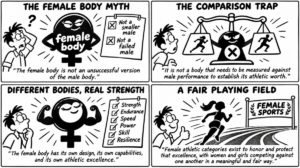
There is a familiar pattern in how society responds to men and women. When women and girls are excluded, overlooked, or denied opportunities, they are often encouraged to become more resilient, work harder, adapt, or accept the situation.
But when men and boys encounter rejection, lose an advantage, or discover that something is not available to them, the conversation can change. Suddenly, people want to know who failed them, what institution needs reforming, and what women and girls might be expected to sacrifice to make things better.
Sometimes there really is discrimination against males, and it deserves a remedy. But disappointment alone is not proof of discrimination. Nor should women’s boundaries automatically become the suspected cause of men’s difficulties.
Here are twelve places where that distinction deserves closer attention.
1. Dating: When a Woman’s No Becomes a Man’s Injustice
A woman declines a date, ends a relationship, or chooses not to marry. Instead of accepting her decision, some people begin examining whether her standards are “too high,” her expectations “unrealistic,” or her independence “selfish.”
The overlooked harm: Women can be pressured to provide romantic access, emotional labor, or explanations they do not owe. A man’s loneliness deserves compassion. It does not give him a claim on a woman’s affection.
2. Marriage: When Unmarried Men Become Women’s Responsibility
Discussions about declining marriage rates sometimes turn into lectures about what women need to change. Women are told to lower their expectations, become more agreeable, or reconsider the independence they have worked to achieve.
But please notice that if the relationship becomes dangerous or harmful, it becomes so much quieter. A convention of crickets.
The overlooked harm: Marriage becomes something women are expected to provide for social stability rather than a relationship they freely choose. Men and women can both want marriage, but neither is entitled to another person’s consent.
3. Sports: When Female Athletic Boundaries Become an Exclusion Crisis
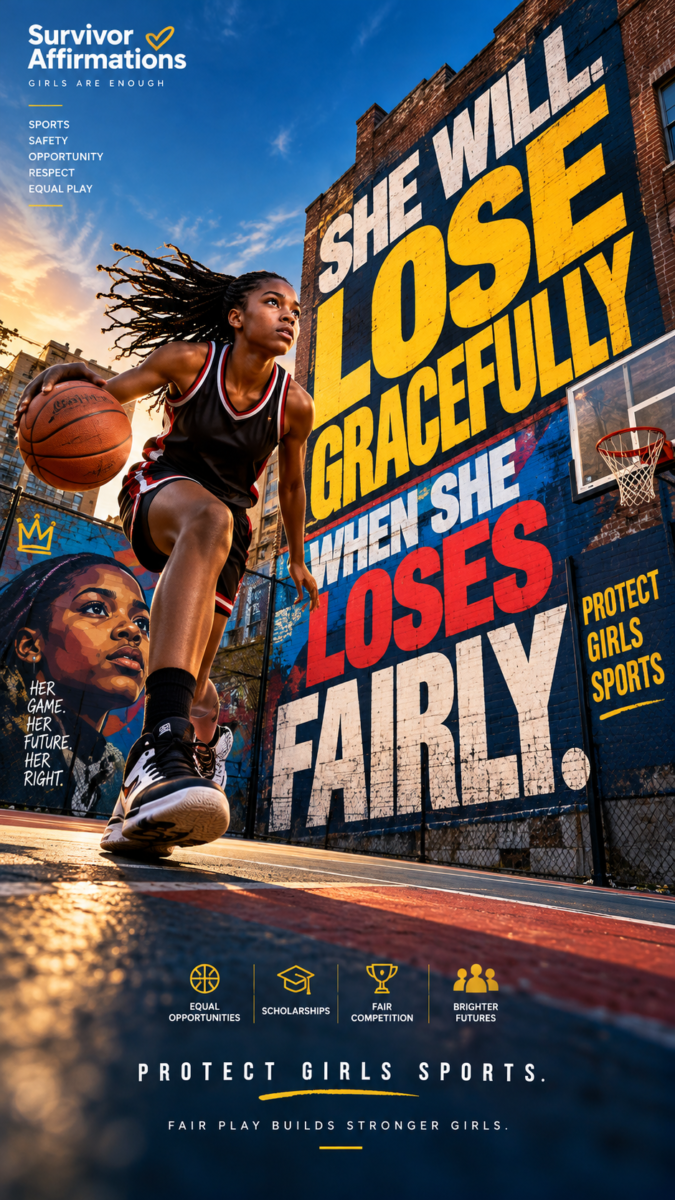
Female sports exist so female athletes can compete against one another within a meaningful athletic classification. Yet debates about eligibility can shift attention away from female athletes and toward the disappointment of males who cannot enter that category. They may be out here using indecipherable language to cover up the angry sentiments behind girls and women achieving and succeeding, but some of us see it.
The overlooked harm: Girls’ competitive opportunities, records, team places, and confidence in the rules can become secondary considerations.
The female body is not an unsuccessful version of the male body. It does not need to reproduce male athletic performance to establish its worth. Our bodies are unique miracles on their own.
4. Education: When Boys’ Struggles Become Evidence That Schools Are Failing Them
When boys fall behind in reading, graduation, or college enrollment, those problems deserve serious investigation. But discussions sometimes move quickly toward the assumption that education has become too accommodating to girls.
The overlooked harm: Girls’ academic success can be treated as suspicious, while girls who are struggling, particularly those facing poverty, racism, disability, or violence, receive less attention.
Boys need effective education. Girls do not need to become less successful for boys to thrive.
5. Employment: When Women Earning Opportunities Is Described as Men Losing Their Place
As women enter professions, earn promotions, and compete for leadership, their advancement can be described as something taken away from men. Look at what happened to Black women in federal positions who had worked twice as hard to get what they got.
The overlooked harm: Women’s qualifications become less visible. Their achievements are treated as social disruption rather than the result of preparation, skill, and work.
A fair hiring process does not guarantee that every male applicant will be selected. It guarantees that applicants receive fair consideration.
6. Leadership: When Men Not Being Chosen Becomes a Question About Women’s Competence
A woman becomes the supervisor, director, principal, or chief executive. Some people immediately question whether she was chosen for reasons other than merit, particularly when diversity initiatives are involved. Especially when she is a Black woman.
The overlooked harm: Women may be required to prove their competence repeatedly while their male colleagues receive the ordinary presumption that they earned their positions. Pull out your receipts America.
A selection process can be scrutinized fairly. A woman’s success is not, by itself, evidence that a man was wronged.
7. Women’s Organizations: When a Female-Focused Space Is Called Unfair
Women establish professional networks, advocacy groups, support programs, and educational gatherings to address experiences that have historically received insufficient attention.
Sometimes the first question is why men are not included. He isn’t necessary or required for a woman’s meeting. Let me say this.
One of the lessons I carried into my work as a court advocate supporting victims of violence was to remember that the women I met knew their own lives in ways I never could. I often reminded them, “You are the expert in your situation.” My role was to listen, offer information, and help where I could. I believe that approach helped women from many different backgrounds feel comfortable talking with me. I wasn’t there to take over their decisions. I was there to support them as they made their own.
For some, it was the first time that anyone ever expressed that. But it was true. Sometimes we treat female victims of crime as being “uninformed” and lesser than others. That’s the lie. Being a victim doesn’t equal lacking knowledge.
So, if you aren’t there in a gathering of women speaking on their unique experiences in life about being a female human being, then….
None of us should be holding up the progress of healing and growth. All of us have our own growing to tend to.
The overlooked harm: Women lose the ability to organize around their own needs without being required to justify why every gathering is not open to everyone. Let women come together and solve social issues.
The legitimacy of a focused organization depends on its purpose, conduct, and applicable law, not simply whether someone outside its intended membership feels disappointed.
8. Safety and Privacy: When Women’s Boundaries Become an Insult to Men
Women request female-only accommodations in intimate settings or establish personal safety boundaries. The conversation can quickly become about whether those boundaries unfairly suggest that men are dangerous. And some people don’t care about male violence against others, they just don’t want you to discuss it or deal with it meaningfully.
The overlooked harm: Women’s privacy, dignity, and experiences of male violence can be pushed aside while they are asked to reassure men about their character.
A woman does not have to accuse every man of wrongdoing to have a legitimate interest in privacy.
9. Sexual Rejection: When Men’s Frustration Receives More Attention Than Women’s Consent
A woman refuses sex, withdraws consent, or decides she no longer wants a sexual relationship. Her decision may be met with accusations of selfishness, manipulation, bigotry, hate, or unfairness. “But what if a man says he won’t date a Black woman?“
I’m so cool with that. Sometimes I trip on how happy I be.
The overlooked harm: Her bodily autonomy becomes something she is expected to defend against another person’s disappointment.
Sexual frustration is a feeling. Consent is a requirement. One does not cancel the other.
10. Divorce: When a Woman Leaving Is Treated as an Injury She Inflicted
A woman ends an unhappy marriage. The public conversation may focus on the husband’s humiliation, loneliness, financial loss, or damaged reputation.
Those consequences can be real. Divorce can be painful and unfairly handled for either spouse.
The overlooked harm: The reasons a woman left, including years of unequal responsibilities, mistreatment, or unmet needs, can disappear from the story. She becomes responsible not only for her decision but for making sure he does not suffer because of it.
A fair divorce process matters. So does a woman’s freedom to leave.
11. Public Recognition: When Women’s Achievements Are Treated as Taking Something From Men
A scholarship, award, historical exhibit, or celebration recognizes women’s accomplishments. Someone asks why men are not receiving equal attention at that particular moment.
The overlooked harm: Women’s achievements become difficult to celebrate without first reassuring men that they are still important.
Recognition is not always a zero-sum contest. A celebration of women does not automatically diminish men.
12. Accountability: When a Man’s Lost Opportunities Overshadow the Harm He Caused
A man faces professional, educational, or social consequences after substantiated misconduct. Attention turns to his “ruined career, lost income, damaged reputation, or uncertain future.”
Due process and proportional consequences are essential. Accusations are not findings, and people deserve fair procedures.
The overlooked harm: When misconduct has been established, the woman or girl harmed can become almost invisible. Her lost opportunities, safety, education, employment, and peace receive less attention than his future.
The consequences of wrongdoing should be evaluated fairly, without treating accountability itself as an injustice.
The Question We Keep Forgetting to Ask
There is nothing wrong with caring about boys and men. Their education, health, employment, relationships, and well-being deserve serious attention.
But care should not require women and girls to surrender their own opportunities, choices, or boundaries.
When a man experiences disappointment, we can ask whether he was treated fairly. We can investigate discrimination where evidence supports it. We can look for ways to help him succeed.
What we should not do is automatically assume that a woman somewhere has received too much freedom, too much recognition, too much protection, or too much opportunity.
Disappointment is not automatically injustice. Inclusion is not automatically fairness. And exclusion is not automatically cruelty.
The purpose of a boundary matters. The rights and interests of the people it protects matter. So do the consequences of removing it.
Before asking what women and girls must give up to make a male feel included, perhaps we should ask what they stand to lose.
Because fairness cannot mean that women are allowed to succeed only until a man is disappointed.
And a society that takes equality seriously must be willing to examine male disadvantage without treating female independence as the problem.
A final question for readers: When was the last time you heard a man’s disappointment discussed as a public injustice while a woman’s loss was treated as something she simply needed to accept?
Not Everyone Who Speaks the Language of Protection is Protecting the Same People – WE Survive Abuse
What Exactly Is She Supposed to Say Yes To? The Missing Offer in Modern Dating. – WE Survive Abuse
“Interrogate Your Choices” Isn’t Advice. It’s a Leash. – WE Survive Abuse
Are We Comfortable With Women’s Freedom Only When Women Say Yes? – WE Survive Abuse