We talk about domestic and sexual violence with so much more ease now-not enough but we are not who we used to be- it is easy to forget the road that
 We talk about domestic and sexual violence with so much more ease now-not enough but we are not who we used to be- it is easy to forget the road that has been traveled. We still have a long way to go, but the terrain used to be a lot rougher. Back in the 1990s, talking about domestic and sexual violence in public was still new. People would tell us that it isn’t a “big deal.” They would say that there are “bigger issues.” Women being battered would turn to friends, family, faith spaces, lawmakers, and even therapists and be told that the most important thing was to “preserve the marriage.” Women and children continued to die.
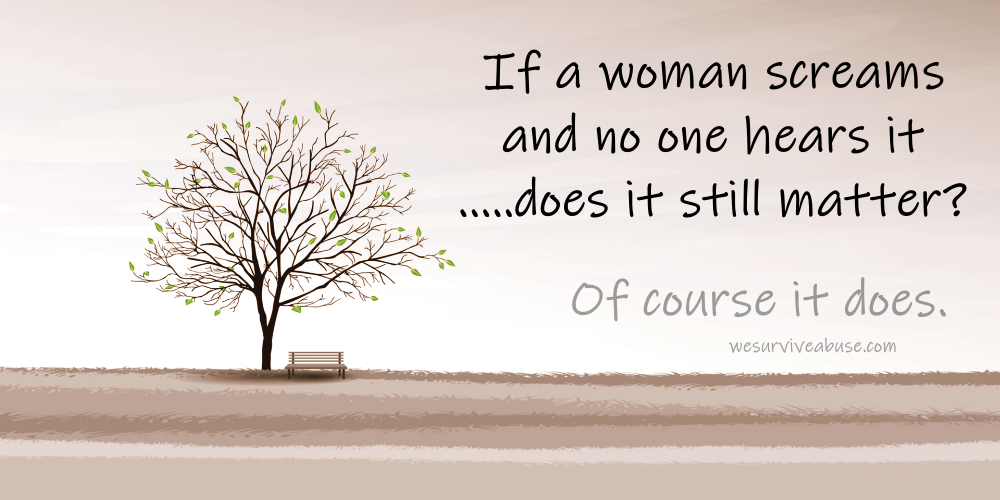
When people don’t want to listen to what you are saying, often they will say that it “doesn’t happen enough to matter.” There was a sign that we kept posted in one of the resource centers that I worked in. It was the first in that area. It was a huge area and needed that center generations before I ever came along. (I was the third person hired.) We kept this sign to inspire us to keep going even as we were being told that the issue of domestic violence “didn’t matter” and “wasn’t that big of a deal.” Because remember, we were meeting the women who were suffering under that logic. The women with broken bones, footprints on their bodies, bruises, and eyes that needed to be reattached from a blown socket. We were the ones receiving those middle-of-the-night pages from women locked out in the cold, naked by their partners because they “disobeyed.”
When we got a new governor, and he promised “lower taxes,” we were one of the much-needed social causes that he skimmed from to try to make it appear as if he were really lowering taxes. We were already straining. (Before, he was elected, the teacher’s union did the math and told everybody that it wasn’t possible but, hey, who listens to teachers right?)
You’re not going to be able to go back into history’s vast vault and find a time when women told men that something mattered and the men (power) just responded, “Oh, okay, you are right. Let’s get on that and make sure that you have that.” That’s exactly WHY women’s rights are so important. They were fought over generation after generation before necessary change took place.
Women’s rights matter. They will tell you what they told us, back when things were more affordable…. What matters is the economy, jobs, and transportation. We know. Women’s rights have always been the pathway to those things for many women and families who depend on their health, wellness, and access to equal opportunities. Women’s rights matter.
Their intuition. Women are often told they’re “overthinking,” “too emotional,” or “imagining things.” Yet intuition is frequently pattern recognition built from lived experience. Dismissing it can make people ignore warning signs about relationships, workplaces, or personal safety.
Their boundaries. Saying “no” is often framed as rude, selfish, or difficult. In reality, healthy boundaries protect dignity, time, energy, and well-being.
Their anger. Women’s anger is commonly labeled irrational or unattractive. But anger can be an important signal that something is unjust, exploitative, or harmful. The question isn’t whether women should feel anger—it’s what the anger is revealing.

Their ambitions. Many women have been encouraged to dream smaller to avoid intimidating others or disrupting expectations. Their aspirations matter, whether in education, leadership, business, art, science, or public life.
Their unpaid labor. Housework, caregiving, emotional support, planning birthdays, remembering appointments, and managing family dynamics are often treated as invisible. These forms of labor keep families and communities functioning.
Their financial independence. Women have long been encouraged to rely on someone else for economic security. Having one’s own income, savings, credit, and financial knowledge creates choices and reduces vulnerability.
Their safety concerns. Women are frequently told they’re being paranoid or overly cautious. Yet concerns about harassment, stalking, coercion, or violence deserve to be taken seriously, not minimized.
Their health symptoms. Women’s pain and medical concerns have historically been dismissed or underestimated. Taking symptoms seriously can lead to earlier diagnoses and better outcomes.
Their voices. Women are often encouraged to stay quiet to keep the peace. Speaking up in meetings, classrooms, communities, and families can challenge harmful norms and bring overlooked perspectives into the conversation.
Their friendships with other women. Female friendships are sometimes trivialized as gossip or secondary to romantic relationships. In reality, these relationships often provide emotional support, practical help, mentorship, and resilience across a lifetime.
Their time. Women’s time is frequently treated as endlessly available for caregiving, volunteering, emotional support, and accommodating others. Their time is as valuable as anyone else’s and worthy of protection.
Their stories. Women have often been told that what happened to them is too small, too personal, or too inconvenient to matter. Yet personal stories can expose larger patterns, preserve history, and help others feel less alone.
At the heart of these messages is a recurring pattern: when women are taught that their perceptions, labor, needs, or voices don’t matter, they become easier to overlook or exploit. Reclaiming these things isn’t about superiority—it’s about recognizing that every person’s dignity, agency, and humanity deserve to be taken seriously.
All human beings matter. All human rights matter. What we are saying is that women’s rights have been fought for and cultivated for women and girls. Not for others who have decided that they want rights for men AND rights for women.
Expect some people to say that the issue of women’s rights doesn’t matter and only impacts a few people. Expect people to ask you over and over, “How many are we talking about?” Expect the people around them to applaud, agree, and platform that person like what they said was new, revolutionary, and insightful philosophy.
All you have to do is know one truth that they have yet to learn, if they ever choose to. One impacted woman. Or, one impacted girl matters.
Women’s rights matter for women and girls.
12 Ways That We Rob Women—Then Judge Their Survival – WE Survive Abuse
Maleness Is Portable Power: 20 Reasons Women Are Still Asked to Move Over – WE Survive Abuse
10 Ways Women Are Coerced in Daily Life—And Why It’s a Problem – WE Survive Abuse