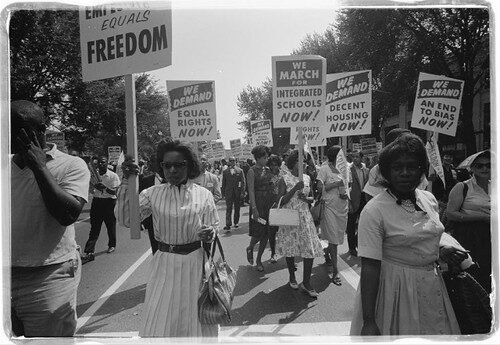
Victimized vs. Victimization Victimization describes an experience, act, process, or condition in which someone is harmed, exploited, abused, targete
Victimized vs. Victimization
Victimization describes an experience, act, process, or condition in which someone is harmed, exploited, abused, targeted, deprived of rights, or subjected to wrongdoing.
Victimization tells us what happened.
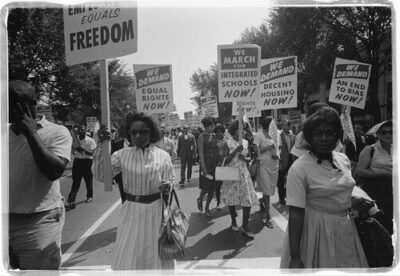
Civil Rights Protesters, Washington DC
Victimized describes what was done to a person or group. Someone can be victimized by another person, an institution, a government, a discriminatory system, or a criminal act.
Victimized tells us what someone was subjected to.
Neither word tells us everything about who the person is.
Survivor describes a person in relationship to what they have endured and continued beyond. Survival does not necessarily mean someone escaped unharmed, prevailed in court, received justice, healed completely, or emerged stronger. Sometimes survival simply means: I am still here, and what happened to me does not get to become my entire identity. AND I absolutely reserve the right to speak about wrongdoing.
There is a strange thing that happens when people survive injustice, violence, abuse, and harm. Terror. Eventually, somebody becomes more uncomfortable with how long the harmed are talking about it than with how long the harm lasted.
In error, Black people are sometimes described as embracing “victimhood” when we speak plainly about slavery, racial terror, Black Codes, convict leasing, Jim Crow, stolen land, redlining, medical experimentation, segregation, discriminatory lending, government surveillance, mass incarceration, destroyed communities and other documented forms of racial injustice.
But naming victimization is not the same thing as surrendering to it.
Victimization describes what was done.
A person is victimized when someone harms, exploits, violates, deceives, terrorizes, discriminates against, steals from, abuses or otherwise wrongs them. A community can be victimized too. So can generations of people when laws, institutions and systems repeatedly produce or enforce the harm.
Victimhood describes the condition of having been a victim of wrongdoing.
Neither word requires shame. Neither word means helpless. Neither word cancels courage, resistance, intelligence, joy, achievement, dignity or survival. And neither word creates an expiration date on justice.
A person who was robbed remains entitled to say that she was robbed even if she rebuilt everything that was taken from her. A family whose land was unlawfully taken does not lose its claim to the truth because several generations have passed. A Survivor does not become less resilient because she wants accountability. A community does not have to stop documenting an injustice simply because other people have grown tired of hearing about it.
There is a dangerous little trick hidden inside some conversations about “victim mentality.”
The original question is:
What happened, who did it, and what should be done about it?
Then suddenly the conversation becomes:
Why are you still talking about what happened?
The second question is often a way of escaping the first.
Black Americans have every right to investigate what happened to our ancestors, preserve their names, identify the institutions involved, trace stolen property, calculate economic losses, correct false histories, pursue legal remedies where they exist, demand accurate education, seek restitution and keep unfinished questions before the public.
Survival does not cancel the debt.
In fact, survival is often the reason the record exists at all.
People survived to testify. They saved letters. They kept deeds. They remembered names. They established newspapers. They photographed destruction. They challenged laws. They filed lawsuits. They told their children what happened when official histories preferred silence.
That is not an unhealthy attachment to victimhood. That is recordkeeping.
There is also no contradiction between the words victim and Survivor.
A victim names the relationship between a person and a wrongful act. A Survivor tells us that the person continued beyond that act. Depending upon the circumstances, someone may use either word, both words or neither. The language belongs first to the people whose lives were touched by the harm.
What we should resist is not the word victim.
We should resist the idea that being victimized tells us everything there is to know about a person or a people.
Black history contains profound victimization because profound wrongs occurred. It also contains resistance, family, faith, invention, litigation, scholarship, organizing, migration, business, music, political thought, military service, institution-building, rebellion, love, humor and ordinary people making lives under extraordinary pressure.
We do not honor that history by removing the victimization.
We honor it by telling the whole story.
So when this collection examines Black Codes, lynching, redlining, destroyed Black communities, medical experimentation, COINTELPRO, housing discrimination or any other injustice, we will not begin from embarrassment about acknowledging victims.
We will ask what happened.
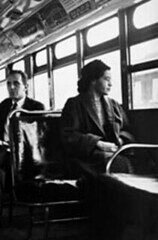
Rosa Parks Civil Rights and Sexual Assault Advocate
We will ask who experienced it.
We will ask who benefited.
We will ask who resisted.
We will ask what was lost.
We will ask what was rebuilt.
We will ask what was repaired.
And where something remains unresolved, we will not pretend that the passing of time resolved it.
Victims have every right to keep righting wrongs.
Sometimes that work belongs to the people who experienced the original harm. Sometimes their children inherit unanswered questions. Sometimes grandchildren find a deed, court record, newspaper clipping or family story and realize that something described as unfortunate was actually deliberate.
They are allowed to pick up the unfinished work.
There is no statute of limitations on telling the truth about history.
Survival should never be used as evidence that the original harm no longer deserves an accounting.
We survived.
Now we get to tell what happened.
**Please keep in mind that this is NOT a complete detailed list.
1. Slavery, Emancipation & Reconstruction
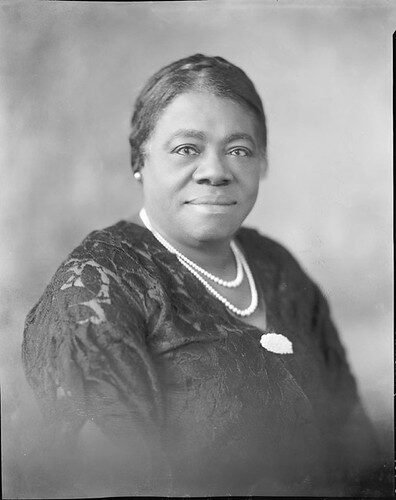
National Council of Negro Women Mary McLeod Bethune: 1930 ca
- Transatlantic slave trade
- The Middle Passage
- American chattel slavery
- Sexual violence and reproductive exploitation of enslaved Black women
- Slave patrols
- Resistance, escape, rebellion and maroon communities
- Free Black communities before emancipation
- Dred Scott v. Sandford
- The Civil War and Black military service
- Emancipation
- Reconstruction
- Black political participation during Reconstruction
- Freedmen’s schools and Black education
- Black Codes
- Convict leasing
- The rise of the Ku Klux Klan
- Reconstruction-era racial terrorism
- Disfranchisement and grandfather clauses
2. Land, Wealth & Economic Exclusion
- The Homestead Act and racial disparities in access to land
- Black landownership after emancipation
- Black farmer land loss
- Heirs’ property and Black land loss
- Discrimination against Black farmers in federal agricultural programs
- Racial discrimination in banking and lending
- Redlining
- FHA mortgage discrimination
- Racially restrictive housing covenants
- Shelley v. Kraemer
- Real-estate steering
- Blockbusting
- Housing discrimination
- The Fair Housing Act of 1968
- Discriminatory implementation of GI Bill benefits
- Urban renewal and displacement of Black neighborhoods
- Eminent domain and Black community displacement
- Interstate highway construction through Black neighborhoods
- The Federal-Aid Highway Act of 1956 and urban displacement
- White flight and suburbanization
- Gentrification and displacement
- Property appraisal discrimination and the racial wealth gap
3. Racial Terror & Destruction of Black Communities
- Lynching in the United States
- Spectacle lynching
- Sexual violence and mutilation associated with racial terror
- Destruction and expulsion of Black communities
- Tulsa Race Massacre
- Rosewood Massacre
- Wilmington massacre and coup of 1898
- Elaine Massacre
- Atlanta Race Massacre of 1906
- East St. Louis massacre of 1917
- Red Summer of 1919
- Destruction and seizure of Black-owned property during racial violence
- Sundown towns
- Church bombings and attacks on Black churches
- The 16th Street Baptist Church bombing
- Emmett Till
- Racial terror directed at Black civil-rights workers
4. Segregation, Voting & Civil Rights
- Jim Crow segregation
- Poll taxes
- Literacy tests
- Grandfather clauses
- White primaries
- Smith v. Allwright
- School segregation
- Kenneth and Mamie Clark’s research on segregation
- Brown v. Board of Education
- Resistance to school integration
- Boston school desegregation and the anti-busing violence of the 1970s
- Heart of Atlanta Motel v. United States
- Civil Rights Act of 1964
- Voting Rights Act of 1965
- Fair Housing Act of 1968
- Racial gerrymandering and redistricting
- The Southern Strategy
5. Medicine, Science & Bodily Autonomy
- Medical experimentation on enslaved Black people
- Gynecological experimentation on enslaved Black women

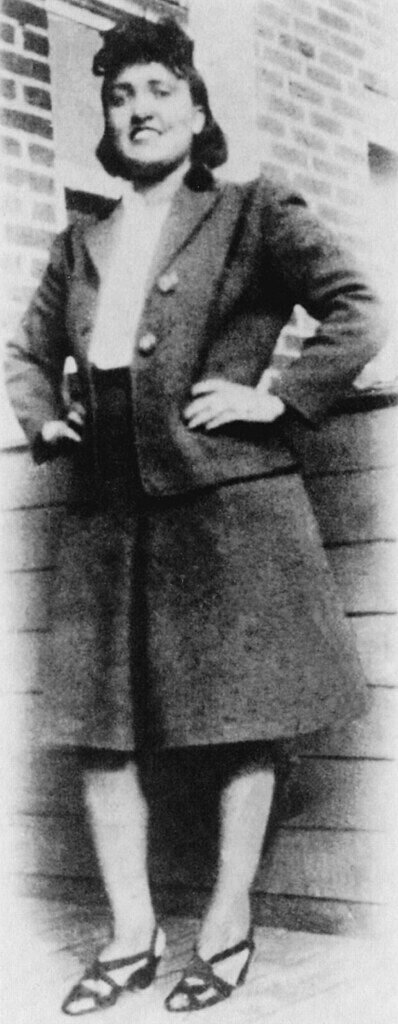
Henrietta Lacks
- J. Marion Sims and experimentation on enslaved women
- Tuskegee syphilis study
- Henrietta Lacks and the HeLa cell line
- Holmesburg Prison experiments
- Medical experimentation on incarcerated people
- Eugenics in the United States
- Compulsory sterilization
- Sterilization abuse involving Black women
- Reproductive coercion and population-control policies
- History of Planned Parenthood and debates surrounding race, eugenics and reproductive policy
- Racial disparities in medical treatment
- Race correction/race norming in medicine and testing
- Environmental racism and public health
- Flint water crisis
6. Policing, Prisons & Criminal Justice
- Development of slave patrols
- History of American policing and race
- Racialized policing after Reconstruction
- Convict leasing
- Chain gangs
- Prison labor
- Racial disparities in arrests and sentencing
- The War on Drugs
- Anti-Drug Abuse Act of 1986
- Crack versus powder cocaine sentencing disparities
- Mandatory minimum sentencing
- School-to-prison pipeline/ Abuse-to-prison pipeline
- Mass incarceration
- Violent encounters between police and Black civilians
- Police accountability and qualified immunity
- Violent Crime Control and Law Enforcement Act of 1994
7. Government Surveillance & Political Repression
- FBI surveillance of Black political organizations
- COINTELPRO
- Surveillance of Martin Luther King Jr.
- Government targeting of Black nationalist organizations
- Black Panther Party surveillance and disruption
- Fred Hampton and the 1969 Chicago police raid
- Surveillance of civil-rights organizations
- Political infiltration and informants
- Government responses to Black liberation movements
8. Drugs, Policy & the Crack Era
- Origins and spread of crack cocaine
- Crack-era media coverage
- Racialized portrayals of crack addiction
- “Crack baby” moral panic and subsequent scientific reassessment
- Anti-Drug Abuse Act of 1986
- Federal sentencing disparities
- War on Drugs enforcement disparities
- Iran-Contra affair
- Contra-linked drug-trafficking allegations
- Gary Webb’s Dark Alliance reporting
- CIA Inspector General investigations concerning Contra-related trafficking allegations

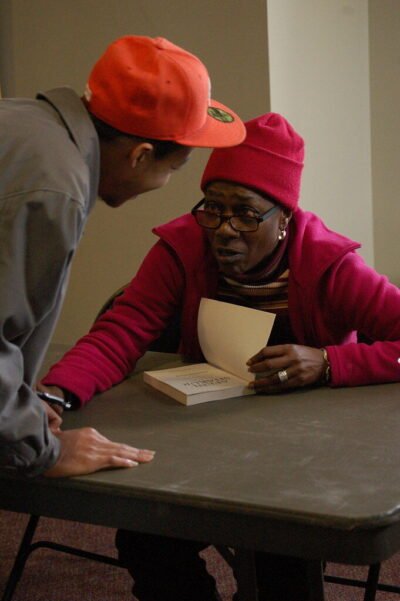
Afeni Shakur-Davis
- Long-term effects of crack-era criminal policy on Black communities
9. Education, Media & Cultural Representation
- Segregated education
- Unequal school funding
- School tracking and racial disparities
- Disciplinary disparities in schools
- School-to-prison pipeline
- Hollywood stereotypes of Black Americans
- Minstrelsy and racial caricature
- Media portrayals of Black criminality
- Racialized reporting of crime
- Eurocentric beauty standards
- Colorism
- Erasure and distortion of African history
- Representation of ancient African civilizations, including Kemet/Egypt
- Appropriation, commercialization and misattribution of Black cultural innovations
- Black inventors and disputes concerning recognition and attribution
Some of the Black Communities that Were Attacked, Destroyed, or Expelled
Dozens of Black American communities were massacred, attacked, burned, dispossessed, or violently expelled, while hundreds and eventually thousands of other communities practiced deliberate racial exclusion.
- Colfax, Louisiana — 1873 — Colfax Massacre; more than 100 Black people were killed according to the historical compilation, and nearby Pollock’s small Black population subsequently left.
- Celina, Tennessee — 1878 — Black residents left after months of racial violence.

- Comanche County, Texas — 1886 — Black residents expelled.
- Paragould, Arkansas — 1888–1908 — repeated racial violence contributed to most of roughly 150 Black residents leaving.
- Lexington, Oklahoma — 1892 — Black residents expelled.
- Blackwell, Oklahoma — 1893 — Black residents expelled; the community became a sundown town.
- Monett, Missouri — 1894 — Black residents expelled following a lynching.
- Linton, Indiana — 1896 — hundreds of Black workers were expelled; exclusion eventually extended throughout Greene County.
- Elwood, Indiana — 1897 — documented racial expulsion.
- Wilmington, North Carolina — 1898 — massacre and white-supremacist coup against an elected biracial government; thousands of Black residents subsequently left the city.
- Pana, Illinois — 1899 — racial/labor violence killed Black miners and was followed by expulsion of the Black population.
- Carterville, Illinois — 1899 — five Black miners were killed; surviving Black miners left afterward.
- Mena, Arkansas — 1901 — most Black residents left following the lynching of Peter Berryman.
- Pierce City, Missouri — 1901 — roughly 300 Black residents were expelled following lynchings.
- Decatur, Indiana — 1902 — a white mob forced Black residents from the city.
- Joplin, Missouri — 1903 — Black residents driven out following a lynching.
- Sour Lake, Texas — 1903 — a large white mob opened fire and drove Black residents from the community.
- Bonanza, Arkansas — 1904 — gunfire was used to terrorize Black residents; nearly all were expelled.
- Sheridan, Arkansas — 1904 — nearly all Black residents were expelled during this period; another forced displacement occurred decades later.
- Harrison, Arkansas — 1905 and 1909 — racial violence and intimidation drove Black residents from the community.
- Cotter, Arkansas — 1906 — documented Black expulsion.
- Birmingham/Marshall County, Kentucky — 1908 — Black residents were driven from Birmingham and much of the surrounding county.
- Anna, Illinois — 1909 — Black families expelled following a nearby lynching.
- Jonesboro, Illinois — 1909 — Black families likewise expelled.
- Hickory Ridge, Arkansas — 1910 — dynamite was thrown at Black homes during the expulsion of residents.
- Forsyth County, Georgia — 1912 — approximately 1,000 Black residents, representing nearly the entire Black population, were driven from the county through racial terror.
- East St. Louis, Illinois — 1917 — major massacre; estimates of Black deaths vary widely, and thousands were left homeless.
- Erwin, Tennessee — 1918 — after the murder and burning of a Black man, the remaining Black population was forced to witness the burning and ordered out of town.
- Corbin, Kentucky — 1919 — approximately 200 Black workers were forced from town.
- Washington, D.C. — 1919 — white mob attacks against Black residents during the Red Summer. The Library of Congress documents the 1919 period as involving racial attacks across numerous American cities.
- Chicago, Illinois — 1919 — major Red Summer racial violence against Black communities.
- Omaha, Nebraska — 1919 — major Red Summer racial violence, including the lynching of Will Brown.
- Knoxville, Tennessee — 1919 — major racial violence during the Red Summer period.
- Elaine, Arkansas — 1919 — one of the deadliest episodes of racial violence of the era; Black sharecroppers and residents were attacked after organizing around crop payments. The Library of Congress includes Elaine among its documented racial massacres.
- Ocoee, Florida — 1920 — Black residents were attacked after attempts to exercise voting rights; homes were burned and the Black community was effectively destroyed and expelled.
- Greenwood, Tulsa, Oklahoma — 1921 — the Greenwood district, commonly remembered as Black Wall Street, was attacked and destroyed; thousands were left homeless and death estimates remain disputed.
- Jay, Florida — 1922 — approximately 175 Black residents fled following racial violence and threats.
- Rosewood, Florida — 1923 — Black community attacked and burned; residents killed and Survivors forced into permanent exile.
- Blanford, Indiana — 1923 — Ku Klux Klan-led expulsion of Black residents.
- Manhattan Beach, California — 1920s — different mechanism: the city used eminent domain against property that included the Black-owned Bruce’s Beach resort. This belongs in the archive as dispossession, not massacre.
- Vienna, Illinois — 1954 — Black homes were burned and the Black population driven from the area.
- Sheridan, Arkansas — 1954 — Black families were pressured from the community after Brown v. Board, including threats involving Black employees’ homes.
The victimization is historical fact.
It is also the history of people who escaped, resisted, litigated, organized, revolted, migrated, educated children, created institutions, accumulated land, built businesses, founded churches and schools, fought in wars, wrote newspapers, changed laws, created political movements, preserved families and cultures, and survived attempts to prevent many of those things.
Stay Woke: When a Warning is Turned to a Punchline – WE Survive Abuse