Table of Contents
There is a larger conversation we cannot afford to keep avoiding.
Women who advocate for women’s rights and safety are frequently accused of being hateful, divisive, selfish, or unreasonable simply for asking questions that deserve answers.
A woman can ask whether a shelter has enough security, whether a school responded appropriately to a girl’s complaint, whether a prison protects female prisoners, or whether a policy has been evaluated for its impact on women. Instead of examining the substance of her concern, people may begin examining her character.
Is she kind enough? Is she inclusive enough? Why is she making people uncomfortable? Why can’t she just be quiet?
We should recognize how easily this shifts attention away from the original problem.
There is a difference between criticizing someone’s argument and creating an atmosphere in which women are afraid to make arguments at all.
We must also recognize that disagreement does not automatically amount to hatred. People can disagree with women’s advocates, including strongly, without threatening them. But disagreement never grants anyone permission to intimidate, stalk, harass, or harm another human being.
And calling a woman “hateful” is not evidence that she has done something hateful. That’s your personal opinion.
The public should expect people making accusations to support them with facts, just as we expect women raising safety concerns to explain their reasoning.
That is not asking for special treatment. That is asking for fairness.
The Threats Against Public Officials Are Not Imaginary
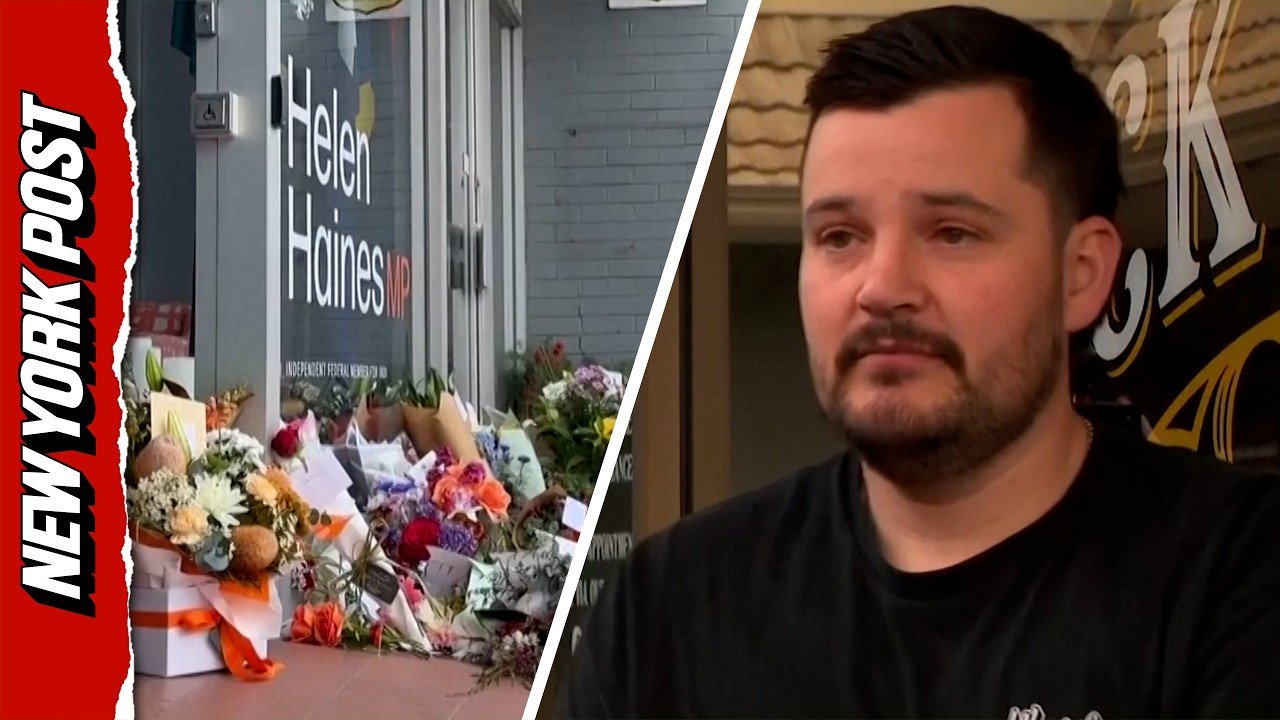
Following the attack on Helen Haines, Australian officials spoke about the increasingly hostile environment facing people in public office.
According to figures cited by the Australian government, reports of harassment and threatening behavior toward public officeholders increased from 951 to 1,067 between the two most recent reporting years.
Those figures do not establish what motivated the attack on Haines, nor do they tell us how many threats specifically targeted women. But they do show that concerns about intimidation are not simply a matter of public officials being overly sensitive to criticism.
Threats are a public safety concern.
And when women face intimidation, we must consider the additional history of threats that specifically exploit women’s vulnerability to sexual violence, domestic violence, and gender-based humiliation.
We know how quickly public conversations can become ugly when a woman refuses to surrender a position that others find inconvenient.
We should not wait for another woman to suffer serious harm before asking whether institutions are responding appropriately to threats and harassment.
That is the very mistake advocates like Helen Haines spent years challenging in other areas of women’s lives.
A Woman Does Not Have to Be Universally Liked to Deserve Protection
One detail about the public response to this attack deserves attention.
People across Australia’s political spectrum have described Haines as kind, respected, and decent. Her community clearly loves her. These tributes speak beautifully of the relationships she built throughout her career.
But there is a principle even more important than her reputation.
Helen Haines deserved to be safe whether people liked her or not.
She deserved to be safe whether someone agreed with every political position she held. She deserved to be safe if she made a controversial speech, challenged a powerful institution, or refused to soften an argument.
We cannot establish a standard in which only agreeable women qualify for sympathy.
That would leave women dependent on public approval for something that belongs to them as human beings.
This is especially important for Black women, whose anger, warnings, boundaries, and demands for accountability have so often been interpreted through stereotypes rather than examined on their merits.
A Black woman should not have to demonstrate endless patience before people take her concerns seriously. A young girl should not have to be perfectly behaved before adults protect her. A Survivor should not have to tell her story in a pleasing tone before someone investigates what happened.
And a woman defending women’s rights should not have to win a popularity contest to deserve safety.
Our dignity cannot depend on whether someone finds our voices convenient.
The Question Is Not Whether Women Can Handle Criticism
Of course women can handle criticism. Women have been responding to criticism, opposition, and outright hostility throughout the history of our struggles for education, voting rights, economic independence, racial justice, and protection from violence.
The issue is not whether women are strong enough to endure another insult.
The issue is why we continue treating women’s endurance as a substitute for other people’s responsibility.
When someone threatens a woman, the question should concern the person making the threat. When someone stalks or harasses a woman, the question should concern the behavior and the response to it.
And when a woman identifies a weakness in a safety policy, the first question should be whether she has identified a genuine weakness.
We should not spend more energy policing her tone than examining the danger she is describing.
This is one of the lessons we can draw from Helen Haines’s public work without pretending to know why she was attacked.
She repeatedly called attention to the distance between promises of protection and the protection women actually receive.
That distance deserves scrutiny everywhere.
Helen Haines Is Still Here. Her Story Is Still Being Written…..but this is some bull.
As I write this on October 22, 2026, Helen Haines remains in the hospital, surrounded by the concern and affection of people who want her to recover.
Her life has changed profoundly. Her family is facing an ordeal no family should have to endure. Her community is trying to make sense of something horrifying.
But her story did not begin with a vehicle outside her office.
It began long before that, in years of nursing, midwifery, community service, and public advocacy. It includes the women she helped, the families she served, and the parliamentary speeches in which she insisted that women’s lives deserved more than sympathetic words.
We should honor the whole woman.
We should remember that she challenged victim-blaming after domestic violence murders. We should remember that she called for practical support for women trying to escape dangerous homes. We should remember that she insisted women deserve healthcare that recognizes their needs and takes their experiences seriously.
And we should remember that the protection of women and girls is not an act of hostility toward anyone else.
It is a legitimate public responsibility.
The attack on Helen Haines is under investigation. We owe her the truth about what happened, including the motive if investigators can establish it. We should neither invent an explanation nor allow speculation to replace evidence.
But we do not have to wait for that investigation to affirm something fundamental.
Women have the right to speak. Women have the right to challenge institutions. Women have the right to advocate for women and girls, including when others disagree with them.
And women have the right to do all of those things without threats of violence.
We do not honor Helen Haines by remembering only what happened to her. We honor her by remembering what she stood for, the people she served, and the work she was doing long before the world learned of her injuries.
May she receive excellent care, lasting support, and every opportunity for recovery. May her family be surrounded by genuine compassion. And may the investigation bring the truth into the light.
Helen Haines spent years reminding powerful institutions that women deserved to be heard before tragedy struck.
We would do well to listen while she is still here.
Sources and further reading
- Victoria Police: Charges following the Wangaratta incident, October 20, 2026.
- ABC News: Helen Haines remains in critical condition, October 22, 2026.
- Helen Haines: We Must Support Women’s Security, March 2020.
- Helen Haines: Women Know Their Own Bodies, September 17, 2026.
- Australian Prime Minister: Official statement following the attack, October 19, 2026.
- The Guardian: Court appearance and community response, October 21, 2026.
- (229) Australian Barber Hailed as Hero After Subduing Attacker Who Struck Helen Haines With Car – YouTube