Why is one person’s discomfort treated as urgent while another person’s safety is treated as negotiable?
And beneath that question lives another one:
Why do women’s experiences have to be translated into someone else’s framework before people agree that what we are going through matters?
Women have been speaking for generations.
 And PMOS is a sharp example.
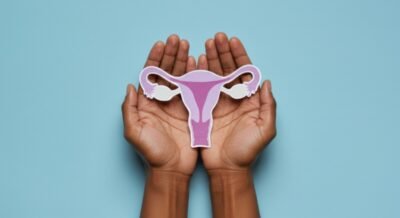
PCOS has now been renamed PMOS: Polyendocrine Metabolic Ovarian Syndrome. The change is meant to correct the old misleading focus on “cysts” and recognize the condition as a complex endocrine, metabolic, reproductive, dermatological, psychological, and cardiovascular condition affecting about 1 in 8 women globally. The renaming came after years of work involving experts and patients, and full transition into international guidelines is expected by 2028.
Before that name change, many women were told, directly or indirectly:
“It is just irregular periods.”
“It is just weight.”
“It is just acne.”
“It is just facial hair.”
“It only matters if you want a baby.”
That is not care. That is minimization with a stethoscope on.
And the hair issue is where the insult becomes especially clear. Excess facial and body hair is a known symptom of PCOS/PMOS, tied to high androgen levels, and it can carry real emotional, social, racial, cultural, and economic weight for women. WHO describes PCOS as involving higher androgen levels, irregular periods, abnormal ovulation, infertility, excess facial or body hair, and acne in women.
Studies and clinical literature also recognize that hirsutism can damage quality of life and is associated with stress, anxiety, depression, and social harm.
So when women with PMOS seek hair removal, that should not be brushed off as vanity.
It is not “trying to be like men.”
It is not “gender confusion.”
It is not frivolous beauty work.
Hair removal can be treated as medically meaningful in some “gender-affirming care” contexts, while women with a female endocrine disorder may still be left fighting to prove that their distress is real. Female suffering is often not treated as important enough on its own terms. So it gets squeezed into categories that already have money, language, institutional sympathy, legal momentum, academic attention, or media permission.
The truthful frame is this:
Female distress has often had to become renamed, reclassified, studied for decades, and translated into institutional language before people admit it was real. A female issue does not become serious only after it is translated into someone else’s framework.
That is why PMOS matters.
Not because a new acronym magically fixes care.
But because the old name helped hide the scope of the condition. It made a whole-body disorder sound like a little ovarian inconvenience. It helped some clinicians, insurers, families, and employers underestimate the condition. And for women already used to being told, “You’re overreacting,” the old language carried a familiar sting.
A woman’s suffering should not have to be renamed before it is believed.
Instead of asking women, plainly:
“What is happening in your body?”
“What is happening in your life?”
“What have doctors missed?”
“What does this cost you socially, financially, emotionally, sexually, spiritually?”
“What would dignity-preserving care look like?”
The system often asks a different question:
“How can we translate this into something funders, policymakers, academics, insurers, or trend-sensitive institutions already know how to care about?”
That is where the distortion starts.
Women’s issues become “palatable” only when they are renamed as something else.
Female safety becomes acceptable when it can be made less specific.
Female medical needs become acceptable when they can be made less female.
Female boundaries become acceptable when they can be discussed without naming who is most often endangered.
Female dignity becomes acceptable when it does not disturb the comfort of people who benefit from women staying quiet.
And that is not bridge-building.
That is erasure dressed up as sophistication.
Real bridge-building would not require women to disappear from the bridge.
Not forcing women’s realities into pre-approved categories.
Not sanding down female language until it becomes acceptable in rooms that have never listened to women well.
Not treating women’s sex-based needs as embarrassing, outdated, or inconvenient.
The missing word here may be translation capture.
That is when a group’s real needs are translated into another framework so thoroughly that the original people become secondary inside their own issue.
The pain gets renamed.
The funding gets redirected.
The experts get centered.
The affected people get quoted, studied, displayed, corrected, and moved to the margins.
And then somebody has the nerve to call it progress. Women should not have to smuggle female suffering into better-funded categories just to receive care, research, language, or compassion.
Women with PMOS were not suddenly more real this week than they were last week. Their pain was real when it was called PCOS. Their facial hair was real. Their irregular cycles were real. Their infertility grief was real. Their insulin resistance was real. Their exhaustion was real. Their shame in the mirror was real. Their doctor visits were real. Their bills were real. Their dismissed symptoms were real.
The name changed because the old language finally had to catch up with the women.
🧩 REARTICULATION: When the System Repackages Harm in New Clothes – WESurviveAbuse
Harm-Jacking: When Your Pain Becomes Someone Else’s Weapon – WESurviveAbuse