They tell women: “If it was bad enough, you would have left.”That sounds like truth. You don't have to be fooled, though. It isn’t.Leaving is
They tell women:
“If it was bad enough, you would have left.”
That sounds like truth. You don’t have to be fooled, though. It isn’t.
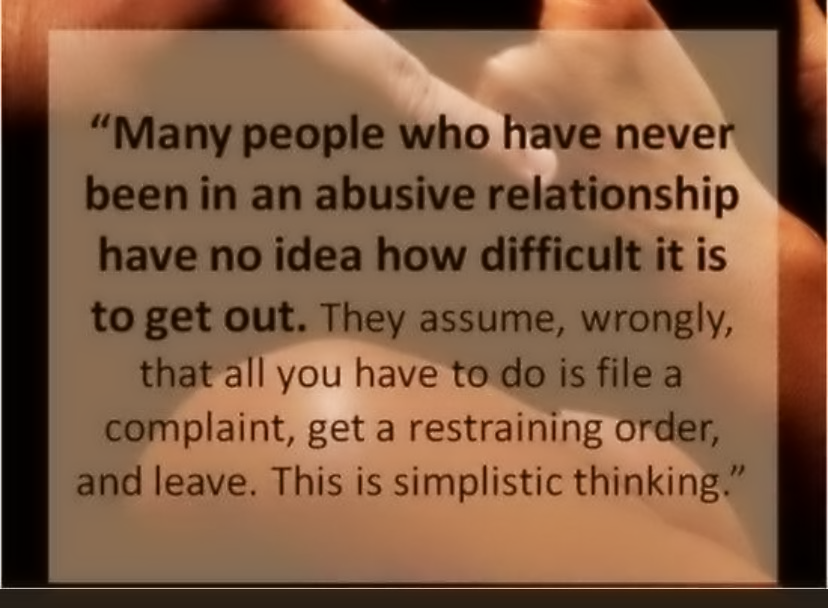
Leaving is not just effort. It is access.
Access to money that runs for a long time.
Access to housing that is safe and accommodates her and her children’s disabilities.
Access to safe people who are empathetic and willing to take action to keep her safe.
Access to reliable transportation for months, maybe even years.
Access to being believed. This one is hard.
Access to people willing to believe that “he” would do “this.”
Access to people willing to put their ego aside. It is hard to see someone that you thought you knew in a different light.
Access to people willing to wake up to your reality now, because in a violent relationship, you can hear the clock ticking.
Some women plan for months and still can’t get out safely.
Some leave and are tracked, stalked, pulled back, or punished.
Some are turned away from shelters. Some turn away from shelters because they can’t accommodate their families needs.
Some lose their children to the government in the process. Some lose their children to fellow lost peers.
Some have their own businesses to keep running. Some have to keep working.
Some are killed while trying to leave. Years after they left.
And still, the story gets twisted:
“You didn’t try hard enough.”
No.
What failed was not her will.
What failed was the net that should have caught her.
Systems that delay protection. Courts that minimize harm. Communities that look away from her pain. Leaders who keep barriers in place.
Leaving is not a test of character. It is a measure of what support exists—and what doesn’t.
So when a woman does not leave safely,
ask a different question:
What or who stood in her way?
Because until those questions are answered,
we are not talking about safety.
We are still talking about blame.
Turn the page.