updated from July 31 2016 Consensual sex and sexual violence are not the same. They are not close.They are not interchangeable.They do not belong
Consensual sex and sexual violence are not the same.
They are not close.
They are not interchangeable.
They do not belong in the same sentence without care, context, and understanding.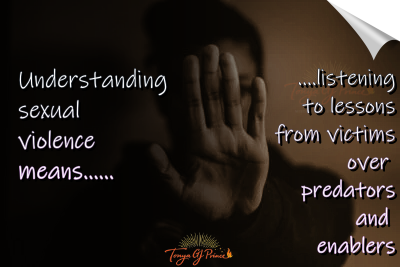
Sexual violence is not casual knowledge.
It requires study.
It requires experience.
It requires deep, careful listening to Survivors and those who have spent years doing this work.
And yet, headlines told a very different story.
“Girl, 15, had sex with 25 boys in high school bathroom”
“Parents stunned after girl has sex with as many as 2 dozen boys”
“15-year-old girl caught having sex with 25 ‘willing’ boys”
Chile… now how you sound?
That question carries weight.
It comes from elders who don’t play about truth.
Translation::
You are out of order.
You are loud and wrong.
You are speaking without alignment, without care, without understanding.
And that is exactly what happened here.
What We Know — And What Should Have Been Obvious
1. The blame was placed on a child.
Every headline centered the girl, but in a negative light that she did not deserve.
Her behavior.
Her body.
Her choices.
Meanwhile, 25 boys were present.
But somehow, the weight of shame landed on her alone.
That is not reporting.
That is conditioning.
It teaches the public exactly who to blame—and who to excuse.
2. The facts were not settled.
Writers moved fast.
Too fast.
There was no way to confirm that every interaction was consensual at the time those headlines were published. Investigations involving minors, especially that many minors, take time.
Yes, people speak during crisis.
And we should listen.
But real understanding often comes later—
The girl did not have sexual contact with 25 boys.
Many were spectators.
That alone should have stopped the presses.
3. Experts were missing where they were needed most.
This is where the harm deepens.
Sexual violence is not a guessing game.
It is not something you “figure out” mid-article.
Where were the experts?
Where were the professionals trained to recognize coercion, group dynamics, exploitation, and trafficking indicators?
Because what looked like a “story”…
What Was Missed Entirely
The girl was a victim of human trafficking.
Let that sit.
While headlines were being written
while clicks were being gathered
while narratives were being shaped
A trafficked child was being framed as a participant.
Not a victim.
Not someone in danger.
Not someone in need of protection.
She did not need help….right? Unworthy?
A participant.
That is not just inaccurate. That is harmful. That is inhumane.
And Now She Has to Live With That Story
A girl. A person. A human being. She still has to walk into school.
People still remember.
Not her truth—
but the version of her that was broadcast.
No name was printed.
But reputations don’t need names when communities can fill in the blanks.
We Have Seen This Before
We have already watched what happens when media gets sexual violence wrong.
The Rolling Stone UVA article controversy should have taught every newsroom a lesson:
Slow down.
Verify.
Consult experts.
Protect the vulnerable.
And yet…Here we are again.
What Needs to Change
(I could use soft words here like “avoid” but y’all haven’t heard us yet. So how about “stop”? Just stop.

Photo by Jose Aragones/Unsplash
Stop defaulting to narratives that blame girls.
Stop reporting before facts are verified.
Stop treating sexual violence like common knowledge.
Start consulting real experts—every time.
Start recognizing signs of exploitation, not sensationalizing them.
Because this is bigger than one story.
This is about how society understands harm.
Final Truth
Just because adults are capable of sex
does not mean they understand sexual violence.
And when you don’t understand it—
you mislabel it
you mishandle it
and you harm the very people who need protection the most.
If a headline makes a child look like the problem…
pause.
And ask yourself, like the elders would:
When you accuse a child of assault, how do you come across to yourself?
Nothing that we are learning in “files” today should surprise us. We have been treating children this way for too long now.
Blues singer Lead Belly put a warning in a song about this very thing. People mock it and laugh about it now. Does that mean we are getting worse or better?
We must challenge ourselves whenever we catch a glimpse of ourselves, as we are the ones accusing child victims of violence and abuse of being the driving force behind their own destruction. They aren’t usually moving that fast, so it is us who must slow down and look more closely.