There is a dangerous mistake societies make about women. They mistake endurance for endlessness.A woman survives something on Monday, gets up
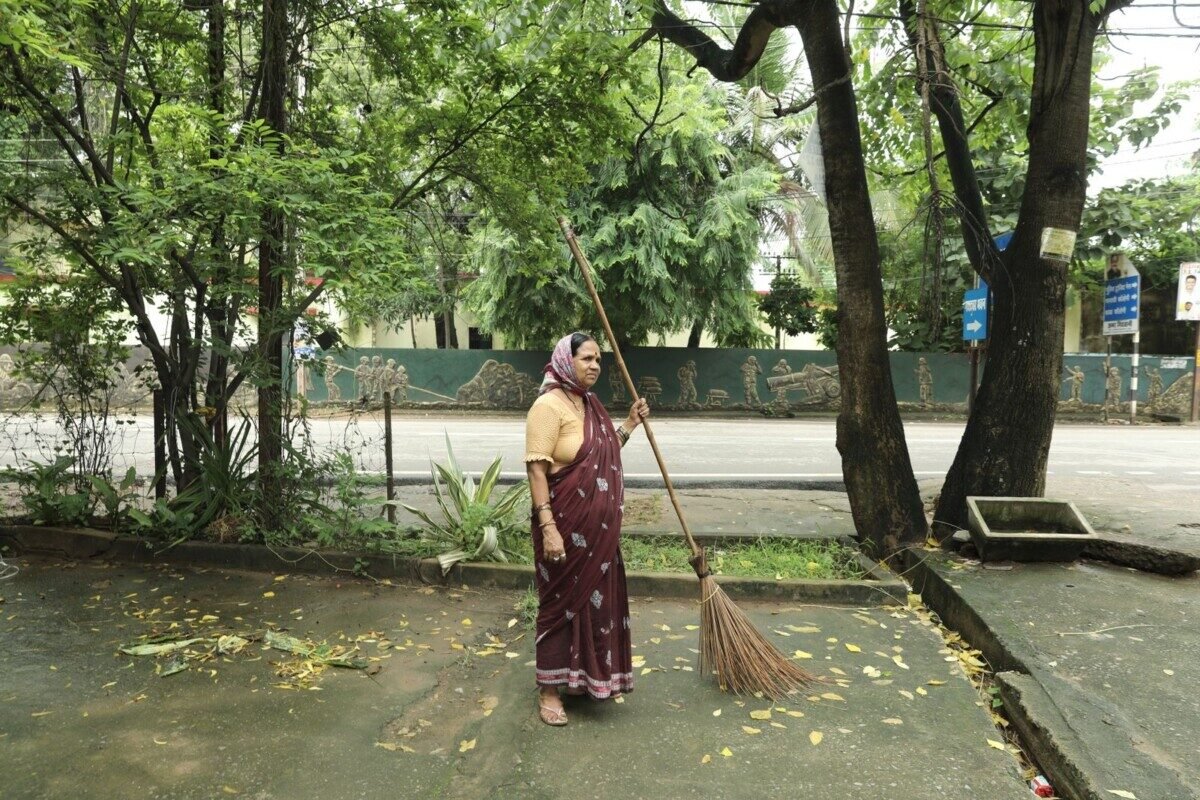
Photo by “Beyond India by Shubham Thakur”
There is a dangerous mistake societies make about women. They mistake endurance for endlessness.
A woman survives something on Monday, gets up on Tuesday, feeds somebody, goes to work, tends to children, laughs with a neighbor and keeps moving. From the outside, everything appears to have returned to normal. So people assume she has accepted what happened. Accepted her fate.
They do not understand that sometimes she is keeping count.
In Kasturba Nagar, a poor neighborhood in Nagpur, India, residents said they had been living in fear of Bharat Kalicharan, better known as Akku Yadav, for years. He faced numerous criminal cases involving serious offenses. Women accused him of rape, sexual harassment, threats and other violence. Residents said they complained to police repeatedly and believed the system had failed to protect them.
This was not the story of women who woke up angry one summer morning.
It was the story of a community reaching the end of a very long road.
Before the Courthouse
One of the women who became central to the story was Usha Narayane, a young woman studying hotel management.
According to later reporting based in part on a Commonwealth Human Rights Initiative report, Narayane encouraged a neighbor to report Yadav after he demanded money from her. Yadav allegedly responded by coming to Narayane’s home with other men and threatening her with rape and an acid attack.
But Narayane did not disappear quietly into fear. She and others began organizing.
A press conference was held. Then, on August 6, 2004, residents submitted a mass complaint to police bearing 96 signatures. They alleged that Yadav continued terrorizing their neighborhood despite an order barring him from the area.
People will always talk about the woman’s response—the after—without acknowledging the before.
Before people remember the weapons, they should remember the signatures.
Before the courtroom, there was paperwork.
Before fury, there were complaints.
Before people said the women had gone too far, the women had spent years saying that a man was going too far.
That is often the part of these stories history rushes past.
August 13, 2004
Yadav eventually came into police custody. On August 13, he was brought to the Nagpur court. And people from Kasturba Nagar came too.
Reports differ about the exact number. Some later accounts put the crowd entering the courthouse somewhere between 200 and 500 people. Contemporary reporting described a crowd composed mainly of women. Other investigations and later reporting complicate the popular story that hundreds of women alone carried out the killing.
So we should not turn history into legend simply because the legend is dramatic enough to tempt us.
What we can say is already extraordinary.
A large crowd from a poor community, with women prominently among them, overwhelmed the courthouse. Yadav was attacked with stones, sharp weapons and chili powder. He died there.
It was brutal. It was vigilantism. And understanding why it happened does not require pretending otherwise.
The question is this though. How a society allows terror to continue long enough that ordinary people stop believing its institutions will protect them.
There Is a Difference Between Peace and Exhausted Patience
Fed-up women are often born in rooms where everybody else keeps asking them for another ounce of patience.
Wait.
Be reasonable.
Give the authorities time.
Don’t make trouble.
Don’t embarrass anybody.
Don’t become angry.
Don’t become the problem.
Meanwhile, somebody else is permitted to be the problem over and over again.
That is what makes the story of Kasturba Nagar larger than one terrible afternoon.
The woman who thought, Nobody will believe me, discovers another woman saying, He did it to me too.
The woman who thought, Nothing can be done, meets a woman holding a petition.
Someone calls the press.
Someone finds a lawyer.
Someone gathers signatures.
Someone refuses to move.
That is the part of women’s collective power worth carrying forward.
Not the knife.
The Lesson Is Not “Women Should Become Violent”
We could make the courthouse killing into a triumphant revenge fantasy and stop there. But that would waste one of its most important lessons.
When institutions repeatedly fail people who are frightened, poor, marginalized, or easily ignored, desperation does not simply evaporate. People think they can live with that easily enough. What they aren’t ready for though is this. It accumulates.
Institutional failure has consequences too.
The women of Kasturba Nagar should never have needed extraordinary courage simply to make allegations of sexual violence matter. They should not have needed a neighborhood uprising to be heard. A functioning system should have interrupted the story long before August 13.
That is the tragedy underneath the spectacle.
Ten years later, in 2014, the remaining defendants prosecuted in connection with Yadav’s death were acquitted because the court found the evidence insufficient to establish their involvement beyond reasonable doubt. History therefore leaves us with something more complicated than a neat tale of heroines and villains.
It leaves us with a warning.
Never Confuse a Woman’s Patience With Permission
There is enormous power in the moment women stop experiencing something privately and begin naming it collectively.
That power does not have to look like Kasturba Nagar.
In fact, we should want it to look different.
It can look like women documenting what happened.
Comparing stories.
Building Survivor networks.
Calling journalists.
Demanding records.
Showing up at hearings.
Finding attorneys.
Building organizations.
Changing laws.
Teaching girls earlier.
Refusing to let another frightened woman stand alone at a police counter wondering whether anybody will believe her.
That is organized refusal.
And organized refusal can change the world without requiring women to destroy themselves in the process.
Perhaps that is what we should remember when we tell the story of the women of Kasturba Nagar.
Do not begin with the courtroom.
Begin years earlier, when women were frightened.
Then watch carefully.
They started talking.
They started recognizing one another.
They started organizing.
They started refusing.
By the time the world finally looked toward Kasturba Nagar, it saw an explosion.
But explosions have histories.
And sometimes what looks sudden from the outside is simply the day everybody finally notices that women have been saying enough for a very long time.