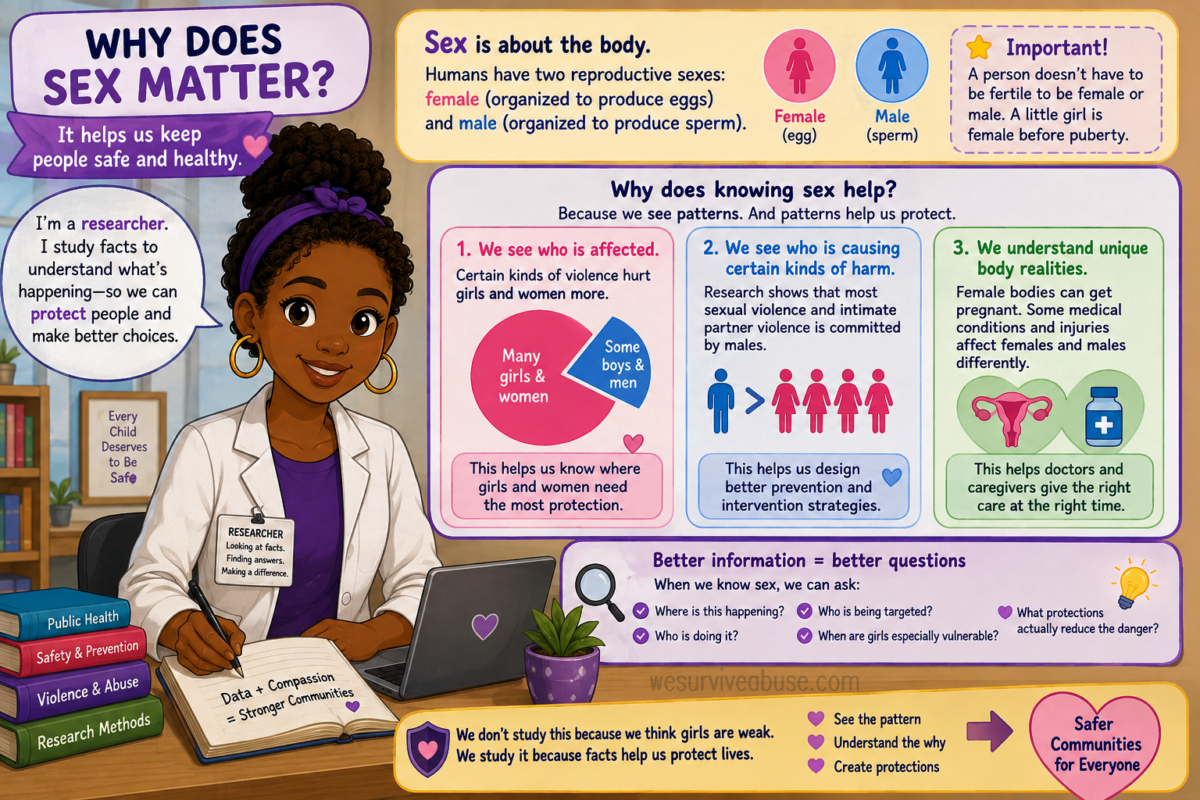
In the real world, on this planet we live on, the female-sexed body may have to navigate menstruation, pregnancy, childbirth, breastfeeding, sexual vu
In the real world, on this planet we live on, the female-sexed body may have to navigate menstruation, pregnancy, childbirth, breastfeeding, sexual vulnerability, intimate medical care, privately undressing, religious practice norms & traditions, imprisonment, refuge from male violence, and recovery from sexual trauma.
People call it “hate,” but Survivors of violence, abuse, and bullying are very much concerned with things like “gender stereotypes.”
‘Gender stereotypes may be the reason:
- For an abundance of expectations from oldest daughters and not sons no matter where they fall in the family
- A father/stepfather/boyfriend “helps” with the baby while the girls of the family raise the child from diapers to feeding.
- Playing sports with other boys makes boys “tough.”
- Some girls were treated as substitutes for their mother in the most horrible ways
- Some boys are bullied in the family and subjected to violence and abuse because they aren’t seen as “masculine.”
- Children grow up with the pain and trauma of seeing their mothers beaten for “not having dinner ready,” “cleaning the home as preferred,” “not keeping children quiet,” “speaking her own mind,” etc.
- Girls must be made clean, kept modest, remain “pure” and “respectable,” and be virgins, (FGM, stricter clothing restrictions)
- Girls who get their periods/menstruate are “dirty.” “Unclean.” or “Bad luck” (girls miss school because they are forbidden to attend during their periods; girls are banished to menstruation huts, menstrual exile, shame)
- The greatest and best contribution a woman (girls aren’t excluded) can make to life is to give birth. (Demographic restrictions apply, abortion restrictions, girl child marriage, a girl suffers rape but society becomes authority on her body decisions if rape results in pregnancy,)
- Cooking, cleaning, watching children, reading, styling girls’ hair, and caring for others in need are for girls. Boys may participate lightly or not at all.
- Girls who go through puberty sooner and may have bodies that appear a bit older than their peers may be considered “promiscuous” or “fast.”
- Boys are rambunctious and free to cause chaos. Girls must administer and facilitate peace and comfort.
- Girls who are athletes are “not a big deal.” Male athletes carry the hope and cheers of the entire community.
Some of the most violent, abusive, and traumatic histories are steeped in gender stereotypes and perceptions of gender expression and how things “ought to be” if you are a girl or a boy.
Imagine three children.
Gender stereotype: What people EXPECT
A gender stereotype is an idea about what boys and girls are supposed to be like. A stereotype of what men and women are supposed to be like.
Someone might say:
“Girls like dolls.”
“Boys like sports.”
“Girls are gentle.”
“Boys don’t cry.”
Those are stereotypes because real children don’t fit into neat little boxes.
A girl might love wrestling and sparkly shoes. A boy might love football and ballet. Their interests and personalities don’t have to follow somebody else’s rules.
Still, some people’s most painful memories are because others thought they didn’t like what boys are supposed to like or what girls are supposed to like.
Gender expression: What people SEE
Gender expression is how someone presents themselves to the world.
Think about clothes, hairstyles, makeup, jewelry, mannerisms, or other ways people express themselves. Some of these are about things you buy.
Suppose Marcus has long hair, loves colorful clothes, and paints his nails.
Those things are part of how Marcus expresses himself.
Entertainers like Rick James, Little Richard, Prince, David Bowie, Grace Jones, and lots of rock, punk, funk, and soul stars had a lot of fans in small part BECAUSE of their unique gender expression. Beautiful people expressing themselves outside the norms of the culture. People liked it then, and still do now.
BUT, in some homes, schools, families, and faith communities, a unique way of expressing one’s gender is not appreciated. Such people recall excessive and extreme bullying. That kind of pain can last a very long time.
Gender identity: How someone IDENTIFIES
Gender identity means a person’s internal sense of their gender and the words they use to describe it.
For example, someone may identify as a boy, a girl, both, neither, or nonbinary.
This is different from expression.
A boy can enjoy things people consider feminine and still identify as a boy. A girl can enjoy things people consider masculine and still identify as a girl.
So here is the age-9 memory trick:
STEREOTYPE = what others EXPECT.
EXPRESSION = what others can SEE.
IDENTITY = how the person personally IDENTIFIES.
Sex is about the body. People with differently sexed bodies often have different health needs.
Boys and men have certain unique healthcare needs. Girls and women have certain healthcare needs.
Now imagine we’re trying to keep a group of children safe.
We discover something important about violence: the risk isn’t evenly distributed.
Girls and boys can both be abused. Women and men can both be victims of violence. Women can also commit violence.
But certain forms of violence have strong sex patterns.
Women and girls are disproportionately affected by sexual violence and intimate-partner violence globally, while men commit the large majority of violent crime and homicide. Men themselves are also frequently victims of male violence.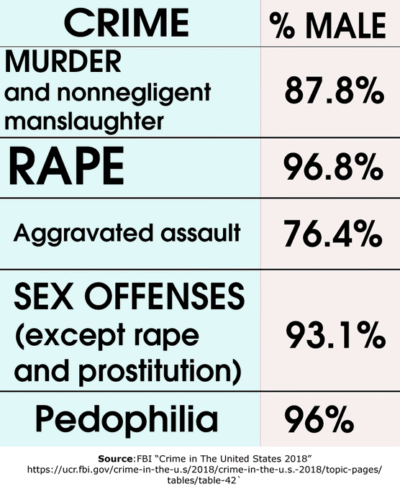
That’s where knowing sex becomes useful. It helps us see a pattern that we couldn’t see as clearly if we stopped recording it.
Imagine 100 attacks happen, and someone studying them notices:
“Wait. Most of the people committing this particular kind of violence are male.”
That’s important information.
Then they notice:
“Girls are experiencing a particular kind of sexual abuse.”
That’s important too.
Now we can ask better questions:
- Where is this happening?
- Who is doing it?
- Who is being targeted?
- When are girls especially vulnerable?
- What protections actually reduce the danger?
- Who needs privacy? When?
Sex also matters because female bodies have some vulnerabilities male bodies don’t have. Girls can become pregnant after puberty. Female genital anatomy creates particular consequences from some sexual assaults. Pregnancy itself can create periods of vulnerability. Some diseases, medications, and medical conditions affect female and male bodies differently.
None of this means:
“All males are dangerous.”
And it certainly doesn’t mean:
“Females are weak.”
Difference is NOT weakness. It means strong in different ways.
It means something much more useful:
A safety system needs to know what is actually happening. 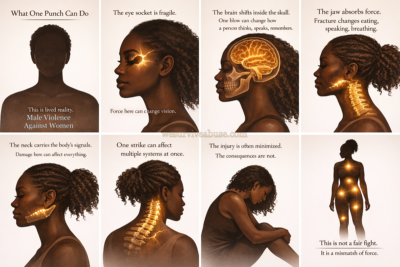
Here’s where our three earlier lessons connect beautifully.
A girl doesn’t have to express herself femininely to be female.
She doesn’t have to obey gender stereotypes to be female.
And whatever language people use for gender identity, we still need information about biological sex for medicine, to keep her healthy from head to toe, research; safeguarding; violence prevention, and understanding patterns.
THAT’S WHY the categories shouldn’t simply be mashed together. The reason some women seem to care a lot about this is because when and where people have a bad understanding of this, there has been harm to women, girls, people with disabilities, the elderly and others. Just like in the homes, schools, or other spaces where people were mixed up about this understanding and people got hurt. Some women and men too want to make sure that all people are safer.
We don’t study whether girls are being hurt because we think girls are helpless. We study it because IF we can see who is getting hurt, how they are getting hurt, and who is hurting them, we have a better chance of protecting them. We do this to make sure that everyone is safe and not just a few people are safe.
Sex is important health information that tells us many things about the body.
Gender stereotype tells us what society expects.
Gender expression tells us how someone presents themselves.
Gender identity tells us how someone personally identifies.Knowing whether someone is female or male can help doctors and researchers understand things such as:
how bodies grow and change
puberty and reproduction
pregnancy
diseases that affect females and males differently
how some medicines affect bodies
patterns of injuries, violence, and abuse
which groups may need particular protections
And there is a useful distinction here:
Sex isn’t important because it tells us someone’s personality.
It doesn’t tell us whether a girl likes pink, whether a boy likes dolls, whether somebody is gentle, athletic, fashionable, shy, or tough.
Sex matters because the body matters.
Sex is health and safety information.
Knowing about our bodies helps us take better care of people and keep people safer.
In the real world, on this planet we live on, the female-sexed body may have to navigate menstruation, pregnancy, childbirth, breastfeeding, sexual vulnerability, intimate medical care, privately undressing, religious practice norms & traditions, imprisonment, refuge from male violence, and recovery from sexual trauma.
12 Things About the Female Body Many Men Do Not Understand – WE Survive Abuse
When Men Encourage Boundary Violations, Women Pay the Price – WE Survive Abuse
Male Predators Are Male: Why Language Matters for Survivor Justice – WE Survive Abuse
10 Dangerous Beliefs That Have Harmed Women Around the World – WE Survive Abuse
The Female Body Part Medicine Knew About—Then Stopped Paying Attention To – WE Survive Abuse