
Table of Contents
This series is about women asking pointed questions about our health, privacy, and safety, and expecting substantive answers. Who does this decision affect? What protections are in place? Who takes responsibility if someone is harmed? These questions deserve more than reassurance or a lecture about being kind.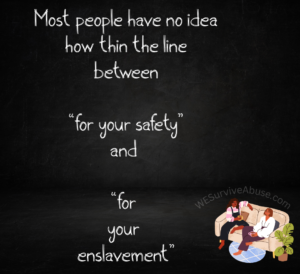
Women are often expected to go along, even when we will carry the consequences. When we question an arrangement, people may examine our tone or motives instead of addressing what we asked. At WeSurviveAbuse, we challenge that expectation. A woman should not have to prove her goodness before someone answers her safety question.
Listening to Women makes room for questions people would sometimes rather women stop asking. Listening means taking the concern seriously, explaining the decision, and acknowledging where an answer falls short. It also means accepting that a woman may understand the explanation and still disagree.
We are demonstrating to women and girls that we have EVERY right to ask questions AND have them answered to our satisfaction.
The goal is not simply to “let women speak.” It is to make sure our questions receive answers worthy of what is at stake.
Sometimes a woman finally says “okay” because she is tired of being punished for saying anything else. The room relaxes. Everyone congratulates themselves on “reaching an understanding.” Meanwhile, her question is still sitting there, unanswered.
You may know that feeling. You ask about something that affects your body, your privacy, or your safety, and suddenly the conversation becomes an examination of your character. Are you kind enough? Open enough? Why are you making this difficult?
At WeSurviveAbuse, we challenge the expectation that women should just go along. Women have every right to ask all the questions we need to ask about our health and safety. We do not have to earn that right by first reassuring everyone that we are good women.
This Listening to Women series makes room for those questions. A woman should be able to finish asking one without being hounded into withdrawing it.
A Woman’s Question Deserves an Answer
There is a familiar little turn these conversations take. A woman asks how a proposed arrangement protects her privacy. Someone responds by telling her how hurt another person feels about her objection.
She has now received information about someone’s distress. She has not received an answer about her privacy.
Both people’s concerns can receive a hearing. But one person’s feelings cannot do the work of answering another person’s safety question. If an institution proposes changing a boundary, the institution should explain why, what protections will apply, and who will take responsibility if those protections fail.
“Please be understanding” is a request. It is NOT a safeguarding plan.
Women notice when people keep answering a practical question with a moral appeal. Some of us have spent years learning to recognize that move in our personal lives. We should not have to abandon that recognition when an organization does it.
Listening Does Not Mean Claiming Someone Else’s Experience
JK Rowling asked this on X.com (we should note that for all the criticisms of the X platform-us included and we stand on that- the algorithm has allowed some women to get their questions through even as others cast women’s health and safety questions as “hate”)
How does a man know his ‘gender identity’ is female?
Man: ‘I know I’m a woman.’ Me: ‘How?’ Man: [fill in answer here]
To her point, you can care deeply about an experience you have never lived. You can study it, listen carefully, and become a dependable person to those who have lived it. That is valuable work.
But understanding someone’s account differs from knowing it firsthand.
A woman who has never been pregnant can support a pregnant woman without claiming to know HOW pregnancy feels. A white woman can listen to a Black woman describe racism without insisting that a different experience gives her the SAME knowledge. Their ability to care does not depend on pretending the difference has disappeared.
Women do not all experience life alike, either. That is a reason to hear more women, including women whose needs are easy to overlook.
Empathy should make us more willing to listen. It should not make us more confident that we can overrule the person speaking.
When a woman describes why a particular boundary matters to her, someone else’s sense of connection to womanhood does not answer her concern. She is still entitled to discuss her body and the conditions under which she feels able to undress, receive care, or recover from violence.
There Is No Personality Test for Being a Woman
Think about how much room women have had to fight for simply to be ourselves. A woman can love lipstick or never wear it. She can want children or build a life without them. She can feel at home in her body or struggle with what other people expect from it. None of those feelings makes her more or less female.
There is no single inner feeling every woman shares.
That is why claims about identity and claims about physical characteristics need careful discussion. A person’s account of their inner life may be sincere and deeply important to them. Sincerity does not, by itself, settle every factual claim or every question about which rules should apply.
We can acknowledge someone’s feelings while asking what a proposed change means in practice. Respectful treatment does not require women to stop distinguishing between an internal experience and the bodily realities that shape their own lives.
Agreement Reached Through Exhaustion Is Worth Questioning
A woman says she is uncomfortable. People explain the situation again, as though she could only disagree because she failed to understand it.
She asks another question. Now she is being stubborn. She maintains her objection, and someone suggests that a better woman would have moved past it by now.
Eventually, she may go quiet.
Anyone who has listened to Survivors should be careful about interpreting that quiet. We know people sometimes stop objecting because the consequences of continuing have become too costly. They still have to keep their job, get through the appointment, or remain part of the community.
Wearing a woman down does not establish that her concern was unfounded. It establishes that the pressure worked.
A sound proposal should withstand questions. If its acceptance depends on making women afraid to speak, that deserves examination too.
Other Women Can Enforce the Expectation to Go Along
Sometimes the hardest pressure comes from another woman. You expected her to understand why you were asking. Instead, she tells you that your concern is embarrassing, selfish, or unkind.
Women can disagree honestly. No woman owes another human being automatic agreement. But disagreement does not give us permission to humiliate a woman for naming a need we do not share.
Perhaps you would feel comfortable in the arrangement she is questioning. Perhaps you have never needed the particular protection she values. You can speak for yourself without volunteering her acceptance.
“I would be fine with it” tells us about YOUR comfort. It does not give you authority over hers.
Listening to women includes listening when another woman’s answer inconveniences us.
Who Remains When Something Goes Wrong?
A woman may notice how many people have energy for correcting her objection, then wonder how many would remain if she were harmed.
Who would help her navigate the complaint? Who would pay attention after the first sympathetic statement? Would the people who urged her to accept the arrangement acknowledge their part, or would she hear that nobody could possibly have known?
These are fair questions to ask before a change.
Nobody can promise a life without risk. But an institution can explain its responsibilities, provide a meaningful way to report concerns, and show how it will respond. It can also hear an objection without treating the woman who raises it as a problem to manage.
The person who carries the consequences deserves more than reassurance from people who can walk away.
Most Importantly, We Are ALLOWED to Keep Asking
Women do not have to prove that every person poses a danger before asking for a safeguard. So no need to create new subsets and categories. We do not have to disclose our most painful experiences to make a privacy concern worthy of consideration.
And we do not have to accept the idea that kindness requires surrendering our judgment
In healthy societies, listening to women means taking their questions seriously enough to answer them. It means allowing a woman to say, “I understand what you are telling me, and I still have a safety concern,” without turning the room against her.
You can care about another person and remain unconvinced by their argument. You can understand their distress and still need a boundary.
You are allowed to leave a conversation with your question intact. Other people’s impatience is not an answer.
21 Questions About Women, Sex, and Women’s Rights – WE Survive Abuse
Are We Comfortable With Women’s Freedom Only When Women Say Yes? – WE Survive Abuse
A Right You Cannot Define Is a Right You Cannot Defend – WE Survive Abuse
Maleness Is Portable Power: 20 Reasons Women Are Still Asked to Move Over – WE Survive Abuse
Safe People Don’t Need Endless Convincing to Respect a Boundary – WE Survive Abuse
Before I add updates to this….note that it is 7 years old. Women have been discussing these issues, for generations as far as my current knowledge goes. But I wouldn’t be surprised to find that it goes back further than that. Women as a demographic are not new to confronting these lines.
