When Her No Becomes the "Problem"As a woman, this is fascinating. Male privilege is amazing.I was a single mom, and there were men who wouldn'
When Her No Becomes the “Problem”
As a woman, this is fascinating. Male privilege is amazing.
I was a single mom, and there were men who wouldn’t date me. Men who wouldn’t date me before I got my degrees.
Men who didn’t like the church I attended. (I podcasted about a guy I was seeing taking me to his church, but HIS pastor and the pastor’s wife didn’t approve of MY pastor or our church, so that ended that.)
A guy who stopped dating me because his good female friend didn’t like how I looked. And I could tell because she sat in the row behind us with her man and glared at me for much of the entire show that we went to see. (THAT’s how I learned to reject double dates. Well, that and the Living Single episode where Heavy D takes Kim Fields to dinner with his friends and it goes terribly. His friends didn’t like her and they broke up.Living Single, Season 2, Episode 20, “If the Crew Fits,”)
I’m short. Some guys dig that. Some guys don’t.
A guy I was not dating, but we were flirting with the idea, told me that he didn’t like that my thick, natural Black folks textured hair because it doesn’t “swing.” Even pointed out another girl’s hair, which did so I could understand. Flirt over. We didn’t date.
Some guys look at you strange if you eat on the date.
A man at a friend’s job declared that he would never date women with what he considers “strange hair colors.”
Such is the world of dating. It is wild, hilarious, and unpredicatable.
No one puts bumper guards on the dating world for women. They wouldn’t even consider it. Men aren’t expected to keep access to themselves open in case a woman needs it. That’s woman’s work. Stay fully open like a 7/11 in case a man needs comfort.
Myths We Need to Examine About Women, Dating, and Consent
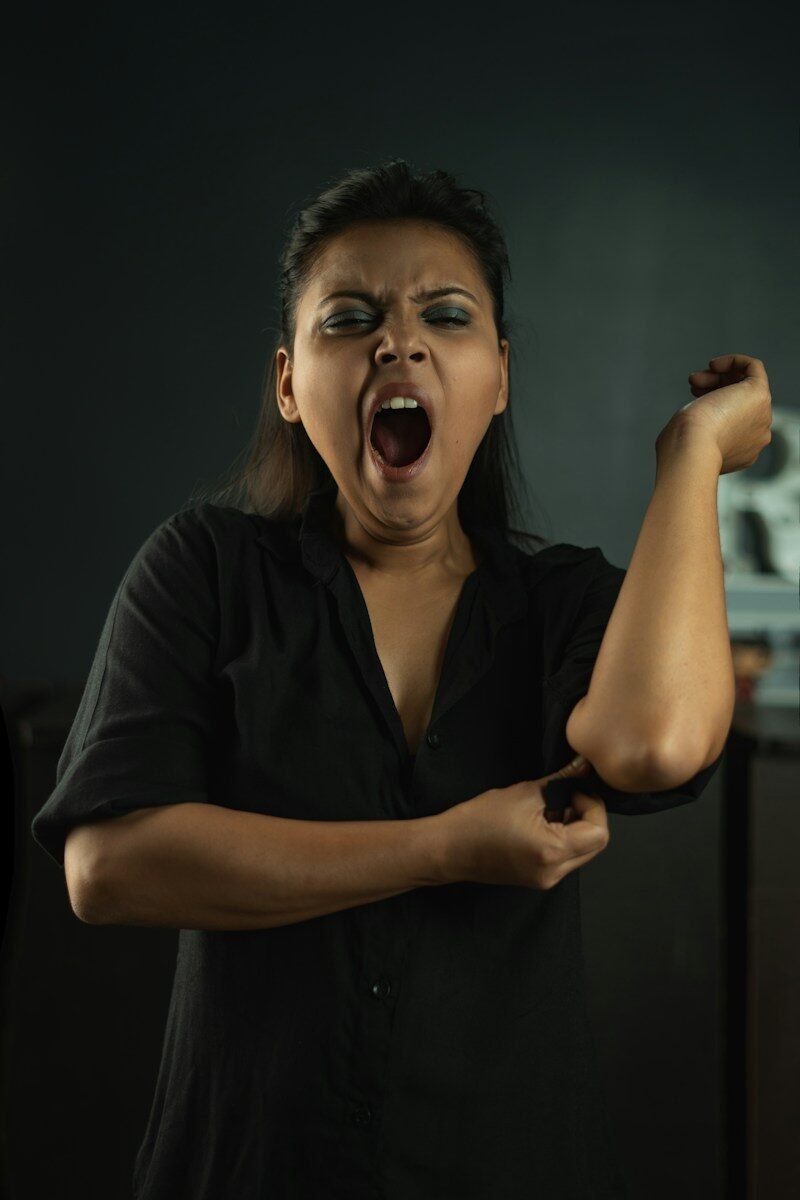
Photo by Debashis RC Biswas
Women are not community property. Nobody’s loneliness, politics, disappointment, desire, or good intentions create a claim on us.
There is a peculiar thing that happens in conversations about women’s dating boundaries.
A woman says she doesn’t want to date someone. Instead of accepting that information and moving along, people sometimes begin examining the woman.
Why?
What are you afraid of?
Have you unpacked that?
Would you reconsider?
Isn’t that unfair?
What if he has never actually been with a man?
What if he is otherwise everything you want?
Oh my goodness. When you tell people that this is how men are in public spaces, people think you are exaggerating. The fact that the words are online every 5 business days is helpful to help others see what women go through.
Eventually we have to notice when curiosity has become an interrogation and when the conversation has quietly moved away from respecting another group of people and toward persuading women to make themselves romantically or sexually available to them.
Bisexual men deserve dignity. They deserve freedom from bullying, discrimination, violence, and ugly stereotypes. They can pursue relationships with consenting adults who are mutually interested in them, which may include gay men, bisexual men, bisexual women, pansexual people, and heterosexual women who are comfortable dating bisexual men.
There are people who will enthusiastically say yes.
So why should the woman saying no become the project?
That question belongs inside a much older conversation about women, sexual boundaries, and consent.
MYTH: If her reason for saying no is objectionable, her no becomes questionable.
FACT: Consent does not require an approved reason.
If her no only counts after you approve of her reason, you never respected her no. You respected your authority to review it
We can disagree with someone’s beliefs. We can correct false information. We can challenge stereotypes. We can do all of that together.
None of that creates romantic access.
This is one of the most important distinctions in the conversation. An idea can be debated. A person’s participation cannot.
A woman may examine her thinking and change her mind. She may examine it carefully and reach exactly the same conclusion. Either outcome belongs to her. And the entire process is no one’s business but hers.
MYTH: If bisexual men experience dating stigma, heterosexual women have a responsibility to become more romantically open to them.
FACT: Fighting discrimination does not require redistributing women’s intimate availability.
There are many ways to confront cruelty toward bisexual men: challenge harassment, correct misinformation, oppose employment and housing discrimination, support mental-health resources, confront violence, build stronger communities and refuse degrading stereotypes.
None requires assigning women the job of expanding somebody else’s dating pool.
A civil society owes people rights and equal protection.
Individual women do not owe people dates.
MYTH: A woman should be willing to explain why she won’t date someone.
FACT: Women do not owe explanations for intimate boundaries.
Somewhere between ‘Why?’ and the seventh ‘But what if?’ curiosity became an interrogation.
She does not have to explain. It is very personal.
That is not evasiveness. It is not cruelty. It is not intellectual laziness. It is one of the ordinary consequences of self-ownership, dignity and respect.
A woman may know exactly why she does not want a particular relationship and decide that the reason is private. She may have complicated reasons she does not wish to discuss. She may simply know that she isn’t interested. She may even still be figuring it out herself.
None of this changes the answer.
We should be careful about creating a culture where women technically possess the right to say no, but must then appear before an informal court and demonstrate that their reasoning is sufficiently rational, compassionate, enlightened or politically acceptable.
Because then the boundary is not really being respected. It is being reviewed.
There is an enormous difference between self-reflection and compelled explanation. Women can examine our own beliefs because we choose to. We can read, listen, reconsider, learn and change our minds. That inner work belongs to us too.
But another person does not acquire jurisdiction over a woman’s private reasoning simply because her decision disappoints them.
This is part of what dignity means.
You do not have to expose the private workings of your mind in order to retain authority over your own body and relationships.
And respect means learning to hear a woman’s no without immediately reaching for a crowbar to pry open the reasoning behind it.
Sometimes there is no conversation to win.
There is simply another human being making a decision about her own life.
That should be enough.
MYTH: Nobody is entitled to sex, but people are ENTITLED to romantic consideration.
A woman does not become cruel because somebody else feels disappointed by a boundary she had every right to set
FACT: Romantic consideration is part of intimate autonomy too.
This is where our consent conversations sometimes become strangely narrow.
Women aren’t only allowed to refuse intercourse. They are allowed to refuse the coffee beforehand.
She can decline the telephone number, the date, the kiss, the relationship, the marriage, and the second chance.
Women do not have to travel farther down an intimate road before their autonomy becomes legitimate.
MYTH: Asking a woman to “give him a chance” is harmless.
FACT: Context determines whether encouragement becomes pressure.
A woman does not owe you the reasoning behind her no. Self-ownership includes privacy
Once? Perhaps somebody is simply playing matchmaker.
Repeatedly, after she has declined? Something else is happening.
Women know this script.
He’s really nice.
Just have dinner with him.
How do you know if you’ve never tried?
You’re too picky.
Give him a chance.
What have you got to lose?
People insert any man into those he/him pronouns and never insert she/her into any of it. She’s just the service provider.
Notice what disappears from the conversation: Does she want him?
That should not be the least interesting question in courtship.
It should be one of the first.
MYTH: Connecting these attitudes to rape culture means saying dating pressure is rape.
FACT: It means examining the beliefs surrounding sexual entitlement and women’s refusal.
A woman can believe completely in your dignity while deciding completely against your access.
These things are not equivalent.
A person criticizing a woman’s dating preference has not committed sexual violence.
But rape-culture analysis has long examined more than the criminal act itself. It also examines cultural beliefs about sexual entitlement, coercion, victim blaming and whose desires society expects other people to accommodate.
That gives us a useful question:
What are we teaching when somebody’s desire receives more sympathetic examination than another person’s refusal?
We cannot teach young women that their boundaries deserve respect while simultaneously teaching them that certain boundaries require successful arguments before other people will honor them.
MYTH: If she supports bisexual people, she should be willing to date bisexual men.
FACT: Respect is not sexual availability.
Women are not required to turn our bodies, relationships, labor, or affection into evidence that we are good people.
Women support so many groups of people with our labor and active support. The thing about women is that we don’t need to be romantically interested in people we choose to align with and give our energy to. We just go around nurturing and loving.
I can believe wholeheartedly in your humanity without wanting a romantic relationship with you.
I can defend your civil rights without offering you access to my private life.
I can stand against someone mistreating you without agreeing to date you.
Somewhere along the way, we began confusing acceptance of people with availability to people.
Women need those separated again.
MYTH: Her refusal harms someone if it reduces their dating opportunities.
FACT: Nobody is guaranteed the largest possible dating pool.
Her private life does not become public business because somebody believes her choices should serve a greater good.
Every boundary shrinks somebody’s possibilities.
Gay men’s orientation excludes women. Lesbians’ orientation excludes men. Some bisexual people have preferences about whom they date. People make decisions involving religion, children, marriage, geography, age, lifestyle, family, intelligence, monogamy, sexual history, and countless other compatibility questions.
The existence of fewer willing partners can be painful, and women know all about this part too.
We also know this: it still cannot create an obligation in unwilling ones.
Scarcity does not manufacture consent.
MYTH: Women’s private choices should advance the community’s social ideals.
FACT: Women are not community property.
Respecting women means accepting that some of our decisions will disappoint you and still belong entirely to us
This one deserves particular attention from Black women.
Black women have lived beneath expectations that our bodies, labor, caregiving, loyalty, sexuality, resilience, and forgiveness should remain available for somebody else’s greater good.
Sometimes the cause has been family.
Sometimes community.
Sometimes race.
Sometimes religion.
Sometimes men.
Sometimes movements that genuinely deserved our support.
Meanwhile, the same energy isn’t likely to be returned.
A woman can support liberation without becoming its currency.
Her body is not a public accommodation. Her dating life is not an equal-opportunity program. Her sexuality is not a community resource to be distributed according to somebody else’s definition of fairness.
She is not community property.
Perhaps We Need a Better Question
The purpose of consent culture is not to teach people how to produce more “yeses.” It is to teach us how to honor a “no.”
When a bisexual man encounters a heterosexual woman who does not date bisexual men, perhaps the central question shouldn’t be:
How do we change her mind?
Perhaps it should be:
Where are the people who want him?
Let us build cultures where bisexual men can meet people who desire them openly, happily, and without shame. Let bisexual communities thrive. Let gay and bisexual men have honest conversations with one another. Let heterosexual and bisexual women who love bisexual men do so without being mocked for their choices either.
There is plenty of room for human beings to find one another without converting somebody else’s no into a social problem.
That is what enthusiastic consent promises us.
It promises something simpler and more humane: the people in our intimate lives should be there because they want to be.
We spent decades teaching that clothing is not consent. Flirting is not consent. Drinking is not consent. Going home with somebody is not consent. Previous sex is not consent. Marriage does not erase the need for consent.
There should not be a political asterisk at the bottom.
Social justice is not consent. Social justice can govern how we treat one another in society. It cannot assign romantic partners.
A woman’s compassion does not obligate attraction. Her politics do not obligate intimacy. Her belief in another person’s dignity does not require romantic availability.
We cannot spend decades teaching women that no means no and then whisper:
Unless we don’t approve of why you said it.
Consent Is Freedom: A Woman’s Right to Belong to Herself – WE Survive Abuse
What May Come When You Say “No” – WE Survive Abuse
When They Don’t See You as a Person, They Don’t Protect You as One – WE Survive Abuse
What Does It Really Mean To Be Socialized As a Woman? – WE Survive Abuse
You Don’t Have to Keep Fighting. You’re Allowed to Heal. – WE Survive Abuse
The Subtle Signs a Man Likes Women’s Labor More Than Women Themselves – WE Survive Abuse
Affirmations
I do not have to build a courtroom case for my boundaries. I am allowed to know what I want, what I do not want, and what I will not participate in. My life is not awaiting public approval.
I can listen without surrendering authority over myself. I can consider another perspective, understand it completely, and still say no. Understanding someone does not obligate me to choose them.
My private reasoning belongs to me too. I don’t have to disclose every experience, instinct, memory, preference or concern behind my decisions. Privacy is part of dignity.
Someone else’s disappointment does not turn my boundary into wrongdoing. People are allowed to want things from me. I remain equally free not to provide them.
I refuse the idea that goodness must be demonstrated through access to women. I can be compassionate, fair and deeply respectful while keeping my romantic and sexual boundaries exactly where I choose.
I am not community property. My body is not a ready community resource. My affection is not a public benefit. My intimate life belongs to the woman living it: me.
I don’t need everybody to understand my no before they respect it. Respect begins precisely where another person realizes the decision is mine even when they would have chosen differently.
I will not confuse pressure with enlightenment. Repeating the question, changing the argument, appealing to guilt and questioning my character do not make my boundary less legitimate. Sometimes the healthiest answer remains the first one I gave.
I am allowed to choose without turning another human being into a villain. They can be decent, worthy and deserving of love, and still not be for me. Nobody has to be bad for me to say no.
My freedom includes choices other people would not make. That is the substance of self-ownership. If I were only free to make approved choices, I would not be free at all.