Table of Contents
updated for 2025
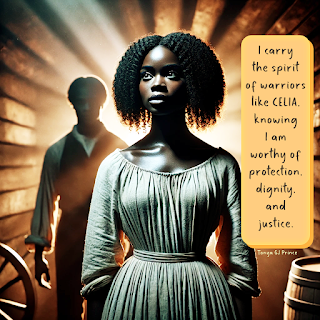
Celia’s name should be spoken not just as a victim, but as a woman who resisted, who fought for her dignity when no one else would.

The Resistance of Celia: A Woman Who Fought Back ✊🏾
Celia was not just an enslaved girl in Callaway County, Missouri—she was a fighter, a survivor, and a tragic example of how the system of slavery brutalized Black women and girls. Her story is one of resistance, injustice, and the horrifying reality of being both Black and female under a system that saw her as nothing more than property.
The Crime? Defending Herself.
In 1855, Celia was enslaved by Robert Newsom, a white man who saw her as nothing more than his possession. For years, he raped and brutalized her—an all-too-common fate for enslaved Black women and girls. But Celia, at just 19 years old, refused to endure this violence any longer.
One night, as Newsom tried to assault her yet again, Celia did something that was both radical and completely justified—she killed him.
The Trial: Could an Enslaved Woman Claim Self-Defense?
Celia’s case went to trial, and it posed a shocking question: Did an enslaved woman have the right to defend herself against rape?
- The Defense’s Argument: Celia had suffered years of sexual abuse at the hands of Newsom. Her lawyers argued that her actions were an act of self-defense, just as they would be if she had been a free woman.
- The Prosecution’s Argument: The prosecution made it clear—Celia was property, not a person. They argued that, as an enslaved woman, she had no legal right to resist her owner, no matter what he did to her.
The Verdict: The System Showed No Mercy
The court sided with the prosecution. The message was clear: Black women, especially those enslaved, had no bodily autonomy.
Celia was convicted of murder and sentenced to death by hanging. The only reason her execution was delayed was because she was pregnant—even in death, her body was controlled by a system that refused to see her humanity.
They sentenced her to hang. Only reason they waited? She was pregnant. Even in death, they still controlled her body.
The Legal Lie: “Self-Defense” Didn’t Apply to Her
The law said white women could resist assault. But Celia?
-
She was enslaved → Meaning, under the law, she was property.
-
Property can’t be raped → So how could she claim self-defense?
-
Her existence was criminalized → Her survival was a crime.
The court’s decision wasn’t justice. It was a public reminder:
“Black women’s bodies are not their own.”
The Appeal: Even the Higher Courts Backed the System
Her lawyers tried to appeal, but Missouri’s Supreme Court refused to hear the case. Because why would they? The whole system was built to keep Black women silent, suffering, and disposable.
The Final Message: The Law Was Never on Her Side
Celia’s case proved what we already know:
-
Resistance gets punished.
-
And freedom was never meant for us under slavery.
But here’s what they didn’t count on: We remember her.
Not as a “slave” who lost, but as a Black woman who fought.
And that fight still lives today.
✊🏾 Rest in power, Celia. The courts failed you, but we won’t forget.
Why Celia’s Story Ain’t Just History—It’s a Warning
This ain’t just about 1855. This is about then, now, and always.
-
Black women’s pain never mattered to this system.
-
Our resistance always gets punished.
Celia wasn’t just some victim. She was a rebel. She looked at the devil and refused to let him win.
The Aftermath: Why Celia’s Story Matters
Celia’s case laid bare the brutal truth of slavery—that Black women were treated as objects, their suffering ignored, their resistance criminalized.
Her story is a crucial lesson in:
- The legal system’s complicity in sexual violence against Black women
- The dehumanization of enslaved people, especially women
- The courage of Black women who resisted, even when the odds were stacked against them
Celia’s Legacy: She Fought. We Remember.
Celia’s name should be spoken not just as a victim, but as a woman who resisted, who fought for her dignity when no one else would.
Her case remains a critical piece of American history—one that forces us to confront the truth about slavery, gender, and the legal system’s role in upholding violence against Black women.
We remember Celia because her fight was not in vain. She defied the system that sought to destroy her. And we must continue that fight—because Black women’s voices, safety, and resistance still matter.
You can’t assert:
“We are not our ancestors” while being
perfectly fine and silent about the women
and girls being coerced to share
disrobing spaces with males.
Ancestors
-at least the beautiful ones I honor through song, prayer, & dance-
knew and affirmed
that a girl, a woman, or womanhood could not
be defined or under the possession of any male.
Oppression, silencing, discrediting, degrading, and debasing
women and girls IS NOT progress.
That’s as old as the hills.
So old, it is corroded.
It is full on regression.
Tonya GJ Prince