Table of Contents
When we talk about ending domestic violence and sexual assault, we spend a great deal of time teaching women and girls how to protect themselves, hide their medication, or build emergency escape plans. Survival strategies save lives—but they do not stop the abuse at its source.
If we want to end reproductive violence and abuse (also called reproductive coercion), one of the most direct, foundational solutions is educating all men and boys early, plainly, and consistently so they understand that controlling another person’s body, birth control, or pregnancy decisions is fundamentally wrong.
Why Educating All Men and Boys Matters
Many young men grow up surrounded by cultural messages that treat pregnancy, contraception, and sexual boundaries as arenas for ego, leverage, or ownership. Some boys are never taught that poking holes in a condom, hiding a partner’s birth control pills, pressuring someone to get pregnant to “lock them down,” or threatening a partner over an abortion is not just “relationship drama”—it is abuse.
Real prevention means shifting the conversation with boys and men from vague talk about “being a good guy” to concrete lessons on bodily autonomy:
-
Bodily Autonomy Is Absolute: Every person owns their body, their health, and their future—regardless of relationship status, marriage, or financial support.
-
Consent Covers Every Step: Consent to sex is never consent to unprotected sex, pregnancy, or tampering with contraception. Removing a condom without consent or sabotaging birth control violates bodily integrity.
-
Parenthood Cannot Be Forced: Using pregnancy to trap a partner, keep them from leaving, or control their independence is coercion, not love.
-
Accountability Among Peers: All men and boys must learn to challenge peers who brag about “trapping” a partner or dismissing a woman’s medical and reproductive choices. This message should reach all men, whether they express attraction to women or not.
When men and boys understand that reproductive control is a violation of human dignity, we stop asking women to carry the entire burden of preventing harm.
What the Statistics Reveal About Reproductive Violence
The data shows why this education cannot wait. Reproductive coercion affects millions of women across the United States and frequently escalates into severe physical danger:
1. National Prevalence Across the U.S.
-
Over 10 Million Women Affected: According to CDC research on intimate partner reproductive coercion, 8.4% of U.S. women (more than 10.1 million women) have experienced reproductive coercion—such as birth control sabotage or pregnancy pressure—by an intimate partner in their lifetime.
-
Sexual Coercion: Within the broader landscape of intimate partner violence, national surveillance data indicates that 14.2% of U.S. women have experienced sexual coercion by a partner during their lifetime.
2. What Survivors Report to the Hotline
When women reach out for help, the tactics of reproductive control come into sharp focus. According to the National Domestic Violence Hotline’s Reproductive Coercion and Abuse Report, among individuals reporting reproductive coercion:
-
23% said a current or former partner pressured them into becoming pregnant.
-
20% said a partner prevented them from using birth control (such as pills, patches, rings, or IUDs).
-
13% said a partner pressured or forced them to terminate a pregnancy.
-
13% said a partner used or threatened physical violence while they were pregnant with the intent to end the pregnancy.
-
42% had never reached out to anyone for support before taking the survey.
3. Danger Escalates During Pregnancy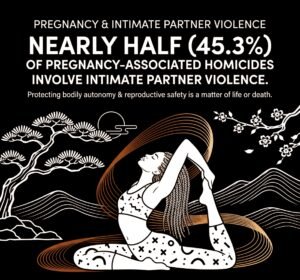
Pregnancy does not protect women from abuse; for many, it marks an escalation in violence:
-
Violence During Pregnancy: According to CDC data on violence and pregnancy, roughly 6% of U.S. women with a recent live birth experienced emotional, physical, or sexual violence by a current intimate partner during pregnancy.
-
Increased Homicide Risk: The CDC reports that homicide rates for women ages 15–44 are 16% higher among those who are pregnant or within one year postpartum compared to non-pregnant women, and nearly half (45.3%) of pregnancy-associated homicides involve intimate partner violence.
4. Disparities and Systemic Vulnerability
Reproductive violence does not impact all communities equally:
-
Racial and Ethnic Disparities: Clinical research published via the National Institutes of Health (PMC) highlights higher lifetime prevalence of reproductive coercion among Latina/Hispanic women (14.8%) and Black/African American women (10.5%) compared to White women (5.6%).
-
Women with Disabilities: Public health research shows women with cognitive disabilities undergo surgical sterilization and hysterectomies at significantly higher rates—and at younger average ages (27.3 years vs. 29.8 years)—than women without disabilities, underscoring the need for strict protections around informed consent and bodily autonomy.
Moving From Awareness to Action
Numbers tell the story, but culture changes the outcome. When schools, youth programs, fathers, coaches, and faith leaders teach boys and young men early on that respect means honoring a partner’s bodily autonomy, we attack reproductive abuse at its root.
If you or someone you know is experiencing relationship abuse or reproductive coercion, free and confidential support is available 24/7 through the National Domestic Violence Hotline (call 1-800-799-SAFE or text “START” to 88788) and If/When/How’s Repro Legal Helpline.