We carry so much. Too much.And still, society dares to question our right to safety. Black women are consistently sent harmful messages—spoken and
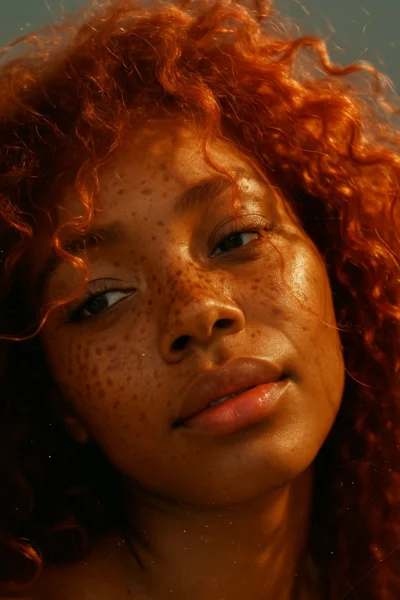
from Sora
We carry so much. Too much.
And still, society dares to question our right to safety.
Black women are consistently sent harmful messages—spoken and unspoken—about our value, our pain, and our right to be protected. These messages are not random. They are embedded in systems, families, faith spaces, online spaces, entertainment spaces, and even activism spaces. They are passed down like bad recipes. And they take root in institutions, media, policy, and even the places we call home.
But we see it.
We name it.
And we will not be silent about it.
🩺 In Healthcare:
Where we go to be healed—but must often fight to be heard.
Our pain is dismissed, minimized, or disbelieved.
Too many Black women are labeled “drug-seeking” or “overreacting” for simply describing unbearable pain.
“When I said I was in pain, they looked at me like I was lying. I learned to bring someone with me to back me up in my own body.”
— SurvivorAffirmations
We suffer higher rates of maternal mortality.
Not because our bodies fail—but because medical systems fail us.We are forced to self-advocate just to receive basic care.
It shouldn’t take shouting, crying, or bringing receipts to be treated as human.They assume we don’t feel pain like others do.
This myth—that we’re built to withstand more—has cost Black women lives.
“Resilience doesn’t mean I should be neglected.”
— RosasChildren.com
👮🏾♀️ In Law Enforcement and Justice:
Where protection is supposed to be guaranteed—but isn’t extended to us.
When we call for help, we’re treated as suspects.
Our cries are met with interrogation, not compassion.We are blamed for the violence done to us.
Instead of asking why he harmed you, they ask what did you do to make him angry?We face harsher penalties than others for similar offenses.
The justice system is not blind—it sees color, and it sees that we are female.When we fight back, we’re punished.
Black women defending themselves are often arrested, not protected.
“I should not have to become a martyr to prove I was in danger.”
— SurvivorAffirmations
📺 In Media and Cultural Narratives:
Where stories are told—but rarely told with us in mind.
They call us ‘strong’ to avoid giving us care.
Strength is a badge we never asked for—and sometimes, it becomes a prison.We are cast as angry, loud, or dangerous.
Our passion is distorted into a threat.We are sexualized before we are even old enough to speak.
Black girls are denied the right to be children.Our pain is turned into a spectacle.
They watch us grieve, suffer, cry—and call it content.
“The world turns us into stories. We are here to reclaim our narrative.”
— RosasChildren.com
🏢 In Professional Spaces:
Where we contribute brilliance—but are met with barriers.
They tone-police us while tolerating abuse from others.
A calm voice from a white colleague is leadership. Our calm voice? Still “too much.”We face retaliation for naming harm.
Workplace harassment leaves us harmed twice—once by the harm, then again by the fallout.We’re told to just “deal with it.”
Hostile work environments are excused because “that’s just how it is.”They ask us to lead without giving us the title—or the pay.
Emotional labor is demanded. Authority is denied.
“Just because I carry it well doesn’t mean it’s not heavy.”
— SurvivorAffirmations
🏫 In Schools and Education:
Where Black girls should be nurtured—but instead are punished.
Black girls are disciplined more harshly for the same behaviors.
Zero tolerance policies have zero grace for our daughters.Bullying and harassment go ignored.
When Black girls report mistreatment, they’re often told, “Don’t be so sensitive.”They’re seen as adults too soon.
There’s a name for it: adultification bias. It steals girlhood.We are under-supported, overlooked, and underestimated.
Potential is there. But the system looks away.
“She is not ‘too grown.’ She is not ‘asking for it.’ She is a child. Period.”
— RosasChildren.com
🧭 In Social and Community Circles:
Where we are expected to pour from an empty cup.
We’re expected to protect everyone else.
But who protects the protector?If we are harmed, they ask what we did.
Our community sometimes mirrors the oppressor.When we speak up, we’re silenced or dismissed.
“Don’t make trouble.” “Let it go.” “You’re being dramatic.”Our anger is treated as the problem.
Not the violation. Not the betrayal. Just our tone.We’re denied the right to softness.
Feminine. Delicate. Gentle. They pretend those words don’t belong to us.
“I deserve tenderness. Not just after I’ve proven myself. Right now.”
— SurvivorAffirmations
✨ What Now?
These messages are not figments of imagination. They are real, repeated, and reinforced.
But so is our resistance.
We are not here to convince the world we are worthy.
We know we are.
We are here to remind one another, to hold each other through the gaslighting and the storms, and to declare—boldly and softly—that:
“My safety is not up for debate. My existence is not a negotiation.”
— SurvivorAffirmations
We see you.
We believe you.
We are with you.