
Table of Contents
What’s missing here is the understanding that girl’s sports are a handicap category, a venue for protected competition that exists to exclude advantaged people who could otherwise displace them. The public has largely forgotten the history of Title IX and the establishment of widespread girl’s programs. If there was a single open category for each sport, men would dominate it, and the result would be viewed as sexual discrimination in which girls are denied most of the benefit of public spending on sports programs. AnechoicMedia
One of the reasons that I love women’s sports is because I love to see underdogs win!
For generations, we told girls they couldn’t play. Now that they’re playing, we’re still arguing about what fairness should look like for them.
You know what I’ve been thinking about? How differently we raise boys and girls to understand the importance of sports.
In some small towns across America, a boy can become a hometown hero before he’s old enough to drive. His Little League games make the local news. People know his name. They remember the home run he hit three summers ago. His coaches talk about his potential, and grown folks who haven’t played a sport in thirty years will rearrange their entire Saturday to watch him play.
And I don’t begrudge that little boy one bit of it. I’m so serious about my joy. I love to see it.
I think it’s wonderful when a community gets behind its children. I love seeing people show up for young athletes, cheering them on, celebrating their accomplishments, and helping them believe that something extraordinary might be possible.
But I’ve wondered how many little girls in those same towns were just as talented, just as determined, and just as deserving of that kind of attention.
How many of them never got the chance to find out?
Because when we talk about women’s sports being disadvantaged, we need to remember something.
Women’s sports didn’t arrive at this moment with the same history of opportunity, investment, encouragement, and public support as men’s sports.
The least attended and supported youth events in most areas are the events for girls. And yet women are routinely asked to compete as though they did.
Many people have a hard time telling boys “no.” But the bigger tragedy is that they have a hard time telling girls “yes.”
Boys Get to Become Legends. Girls Have to Prove There’s an Audience.
Think about what happens when a community decides a sport is important.
People invest in it.
They build facilities, organize leagues, recruit coaches, sell tickets, and tell stories about the players. Local businesses sponsor teams. Parents bring their children to games. Those children grow up remembering the athletes they admired.
Eventually, the sport becomes part of the community’s identity.
Nobody has to explain why the Friday night football game matters. It just does.
But that didn’t happen by magic. Generations of people helped make it happen.
Now consider how often women’s sports have been judged by a different standard.
People look at smaller audiences, lower revenues, or less established leagues and announce that women simply aren’t as interesting to watch.
Well, hold on.
If one group has enjoyed generations of promotion, infrastructure, and community investment while another has spent much of that history fighting for access, why would we expect identical commercial results?
And why would we treat the difference as proof of inferior talent?
You cannot spend generations building one side of the field and then blame the other side for having fewer spectators.
Women Have Already Had to Fight for the Right to Play
Girls barely have a history of athletes in sports to reach back to. If we have the trophies and medals displayed in the home from two or three generations ago, most likely those belong to the boys in the family. It wasn’t so long ago that girls and women faced serious restrictions on athletic participation.
In the United States, Title IX became law in 1972, prohibiting sex discrimination in federally funded education programs, including athletics.
That law didn’t invent talented female athletes. They were already here. It helped open doors that had been closed to them.
Women had been running, swimming, throwing, competing, and testing their physical limits long before institutions decided their athletic ambitions deserved serious support.
And I think we sometimes forget what it means to be excluded from something for generations. You don’t just lose the opportunity to play a game.
You lose the coaching you might have received. The confidence that comes from competition. The scholarships that could have changed your life. The chance to become somebody else’s childhood hero.
You lose years of development that cannot simply be handed back later.
So when someone talks about women’s sports as though they are naturally less important, I want to know whether they’ve considered how much was withheld before they reached that conclusion.
And Yes, Male and Female Bodies Are Physically Different
Somewhere along the way, we’ve developed a strange discomfort with saying something that sports medicine has recognized for a very long time. Male and female bodies have average physical differences.Those differences are not limited to a testosterone measurement.
They can involve skeletal dimensions, muscle mass and distribution, cardiovascular capacity, hemoglobin levels, and other characteristics that influence athletic performance.
Hormones play an important role in how many of those characteristics develop, particularly during puberty. But a person’s present hormone level doesn’t tell us everything about the physical development that has already occurred.
None of this makes women lesser athletes.
A woman who trains for years, pushes through exhaustion, develops extraordinary skill, and competes at the highest level has accomplished something remarkable.
She doesn’t need to have the same body as a man for her achievement to count.
Equality never required women to become physically identical to men.
It required us to recognize their equal humanity, dignity, and entitlement to opportunity. That’s a very different thing.
Fair Competition Is Not the Same as Identical Competition
We already understand this principle in sports.
Boxing has weight classes. Youth leagues have age divisions. Many athletic competitions establish categories because certain physical characteristics can significantly affect the outcome.
We don’t ordinarily tell a lightweight boxer that requesting a weight-appropriate opponent demonstrates weakness.
We understand that a meaningful competition needs rules suited to the athletes and the sport.
Female sporting categories have a related purpose. In many sports, they provide opportunities for female athletes to compete against others without the average performance advantages associated with male puberty.
There are legitimate discussions about how eligibility rules should work across different sports and levels of competition. Those decisions require careful attention to evidence, fairness, participation, and, in contact sports, safety.
But acknowledging the physical basis for female categories should not be treated as an insult to women.
And neither should women be expected to apologize for wanting competitions that recognize relevant physical differences.
A fair contest doesn’t have to erase differences. It has to account for the differences that affect the contest.
That is one of the reasons sporting categories exist in the first place.
We Cannot Keep Asking Girls to Make All the Accommodations
Here’s where this conversation reaches beyond sports.
Girls grow up with the expectation to be considerate. “Share your space. Don’t make a fuss.” Think about everybody else’s feelings.
There is nothing wrong with teaching children kindness. But I have spent enough time listening to women describe the ways they were expected to accommodate everybody else to recognize when a familiar expectation shows up in new clothing.
Is she being nice enough? Is she being inclusive enough? Could she have said it differently? Has she considered how somebody else might feel?
Women and girls should be able to discuss their sporting categories without being personally attacked. Athletes affected by eligibility decisions also deserve dignity and respectful treatment.
We cannot make meaningful progress if the people most directly affected are afraid to speak.
A girl’s willingness to be kind should never become the price of her right to fair treatment.
Women Are Not Asking for a Participation Trophy
When women ask for fair athletic opportunities, they aren’t necessarily asking for easier competition. They want the chance to test themselves.
They want to train hard, develop their skills, win when they’ve earned it, and learn from losing.
A girl learns that she can work toward something difficult. She discovers what her body can do. She learns to handle disappointment without surrendering her ambition. Sometimes she loses to another girl who was simply better that day.
That’s sports.
She can lose gracefully when she loses fairly.
And when she wins, she deserves to know that her achievement will be taken seriously.
Her game matters because she matters.
Maybe We Should Ask What Girls Could Become if We Actually Invested in Them
I keep coming back to those little towns.
The crowded bleachers. The parents shouting encouragement. The local news cameras. The photographs of young athletes hanging in restaurants and school hallways.
I think about the little boy who grows up knowing his community believes in his possibilities. And I want that for the girls, too.
I want them to have excellent coaches, safe facilities, strong athletic programs, and opportunities that don’t disappear when somebody decides girls’ sports aren’t profitable enough.
I want their accomplishments covered with the same seriousness we give boys’ accomplishments.
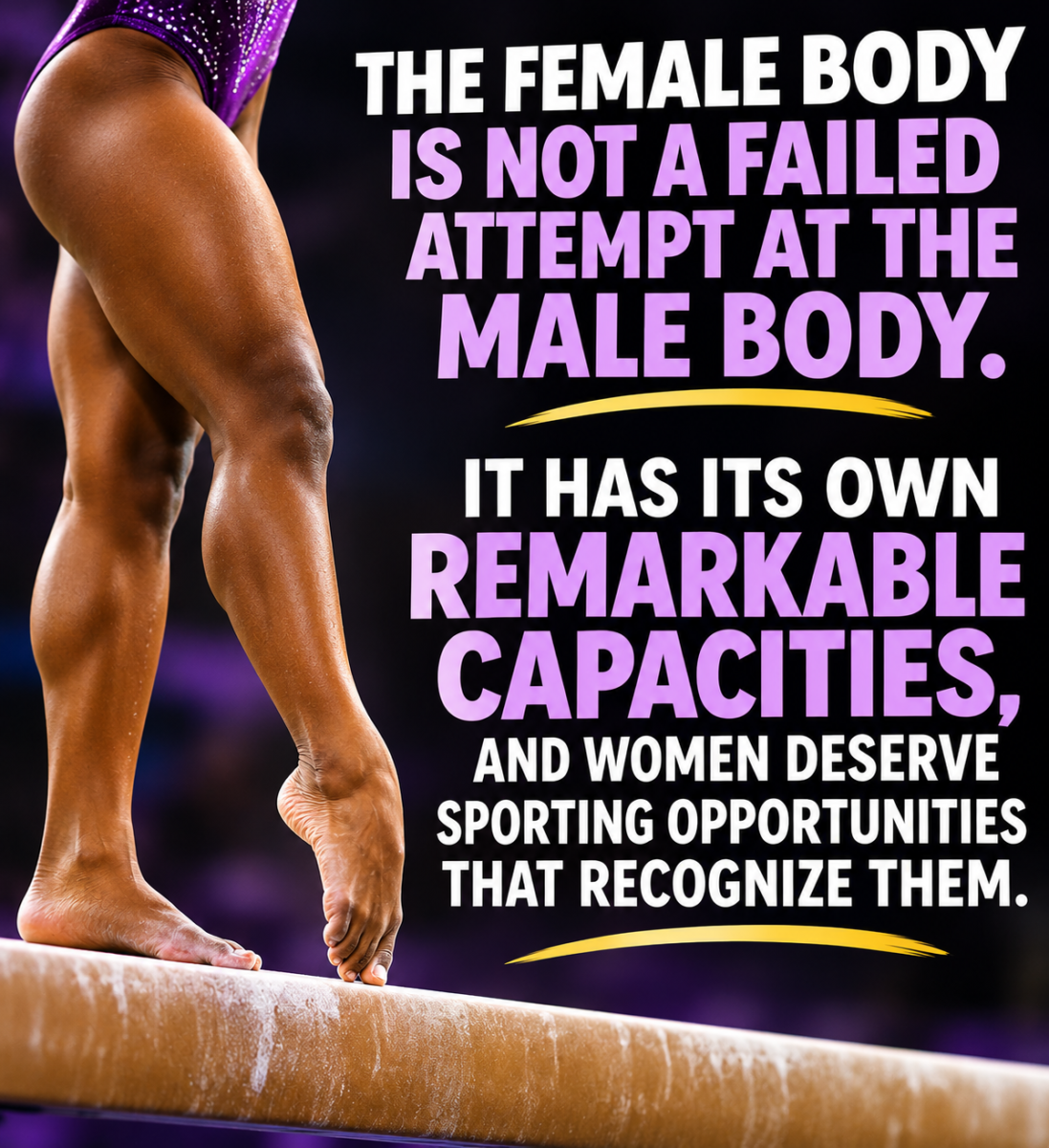
And I want them to grow up understanding that their bodies are not defective versions of male bodies.
They are female bodies, capable of strength, endurance, speed, skill, and astonishing athletic achievement.
Because the real tragedy isn’t that girls and boys may perform differently in certain sports.
It’s that we have spent so much time debating the value of women’s sports when we could have been helping more girls discover their own abilities.
Women’s sports have been handicapped by history, unequal opportunity, and the habit of treating female achievement as secondary.
The answer is not to ask girls to be less ambitious, less outspoken, or less concerned about fairness. The answer is to take their sports seriously.
And perhaps, years from now, some little girl will walk into a restaurant in her hometown and see a photograph of a woman who once played on the same field she plays on.
A hometown legend.
Somebody whose name everybody remembers. And she’ll know that greatness is something her community believes she can pursue, too.
Not because she’s trying to be one of the boys.
Because she’s a girl, and her possibilities were always worth investing in.
A thought worth keeping
A girl should never have to choose between being gracious to others and asking for fairness for herself.
She can be generous, respectful, and compassionate without surrendering her own opportunities.
And when she steps onto that field, court, track, or playing surface, she deserves something every athlete deserves:
A fair chance to find out just how good she can become. Many people have a hard time telling boys “no.” But the bigger tragedy is that they have a hard time telling girls “yes.”
Let her win ….too.
Sincere Appreciation: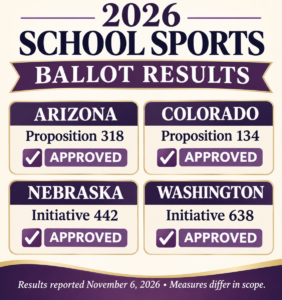
Voters in Arizona, Colorado, Nebraska, and Washington approved ballot measures establishing or reinforcing sex-based requirements in school athletics. Supporters described these measures as protections for fair competition and female athletic opportunities.
12 Unapologetic Truths: Your Rights as a Woman Are Unconditional (Audio/podcast) – WE Survive Abuse
Women Deserve Privacy, Safety, and Respect—Especially in Campus Athletics – WE Survive Abuse
