"I was excluded, so this is like Jim Crow."Jim Crow was not simply “I feel unwelcome." Jim Crow was an entire machinery of racial domination, bac
“I was excluded, so this is like Jim Crow.”
Jim Crow was not simply “I feel unwelcome.”
Jim Crow was an entire machinery of racial domination, backed by law, violence, economic punishment, police power, mob terror, and social permission.
Jim Crow controlled almost everything that made a person a citizen, a worker, a neighbor, a student, a traveler, a voter, and a human being in public.
It was not just “separate bathrooms.” It was a whole racial order. A cage with laws, customs, police, employers, mobs, judges, sheriffs, registrars, newspapers, landlords, and white citizens all helping guard the door.
The danger was severe. A Black person who violated Jim Crow could lose a job, lose land, be beaten, arrested, framed, sexually assaulted, driven out of town, have their home burned, or be lynched. Ferris State’s Jim Crow Museum says the system was backed by both real and threatened violence, and that Black people who violated Jim Crow norms, including drinking from a white water fountain or trying to vote, risked “their homes, their jobs, even their lives.” It also notes that white people could often beat Black people with impunity because the criminal justice system was controlled by white police, prosecutors, judges, juries, and prison officials.
What Jim Crow controlled
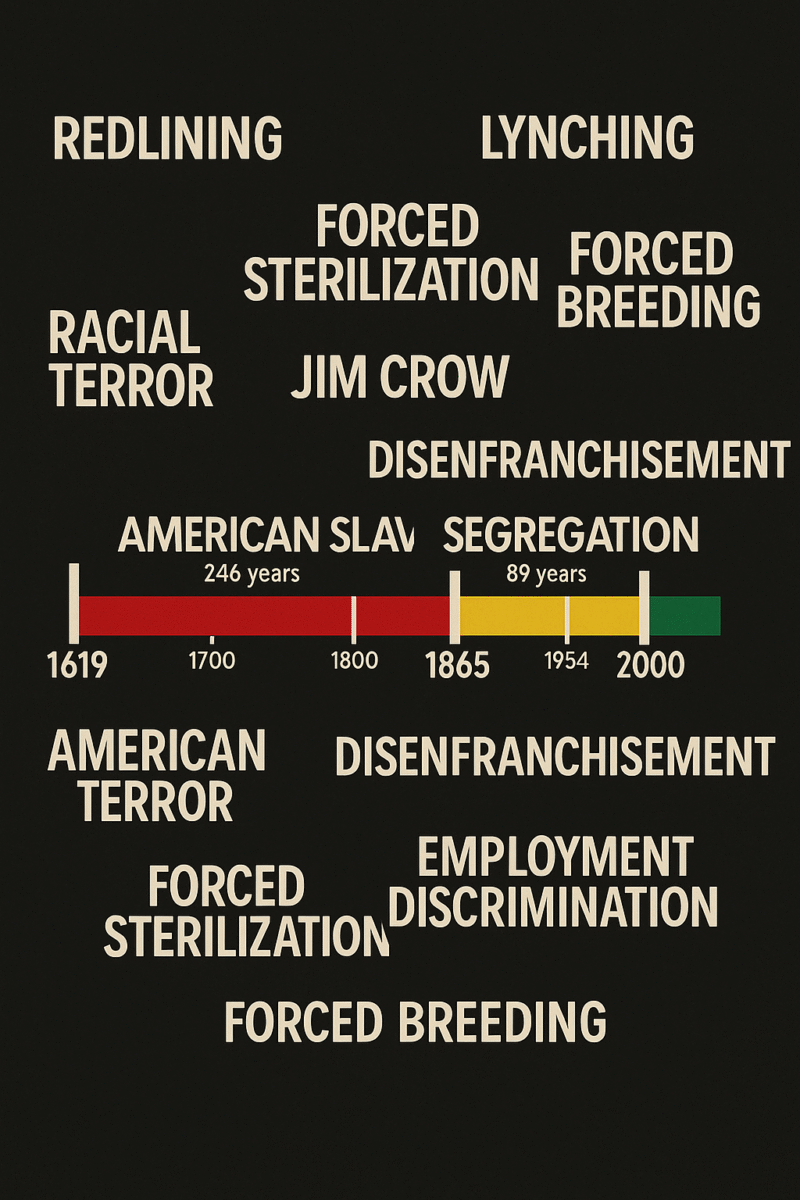
Jim Crow controlled:
Voting and political power
Black people were blocked from registering, voting, holding office, serving on juries, and influencing law. Southern states used poll taxes, literacy tests, grandfather clauses, white primaries, intimidation, fraud, and violence to strip Black citizens of political power. EJI notes that between 1890 and 1910, Southern and border states adopted poll taxes, literacy tests, and other policies that disenfranchised most African Americans.
Schools
Public education was segregated by race. Black schools were usually underfunded, overcrowded, and treated as inferior by design. Segregation was not just separation. It was structured deprivation.
Transportation
Buses, trains, waiting rooms, ticket counters, and streetcars were segregated. Black people could be ordered to the back, forced to stand, removed, arrested, or attacked for refusing racial rules.
Restrooms, water fountains, and public facilities
Bathrooms, water fountains, parks, hospitals, cemeteries, libraries, restaurants, theaters, hotels, and waiting rooms were segregated. These rules told Black people, every day, “You may exist here only under domination.”
Housing and neighborhoods
Segregation shaped where Black families could live, rent, buy, borrow money, and build wealth. EJI describes public education as legally segregated throughout the South and residential segregation as widespread beyond the South as well.
Jobs and economic survival
White employers, banks, unions, landlords, and local officials could punish Black people who challenged racial rules. A person could be fired, blacklisted, evicted, cheated, or pushed off land.
Courts and law enforcement
Black people were often denied equal protection. Police could ignore violence against Black victims, courts could refuse justice, and all-white juries could acquit white attackers.
Social behavior and “etiquette”
Jim Crow also controlled posture, tone, eye contact, speech, movement, and perceived “respect.” A Black person could be endangered for not stepping aside, not saying “sir,” looking a white person in the eye, objecting to disrespect, or being accused of being “uppity.”
That last part is important. Jim Crow was not only written law. It was a terror code.
How dangerous was the penalty?
The penalty could be deadly.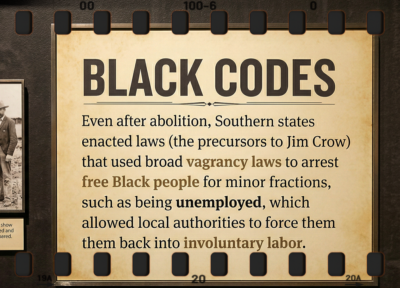
The NAACP records 4,743 lynchings in the United States from 1882 to 1968, while noting that the true number is likely underreported. Equal Justice Initiative’s work on racial terror lynching describes lynching as a tool used to enforce white supremacy and racial control, not random violence.
That means the “penalty” was not always a formal court sentence.
Sometimes the penalty was a mob.
Sometimes it was a sheriff looking away.
Sometimes it was a boss saying, “Don’t come back.”
Sometimes it was a registrar refusing your vote.
Sometimes it was your house burning that night.
Her Name Is Mary Turner. Her Story Still Speaks. – WESurviveAbuse
📢 Hidden Herstory: The Leesburg Stockade Girls – WESurviveAbuse
The documented cases are not the full story. They are the part that survived paper.
So much of Jim Crow terror lived outside the official record because the same systems that harmed Black people often controlled the recording of the harm.
Some deaths were called “accidents.”
Some disappearances were never investigated.
Some families kept quiet to survive.
Some names were never written down.
Some police reports were never made.
Some coroners lied.
Some newspapers softened the truth.
Some judges refused to hear it.
Some witnesses knew speaking could make them next.
Some people fled in the night, and the loss was recorded only as “they moved.”
That is why documented lynching counts, documented beatings, documented voter intimidation, documented expulsions, and documented massacres should be read as the floor, not the ceiling.
And this is part of why careless comparisons hurt so badly.
Families know there is a whole underground archive of pain that never made it into textbooks, court files, newspapers, or museums.
Why “The Last RECORDED Lynching” IS NOT the Same As “The LAST Lynching” – WESurviveAbuse
Voting examples
Voting was one of the most dangerous places to challenge Jim Crow because voting meant power.
Black political participation after the Civil War threatened the old racial order. During Reconstruction, Black men voted, held office, built schools, shaped law, and helped create a new democratic possibility. Then white supremacist power moved to destroy that possibility through law and terror. The Smithsonian’s National Museum of African American History and Culture notes that white southern Democrats used violence, intimidation, and electoral fraud to suppress Black men’s votes during Reconstruction.
Here are examples of how voting was controlled:
| Jim Crow voting tactic | What it did | Why it was dangerous |
|---|---|---|
| Poll taxes | Required payment before voting | Poor Black voters and many poor white voters were priced out |
| Literacy tests | Forced voters to read or interpret legal text | White registrars could pass white voters and fail Black voters arbitrarily |
| Grandfather clauses | Protected many white voters whose ancestors could vote before Black men gained rights | Let states claim neutrality while targeting Black citizens |
| White primaries | Kept Black voters out of decisive primary elections | In one-party regions, the primary often decided the real winner |
| Registration intimidation | Made registration public, hostile, or humiliating | Black citizens could be threatened, fired, evicted, or attacked |
| Violence and mob terror | Punished Black political activity | Voting could cost a person their home, job, safety, or life |
One direct example: the America’s Black Holocaust Museum notes that Black people who tried to vote could be threatened, beaten, killed, fired, thrown off farms, or have their homes burned.
Another example: the National Archives explains that media coverage of racial violence in Mississippi and Alabama helped build pressure for the Civil Rights Act of 1964 and the Voting Rights Act of 1965. That matters because the violence was not incidental. It was part of the national crisis that forced federal action.
Specific historical examples
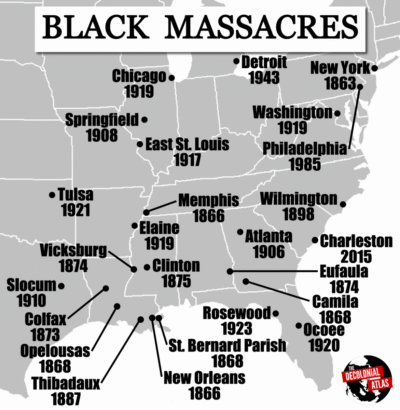
Ocoee, Florida, 1920.
On Election Day 1920, Black residents in Ocoee attempted to vote. White mob violence followed. Reports vary on the number killed, but the event is widely remembered as one of the deadliest Election Day attacks in U.S. history. It was a warning written in blood: Black voting would be met with terror.
Wilmington, North Carolina, 1898.
White supremacists overthrew a legitimately elected multiracial government in Wilmington. Time describes the event as a massacre and coup in which at least 60 Black men were killed, with Black voting rights and officeholding targeted as part of the violence.
Selma, Alabama, 1965.
The Selma voting rights campaign exposed how dangerous voting rights activism remained deep into the 20th century. On March 7, 1965, voting rights marchers were brutally attacked by Alabama state troopers on the Edmund Pettus Bridge, an event remembered as Bloody Sunday.
Survivors Speak Truth: John Lewis Speaks Truth on Black America’s Fight for Justice – WESurviveAbuse
Emmett Till, 1955.
This was not a voting case, but it shows the broader danger of Jim Crow “etiquette.” Fourteen-year-old Emmett Till was murdered after being accused of offending a white woman. The NAACP describes his murder as a brutal example of white supremacy and racial terror in the Jim Crow era.
The plain truth
Jim Crow controlled:
where Black people could sit, drink, learn, vote, work, sleep, travel, speak, enter, stand, buy, sell, pray, heal, and be buried.
And the penalty for resisting could be:
economic ruin, public humiliation, arrest, beating, exile, sexual violence, home destruction, or lynching.
That is why the comparison to Jim Crow has to be handled carefully.
Jim Crow was not just exclusion.
It was exclusion backed by racial terror.
How Abusers and Systems Use “You Have It Good” to Normalize Deprivation – WESurviveAbuse
Stay Woke: When a Warning is Turned to a Punchline – WESurviveAbuse
Civil Rights: Focus is How a People Stop Being Managed and Start Being Heard – WESurviveAbuse