Congressman John Lewis was beaten while fighting for voting rights. On March 7, 1965, during the Selma voting rights march across the Edmund Pettus B
Congressman John Lewis was beaten while fighting for voting rights.
On March 7, 1965, during the Selma voting rights march across the Edmund Pettus Bridge, Alabama state troopers attacked peaceful marchers. That day became known as Bloody Sunday. John Lewis, who was only 25 years old and chairman of SNCC, was hit in the head by a state trooper and suffered a skull fracture. Marchers were beaten, tear-gassed, and trampled by horses.
So, when people talk casually about weakening the Voting Rights Act, they are talking about something people bled for.
John Lewis did not get beaten because Black people wanted “special treatment.”
He got beaten because Black people were asking America to stop blocking them from voting.
The Voting Rights Act was not born from theory.
It was born from bruises, blood, courage, and locked doors.
That is why this current fight feels so insulting. People are acting like the Voting Rights Act was some unfair advantage, when it was actually a shield built after generations of harm.
The loudest conservative response is: “Good. Stop drawing districts by race.”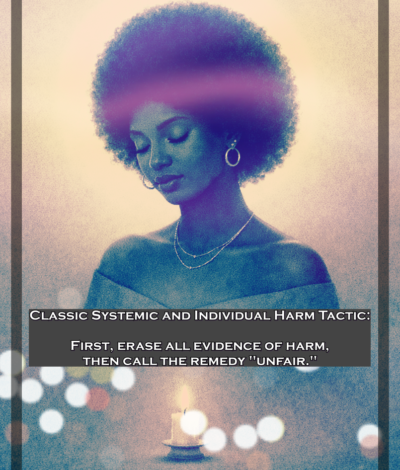
That response treats race-conscious repair as the same thing as racial discrimination. It ignores the history that made the Voting Rights Act necessary in the first place. That is the old trick in a fresh suit: erase the harm, then call the remedy unfair.
They used things like:
• reading tests that were not fairly given
• extra fees called poll taxes
• threats
• violence
• firing people from jobs
• refusing to register Black voters
• changing rules whenever Black people got close to power
So the problem was not that Black people did not care about voting.
The problem was that powerful people were standing in the doorway and saying, “You have the right to vote, but we will not let you use it.”
That is harm. It was deadly.
In 1965, many brave people marched in Selma, Alabama, because Black Americans were being blocked from voting by racist systems. The National Archives says the Selma marches protested the blocking of Black Americans’ right to vote and helped lead to the Voting Rights Act of 1965.
So Congress passed the Voting Rights Act to say:
“You cannot use tricks, threats, violence, unfair tests, or unfair rules to stop people from voting because of race.”
Think of it like this:
A school says, “Everyone may eat lunch.”
But then one group of children is told:
“You have to answer 50 impossible questions first.”
“You have to pay money first.”
“You have to enter through a locked door.”
“AND, if you try to come in, someone may hurt you and your family.”
That is not equal access to lunch.
So the school would need a stronger rule, not because those children are asking for special treatment, but because they were being specially blocked.
That is what the Voting Rights Act was for.
It was not created because Black people wanted “extra” rights.
It was created because Black people were being denied the rights they already had.
A more “moderate” response is confusion dressed up as balance: “I don’t understand why race can be used at all in districting.”
These people may not be openly hostile, but they often treat history like clutter.
They want a clean rule: “Don’t use race.” But America’s voting systems were not built cleanly. And these people know that. Maybe not the exact facts, dates, times, names, and places, but they are very much aware.
If districts were shaped by segregation, racial bloc voting, intimidation, dilution, and exclusion, then pretending race is irrelevant does not make the system fair. It just protects the old arrangement under nicer language.
The Voting Rights Act came about because people were being hurt and blocked from using their rights.
The most dangerous response, to me, is the calm shrug: “This is just politics.”
That is where anti-Blackness becomes invisible. Because when Black voting power is reduced, some people will say, “Well, both parties gerrymander.” That skips the core issue: the Voting Rights Act exists because Black people were systematically blocked, diluted, threatened, harmed, murdered, and erased from political power.
Calling that “just politics” is how a country launders racial harm into procedure.
The plain truth: a lot of white conservative online commentary is celebrating this as “race-neutral.” But the likely outcome is not neutral. AP reports the ruling could open the door for Republican-led states to eliminate Black and Latino electoral districts, especially districts that currently allow communities of color to elect candidates of choice. Experts quoted by AP said the most likely major effects may show up in 2028, with more than a dozen previously protected Democratic-held districts potentially affected.
The Voting Rights Act was like a guard placed at the door of democracy, because too many people had been locking Black people out. Based on initial reactions to the devastating Supreme Court decision. We have not come nearly as far as we think that we have.
You Are Not Overreacting: The Truth About Racism and Dismissal (w/Affirmations) – WESurviveAbuse
Stay Woke: When a Warning is Turned to a Punchline – WESurviveAbuse
(3) Dear Killer Mike, Shut The F*ck Up by Goldie Taylor
@intagibleasset Voting rights when diluted for anyone are intended for use against eveyone and will be used as such. The writing is on the wall and I’m trying to help you read it because it’s in a language with which you are deeply unfamiliar #voting #rights #usa #constitution #fight ♬ original sound – Miss.Information