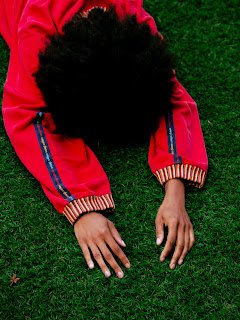
I saw this online from Dr. Mozelle Martin and wanted to share it. Self-awareness is a powerful thing, is it not? .-Tonya GJ Prince (Trauma -includin
I saw this online from Dr. Mozelle Martin and wanted to share it. Self-awareness is a powerful thing, is it not? .-Tonya GJ Prince
(Trauma -including generational trauma-is exhausting even when as you sleep.)

For centuries, the way humans sleep has evolved as a response to environmental threats. One of the most fascinating and lesser-known aspects of sleep patterns in trauma survivors is the instinct to sleep with their palms and fingers protected or covered. While this behavior may seem trivial, it is deeply rooted in our ancient survival instincts—a subconscious, primal response passed down through generations.
Thousands of years ago, early humans faced constant threats from wild animals, tribal encounters, and other dangers. In those dangerous times, humans had no way of being easily identified, such as with photo IDs, if they were injured or killed. Identity was preserved through fingerprints and palm prints, as these were unique to each individual. If a person was found dead or unconscious, their identity could often only be traced through their handprints. In a world without technology or written records, these prints were the simplest, most reliable form of personal identification.
Fast forward to today, and this instinct continues to persist in the subconscious of trauma survivors. As a retired clinical director of a trauma clinic, I’ve observed a powerful, nearly universal behavior among trauma survivors: almost 100% of them sleep with the “print” side of their hands and fingers covered or protected, often without even realizing it.
- Whether sleeping on their side in a self-hug position,
- tucking hands under the pillows,
- burying themselves under the covers,
- or any other variation…
…this seemingly small act is a profound psychological response.
It is a defense mechanism that ensures their identity can be preserved if harm were to come to them while they sleep, when their photo ID, phone, or other forms of identification may be far away, tucked in a car, purse, or somewhere else. I am one of those survivors who instinctively protects my hands while asleep.