updated from May 1 2025 UPDATE: I Learned More About Kitty Genovese I originally published this post in May 2025. At the time, I repeated a ve
updated from May 1 2025
UPDATE: I Learned More About Kitty Genovese
I originally published this post in May 2025. At the time, I repeated a version of the Kitty Genovese story that I had heard, read, watched on documentaries and encountered for years: that numerous neighbors heard or witnessed her attack and essentially did nothing.
I have since learned that this familiar account is seriously misleading.
Rather than quietly rewriting the post as though I had always known better, I am leaving much of my original post here. I think there is something useful in seeing how easily even careful people can inherit a story that has been repeated so often that it begins to sound like settled fact.
Kitty Genovese was brutally murdered in Queens in 1964. But later investigations found that the famous story of 38 indifferent witnesses watching her murder and refusing to help was not supported by the evidence. Some people heard only portions of what was happening. The attacks occurred in different locations. One man shouted from his window and frightened the attacker away temporarily. Police were reportedly contacted. And after the final attack, Kitty’s friend and neighbor Sophia Farrar went to her and held her as they waited for help.
That changes something important.
It does not mean the bystander effect is imaginary, nor does it erase the many situations in which people really do stand around while another human being is harmed. The video that prompted this original post still raises that question for me.
But Kitty Genovese should not have to carry evidence for something that the historical record does not establish.
So I am correcting my use of her story while leaving enough of my original post intact for readers to see how the mistake happened.
I recorded a new episode of the We Survive Abuse Podcast examining what we now know about Kitty’s murder, the neighbors who were erased from the popular account, and how an inaccurate story became one of the most famous lessons in American psychology.
Sometimes learning requires adding new information.
We Were Told Nobody Helped Kitty Genovese. That Wasn’t True. (audio ep) – WE Survive Abuse
I saw a video of a very young woman getting flipped into the pool yesterday. She was young, carefree, wearing a bikini and dancing with a young man. Another young man comes along, appearing angry, picks her up and flips her into the pool. HARD! Her head barely misses the concrete edge.
Later she posts online that she doesn’t know the man and she is recovering.
It reminds me that I haven’t worn a bathing suit to pools since I was in my early teen years. No bikinis ever. In fact by the time I was this beautiful young lady’s age, I wore poolside clothes and stayed far away from the edge. Men can act predatory, even violent out of nowhere and for no reason. And like men in this video, often other men do nothing to help.
They stare. They keep walking. They laugh. They say, “that’s crazy.” But they do not intervene.
Psychology has been studying this for some time now.
In 1964, a 28-year-old woman named Kitty Genovese was brutally attacked outside her apartment building in Queens, New York.
According to early reports—later clarified, but still deeply symbolic—dozens of people heard her screams. But no one came.
No one called the police.
No one ran down the stairs.
No one said, “She matters.”
And when the news broke, the world asked:
“How could so many people do nothing?”
🤎 The World Had Already Judged Her
Before the knife. Before the screams.
Society had already decided what kind of woman Kitty Genovese must be.
She was young.
She lived alone.
She came home late at night.
She worked in a bar.
There was a cruel cultural script playing in the background:
“A good woman wouldn’t live like that.”
“If she were married, this wouldn’t have happened.”
“She probably knew the man.”
This wasn’t just about neighbors not hearing.
🧠 Groupthink and the Bystander Effect: When We Silence Ourselves
Kitty’s case helped uncover something that psychology has since confirmed:
When a group of people witnesses something dangerous or harmful, each person is less likely to help because they assume someone else will.
This is called the bystander effect (sometimes called Genovese Syndrome)
And when paired with groupthink—the urge to avoid rocking the boat or standing out—it becomes deadly.
This is how harm continues:
In homes where children are abused.
In schools where girls are harassed.
In communities where women are killed.
In boardrooms, churches, and digital spaces where silence equals complicity.
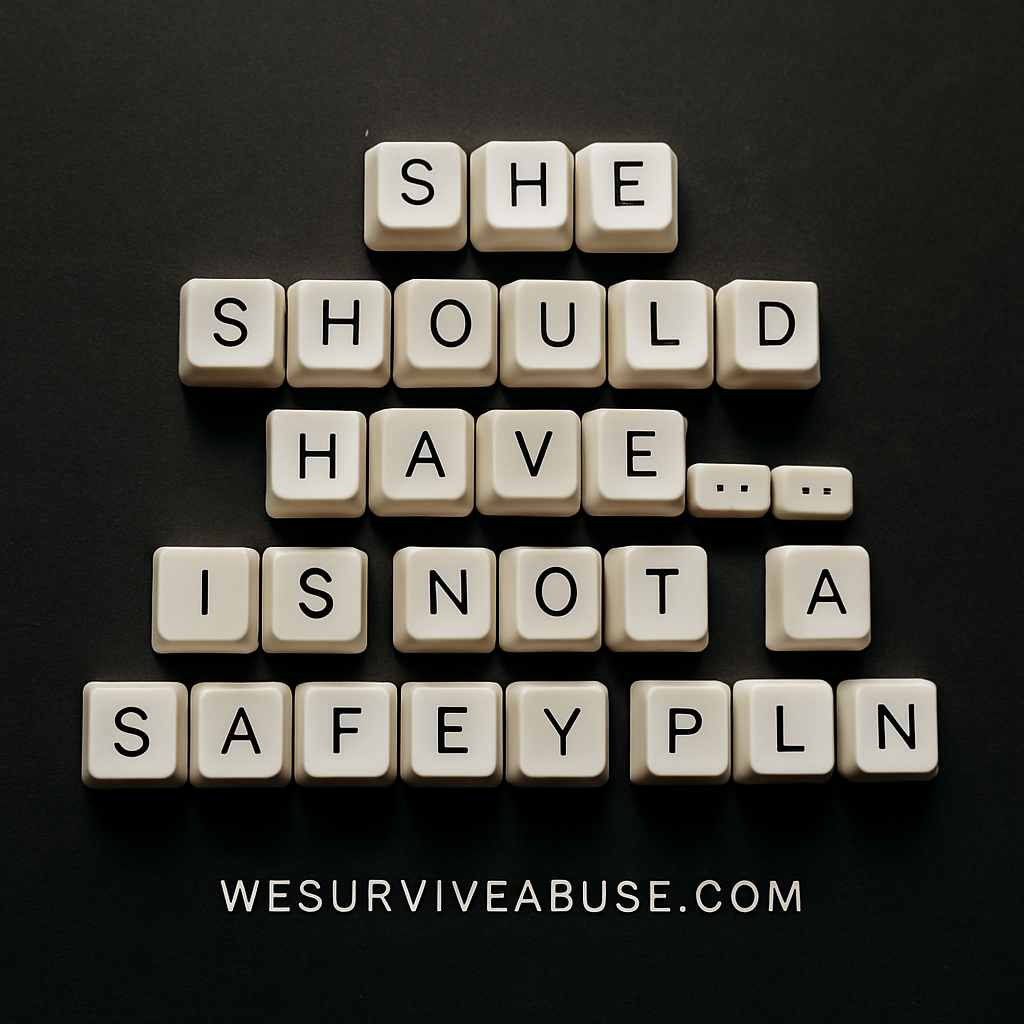
🙅🏾♀️ “She Should Have…” is Not a Safety Plan
We’re still living with the same toxic assumptions today.
That women should marry to be protected.
That women should dress or speak or walk in just the right way.
That if something happens, she probably brought it on herself.
That only “certain” kinds of women deserve to be believed or defended.
This is not protection.
This is prejudice wrapped in tradition.
And it costs lives.
🕯️ What We Must Choose Instead
We must choose compassion over cowardice.
Courage over compliance.
Care over comfort.
Because here’s the truth:
Every woman deserves safety.
Every girl deserves protection.
Every Survivor deserves to be seen, heard, and helped—without judgment.
Let us never again be the neighbors who close the blinds.
Let us be the ones who open doors.
Raise our voices.
Make the call.
Break the cycle.
Tell the truth.
Because silence is not safety.
And judgment is not justice.
Important update on Kitty Genovese:
🕯️ The Story I Thought I Knew About Kitty Genovese
In 1964, 28-year-old Kitty Genovese was brutally attacked and murdered near her home in Queens, New York.
For decades, many of us were taught essentially the same story: dozens of people witnessed or heard Kitty being murdered, nobody called the police, nobody went downstairs, and nobody came to help her.
I believed that account when I originally wrote this post.
We now know the evidence tells a much more complicated story.
Some neighbors did take action. One man’s shout interrupted the attack and caused Kitty’s attacker to leave temporarily. Police were reportedly contacted. Most importantly, Kitty was not simply left to die alone while an entire neighborhood hid behind its curtains. Her friend and neighbor Sophia Farrar came to her, held her, and stayed with her while help was coming.
That woman deserves to be remembered too.
The correction does not erase the question that originally brought me to Kitty’s story: Why do people sometimes fail to intervene when someone is being harmed?
Psychologists have studied that question extensively.
But we can study bystander behavior without asking Kitty Genovese, Sophia Farrar, and the other people who did act that night to carry a story that isn’t true.
We Were Told Nobody Helped Kitty Genovese. That Wasn’t True. (audio ep) – WE Survive Abuse