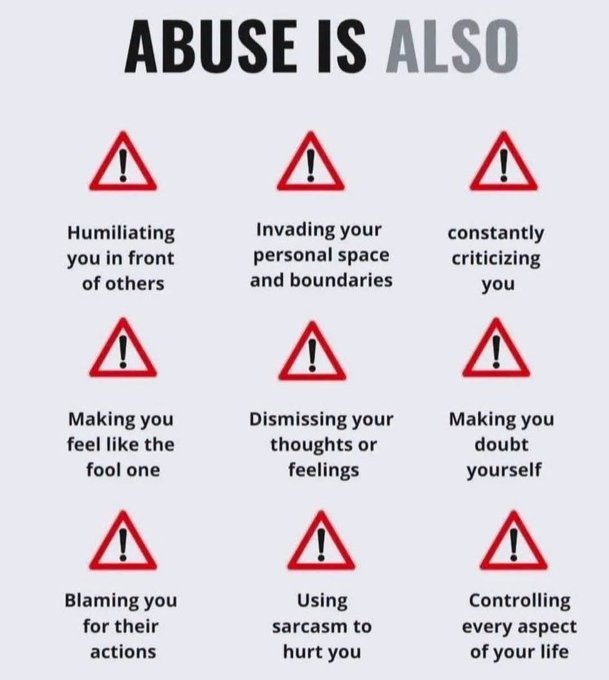
updated from January 2026I've served the women who responded to violence and were facing harsher punishment than any man would have for the same c
updated from January 2026
I’ve served the women who responded to violence and were facing harsher punishment than any man would have for the same crime. No one was willing to hear her. Police, attorneys, her attorneys, the children’s guardian ad litem, would come to the domestic violence advocate trying to “understand her.”
For a woman whose native language is the same as theirs. But understanding the dynamics of domestic violence against the backdrop of this society can be complicated.
Some of us were raised to be the glue.
It sounded beautiful.
Be dependable. Keep everybody together. Remember the birthdays. Smooth over disagreements. Calm the room. Help people forgive. Protect the family. Protect the community.
But nobody warned us to ask:
🧩 What exactly am I being asked to hold together?
Because sometimes women aren’t holding together something healthy.
Sometimes we are being asked to keep broken systems functioning by absorbing the damage ourselves.
1. 🫶🏾 “Be the Glue” Sounds Beautiful Until You See What You’re Gluing Together
There is love in caring for people.
There is beauty in community.
But keeping people connected is not automatically good when the connection requires somebody to tolerate abuse, cruelty, racism, exploitation, secrecy, or fear.
Sometimes the crack isn’t the problem.
The crack is revealing the problem.
2. 🤫 “Keep the Peace” Can Mean “Absorb the Disturbance”
A woman says:
“Something is wrong.”
And suddenly everybody becomes concerned about harmony. Oh yeah, and “unity”. Sometimes it is allegedly “inclusion”……even while women and girls are sacrificed and side-lined.
Don’t embarrass him.
Don’t hurt his feelings.
Don’t ruin the gathering.
Don’t tear the family apart.
Don’t damage the organization.
Don’t damage his reputation.
Don’t disrupt his future.
Don’t bring outsiders into our business.
Translation:
We would rather you carry the discomfort privately than make the rest of us confront its source.
That isn’t peace.
That is redistribution.
The disturbance has simply been moved into her.
3. 🚨 We Can Become More Afraid of Disruption Than Danger
A woman or girl says:
“I don’t feel safe here.”
Listen to what happens next.
Does everybody move toward her safety?
Or toward preserving whatever her disclosure threatens?
A family reputation.
A respected man.
A church.
A school.
A team.
A workplace.
A movement.
A community.
Sometimes people attack the person pointing toward the fire because acknowledging her means admitting the house may actually be burning.
4. 👧🏾 “Good Girl” Training Can Prepare Girls to Override Themselves
Be polite.
Don’t make a scene.
Give people another chance.
Don’t embarrass anybody.
Don’t be difficult.
Be the bigger person.
Those lessons can sound harmless until a girl needs to do the opposite.
Leave.
Refuse.
Yell.
Tell.
Move away.
Call somebody.
Say:
“No. I don’t like this.”
Girls need more than lessons in kindness.
They need permission to recognize when kindness is being demanded at their expense.
5. 🧱 Sometimes Women Become Gatekeepers of Systems That Don’t Fully Protect Us Either
Women can protect women beautifully.
We have built shelters, hotlines, friendships, underground networks, community organizations and countless informal systems of care.
But womanhood does not automatically make any of us incapable of protecting harmful systems.
Women can enforce family secrecy.
Women can repeat racist stereotypes.
Women can dismiss another woman’s disclosure.
Women can defend powerful men.
Hell, women can simply defend men without a lot of social power and their alleged “right” to harm others.
Women can participate in institutions that disadvantage other women.
History does not allow us the comforting story that women will always choose women.
Solidarity is something we practice, not something biology performs for us automatically.
6. ✊🏾 And No, This Isn’t Just a “Black Community Problem”
That explanation is far too convenient.
Protecting institutions, families, powerful people, and social hierarchies at the expense of harmed women appears across cultures and communities.
Black communities deserve honest conversations amongst ourselves about our own failures without being turned into the universal explanation for human behavior.
And Black women deserve something better than being told:
“Your community silenced you.”
while everyone avoids asking how often the larger society has failed to hear Black women too.
That’s another kind of glue.
Racism can be protected by pretending its failures belong exclusively to the people experiencing them.
7. 👂🏾 “Giving Voice to the Voiceless” Gets Something Backward
People have voices.
The harder question is:
Who has listeners?
A woman can speak without being believed.
A girl can tell without being protected.
A Survivor can disclose without receiving help.
A community can know without responding.
And an atrocity can be documented while much of the world continues with its day.
Instead of constantly asking why people at the margins aren’t speaking, sometimes we need to turn around and examine everyone standing within hearing distance.
8. 📱 The Internet Can Give Us a Distorted Picture of Whose Reality Counts
The women we see online are not the entirety of womanhood.
Neither are academics.
Influencers.
Journalists.
Politicians.
Advocates.
Or those of us with websites and microphones.
There are women and girls whose experiences will never become content.
No hashtag.
No viral video.
No podcast interview.
No blue check.
No global campaign saying her name.
Her absence from our feeds does not mean her life exists outside the story.
9. 🌍 Look Toward What I Call the Socialized Bottom
If I want to understand how power actually works, I cannot look only toward people closest to microphones.
I want to look toward the woman with the fewest exits.
The girl nobody powerful knows.
The woman without reliable transportation.
The woman living where services barely reach.
The woman whose wisdom will never be packaged into a curriculum.
The girl whose suffering will never trend.
People living nearest the bottom of a hierarchy often encounter its hardest edges.
That perspective belongs in the center of how we think about safety.
10. 🎤 A Platform Should Be a Window, Not a Mirror
Those of us who can publish, teach, podcast, research, organize or reach thousands of people possess something valuable:
access.
The danger comes when everyone with access begins listening primarily to everyone else with access.
Eventually we can mistake the conversation happening among relatively visible women for women’s reality itself.
It isn’t.
Our microphones should help us hear farther than ourselves.
11. 🪞 Sometimes Being “The Glue” Is a Survival Strategy
There is compassion required here too.
Women don’t always accommodate because we are weak.
Sometimes accommodation has kept women alive.
If keeping the powerful person happy appears to reduce danger, smoothing things over can become survival intelligence.
If belonging to the group means food, shelter, employment, community or protection, disrupting the group can carry an enormous price.
So I don’t want to shame women for finding ways to survive.
I want us to become able to distinguish:
🌿 care from compulsory caretaking
🌿 peace from enforced silence
🌿 loyalty from complicity
🌿 safety from counterfeit safety
🌿 survival from freedom
Those are not always the same things.
12. 🧹 Maybe We Don’t Need to Keep Fixing Every Crack
This is part of my own unlearning too.
I still find the glue on my hands.
The instinct to smooth things over.
To stabilize.
To understand everybody.
To keep something functioning because its collapse feels frightening.
But I am learning to ask a different question:
Should this be held together?
Some relationships need repair.
Some communities need accountability.
Some institutions need rebuilding.
And some arrangements survive only because generations of women have been expected to keep absorbing their failures.
Maybe every crack isn’t ours to patch.
Maybe every uncomfortable truth doesn’t need softening.
Maybe every institution does not deserve protection from the consequences of what it has permitted.
And maybe a woman refusing to be the glue isn’t destroying something.
🌿 She may simply be refusing to hold together what has been breaking her.
👑 For the Woman Unlearning the Glue
💛 I can care deeply without becoming responsible for holding everyone together.
💛 Keeping other people comfortable is not the same thing as keeping myself safe.
💛 I am allowed to ask whether something deserves preservation before sacrificing myself to preserve it.
💛 Another woman’s suffering does not become less urgent because acknowledging it inconveniences my world.
💛 I will not confuse silence with peace.
💛 Sometimes the crack is where the truth finally gets in.
Unlearning Loyalty to Those Who Ask You to Lie – WE Survive Abuse
When Someone Else’s Path Becomes a Rulebook for All Women – WE Survive Abuse
🚨 Control of Language Is a Red Flag for Abuse—And Many Miss It – WE Survive Abuse
Abuse of Power in Spiritual Leadership: When Faith Is Used to Conceal Harm – WE Survive Abuse