Table of Contents
It is a contradiction to restrict women’s opportunities, safety, or autonomy and then criticize the ways women adapt. If we want different outcomes, we must examine the conditions we as a society create.
1. Unequal Pay and Economic Barriers
HeCheated.org
Women are still underrepresented in many of the highest-paying industries and leadership positions, and many continue to shoulder unpaid caregiving responsibilities that affect lifetime earnings.
Then society asks why women stay in financially dependent relationships or seek alternative ways to earn income.
The question should be: Why weren’t more economic doors open?
2. Punishing Motherhood
Women are often expected to become mothers while simultaneously being penalized professionally for pregnancy, caregiving, or career interruptions.
Then people ask why so many women struggle financially after having children.
Motherhood should not become an economic penalty.
3. Expecting Free Caregiving
Women perform enormous amounts of unpaid labor—raising children, caring for elderly relatives, managing households, and providing emotional support.
Then that labor is treated as though it has little economic value.
Invisible work is still work.
4. Failing to Protect Women From Violence
Many women alter where they go, what they wear, when they travel, and how they live because of the risk of harassment or violence.
Then they are criticized for being fearful, cautious, or “overreacting.”
Safety is not a privilege. It is a prerequisite for opportunity.
5. Discouraging Women From Leadership
Girls are often praised for being agreeable while boys are encouraged to be assertive.
Adult women who lead decisively may be labeled intimidating, emotional, or unlikeable.
Then people ask why there are fewer women in leadership.
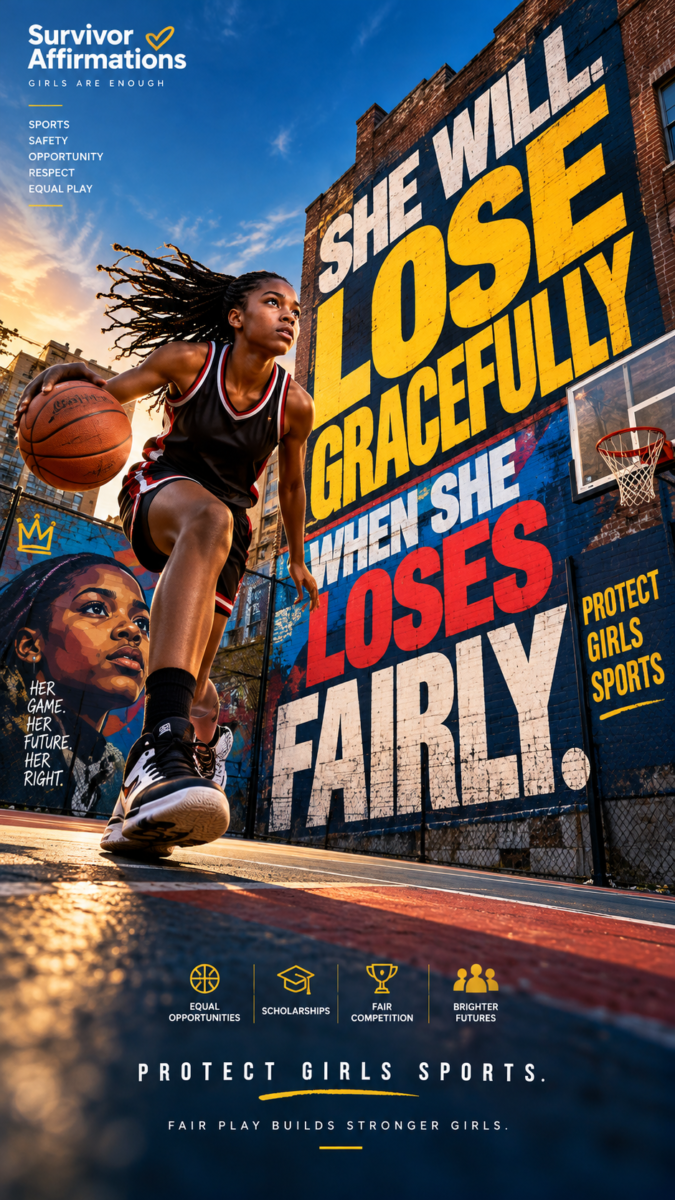
6. Not Protecting Women’s Sports
The audacity to have a society that harshly critiques, analyzes, and judges girls’ and women’s bodies and then puts up obstacles for them to compete fairly when we want to use those bodies for sports. Power using imposturing and insanity. Whatever it takes to take from girls and women.
Women’s sports exist because sex-based competition recognizes average physiological differences that can affect fairness, safety, and competitive opportunity.
Preserving female competition categories protects opportunities for girls and women to earn roster spots, scholarships, records, championships, and professional careers. Others emphasize inclusion for male athletes in women and girls sports and advocate for policies they assert is “fair.”
From the perspective of those concerned about protecting women’s sports, weakening female competitive categories can reduce opportunities that Title IX and decades of advocacy sought to expand.
The discussion should begin by recognizing that women deserve meaningful opportunities to compete, develop athletically, and excel. Males have other opportunities to compete with other boys and men.
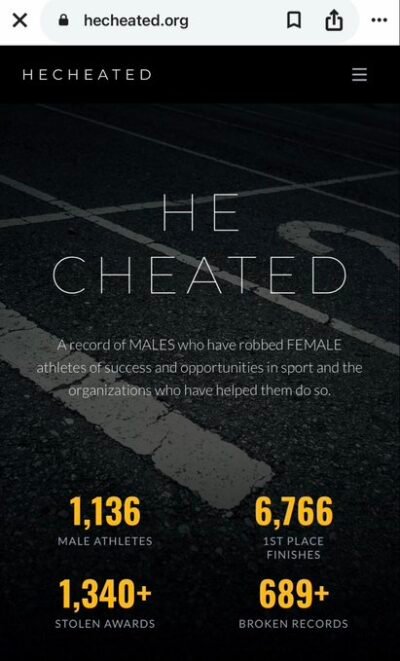
HeCheated.org …..A record of MALES who have robbed FEMALE athletes of success and opportunities in sport and the organizations who have helped them do so.
7. Sexualizing Women While Condemning Them
Society often profits from women’s appearance in advertising, entertainment, and social media.
Then women are criticized if they monetize that same demand.
The market did not appear out of nowhere.
8. Limiting Financial Education
Many girls receive less encouragement to learn about investing, negotiating salaries, entrepreneurship, and wealth-building.
Then people criticize women for lacking financial confidence.
Knowledge is an opportunity.
9. Ignoring Women’s Health
Women’s pain has historically been dismissed or undertreated, and research has often centered on male bodies.
Then women are criticized for missing work or struggling with chronic health conditions.
Health affects opportunity.
10. Expecting Women to Be Everything
Women are expected to be attractive—but not vain.
Ambitious—but not intimidating.
Kind—but not weak.
Confident—but not “too much.”
Successful—but always available to everyone else.
Then society wonders why women experience exhaustion and burnout.
Contradictory expectations create impossible standards.
11. Punishing Women Who Set Boundaries
Women who say “no” are often called rude, selfish, cold, difficult, or angry.
Then people ask why women struggle with burnout or unhealthy relationships.
Boundaries protect well-being.
12. Questioning Women’s Credibility
Women’s memories, expertise, instincts, and reports of harm are frequently subjected to greater skepticism than men’s.
Then people wonder why women hesitate to speak up.
Belief shapes participation.
Black Womanist Truth
For generations, women have been denied equal access to education, fair wages, property ownership, promotions, financial security, and positions of power. Black women, in particular, have faced the compounded barriers of racism and sexism, often expected to work harder for less while carrying the weight of entire families and communities.
Black women have often faced these barriers at multiple intersections. They have been expected to work harder, endure more, receive less protection, and carry communities while asking for little in return. Too often, resilience has been celebrated instead of injustice being corrected.
A just society does not admire women’s endurance while ignoring the conditions that made such endurance necessary.
*PS…don’t whine about DEI because we defied expectations. That’s just how we do, because we have to.
Affirmation
I deserved opportunity before I was ever expected to prove my resilience. My dignity is not measured by how well I survive barriers that should never have existed.
Journal Reflection
- Which barriers facing women have become so familiar that we mistake them for normal?
- Where have I confused women’s resilience with justice?
- What opportunities would expand if women’s safety and dignity were treated as foundational rather than optional?
- How can I advocate for systems that give women genuine choices instead of forcing impossible tradeoffs?
We cannot keep robbing women of opportunities and then condemning the ways they survive.
Then, when some women find income outside the paths society deems “respectable,” the same society that restricted their choices often rushes to judge them.
That contradiction deserves to be named.
If we limit women’s access to economic opportunity, we should not be surprised that some will create opportunities wherever they can. Survival has never waited for permission.
This does not mean every way of making money is without risk or consequence. It means we must be honest about the conditions that shape people’s choices. Moral outrage is easy. Creating equitable opportunities is harder.
History reminds us that women have repeatedly been excluded from economic independence. Married women were once barred from owning property in their own names. Many professions excluded women entirely. Black women were frequently confined to domestic and agricultural labor, denied the protections and pay afforded to others. Even today, occupational segregation, caregiving expectations, discrimination, and wealth disparities continue to narrow women’s options.
When opportunity is rationed, survival becomes creative.
Instead of asking, “Why would she make money that way?” we should also ask, “What doors were closed before she ever reached that decision?”
A society that truly values women invests in their education, pays them fairly, protects them from discrimination and violence, supports caregivers, and ensures that dignity is not a luxury reserved for the economically secure.
Until then, we should be careful not to condemn women for navigating systems they did not design.
Affirmation
My worth is not determined by who approved of the choices available to me. I deserved opportunity before I was ever forced to become resourceful.
Journal Reflection
- What opportunities have women historically been denied that are now taken for granted?
- When have I judged someone’s choices without first asking what options were actually available to them?
- Where have I confused access with opportunity?
- What would a society look like if every woman had enough genuine economic choices that survival did not require impossible compromises?