Table of Contents
Melba Wilson wrote about something that Black women had certainly been living but had rarely been given room to discuss publicly: incest and childhood sexual abuse inside Black families.
Crossing the Boundary: Black Women Survive Incest did not treat Black women as simply another demographic to be added to a general conversation about sexual abuse. Wilson explored the particular pressures surrounding Black Survivors: racism, sexual stereotypes about Black women and girls, family loyalty, community protection, distrust of institutions, shame, silence, and the fear that speaking about abuse within Black families would give racist people another weapon.
Those complications did not make the abuse less real.
They made finding somewhere safe to tell the truth more complicated.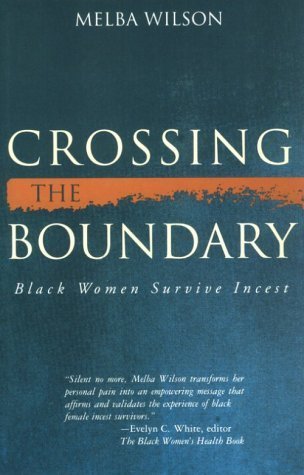
Here are ten lessons I carry from her work.
1. 🔇 Silence can protect a family’s image while leaving the Survivor alone with the harm.
Families can have powerful reasons for not wanting certain truths spoken aloud.
Sometimes people fear shame. Sometimes they fear authorities. Sometimes they fear what will happen to the family. In Black communities, there can also be a legitimate historical distrust of systems that have treated Black people unjustly.
But there is a question underneath all of that:
Who carries the cost of everybody else’s silence?
Too often, it is the person who was harmed.
Protecting the appearance of family unity is not the same thing as protecting the family.
Sometimes the silence is what allows the wound to remain open.
2. 🧒🏾 A child cannot be responsible for protecting the adults around her from the truth.
Children quickly learn what adults can tolerate hearing.
A child may notice that talking about certain things upsets Mama. She may know Grandma doesn’t want trouble in the family. She may understand that an uncle is loved, a father is respected, or somebody’s reputation holds enormous importance.
So she carries information far too heavy for her age.
That burden never belonged to her.
A child should not have to decide whether telling the truth will break apart a family. She should not have to calculate what will happen to the man who harmed her, whether her mother will believe her, or what the community will say.
Those are adult burdens.
The child’s responsibility was to be a child.
3. 🖤 Black women can fight racism without sacrificing Black female Survivors.
This is one of the most difficult tensions Wilson confronted.
Black people have historical reasons to be suspicious of racist sexual narratives about Black men. Those narratives have been used to justify imprisonment, violence, lynching, segregation and terror.
That history is real.
So is sexual violence against Black women and girls.
We do not have to erase one truth to protect the other.
Racism does not become less wrong when we talk about sexual abuse. Sexual abuse does not become less wrong because the person committing it is Black.
There has to be room in our communities to defend Black people against racism while also defending Black women and children against violence.
4. 🪞 Racist stereotypes about Black girls can interfere with recognizing their vulnerability.
Black girls have lived beneath some terrible sexual stereotypes.
Too mature.
Too fast.
Already knowing.
Already sexual.
Developed for her age.
Womanish.
None of those descriptions can turn a child into an adult.
A girl can develop early physically and still be a child. She can be outspoken and still be a child. She can know about sex and still be incapable of consenting to sexual activity with an adult.
Even a child who behaves in ways adults consider difficult, precocious or inappropriate remains a child.
Nothing about a girl’s personality moves the boundary between childhood and adulthood.
5. 🤐 A Survivor may remain silent for reasons that make complete sense from where she is standing.
It is easy to ask years later:
“Why didn’t she tell?”
The harder work is understanding the world in which she would have had to tell.
Who would she have told?
Would that person have believed her?
Was the person hurting her also providing housing, money, transportation or stability?
Would disclosure have brought police or child welfare authorities into a Black family’s home?
Was she afraid of being blamed?
Did she even have language for what was happening?
Silence does not tell us that nothing happened.
Sometimes silence tells us something about the conditions surrounding disclosure.
6. 📚 Sometimes another Black woman’s story gives us language for our own.
One beautiful thread in Wilson’s history is her encounter with Maya Angelou’s I Know Why the Caged Bird Sings.
Wilson wrote about reading Angelou’s book as a young woman and encountering another Black woman’s account of childhood sexual abuse. Later scholarship examining Wilson’s work describes that reading experience as helping her recognize and understand parts of her own life.
There is something extraordinary about recognition.
You can carry an experience for years without having words that quite fit it.
Then another woman tells the truth about her life.
Suddenly something inside your own history becomes visible.
This is one reason Survivor stories belong in our libraries.
Sometimes a book does not tell us what to think.
It simply lets us know:
Someone else knows this territory.
7. 🧩 Healing does not have to look identical for every Survivor.
Wilson’s book crosses several territories: personal testimony, cultural analysis, literature, professional services and practical questions about recovery. Scholars have described it as simultaneously personal narrative, sociological and cultural analysis, and self-help.
That mixture tells us something.
There isn’t one door marked HEALING that every Survivor must walk through.
One woman may want therapy.
Another may need distance from family.
Someone may find language through books.
Someone may need community.
Someone may find strength in faith.
Someone may need legal information.
Someone may need to understand what happened before she decides what she wants to do about it.
Survivors do not have to perform recovery according to somebody else’s timetable.
8. 🏥 Professional help is not automatically culturally safe help.
This was particularly important in Wilson’s work.
A Black woman can enter a helping system carrying both the trauma of sexual abuse and knowledge about racism. She may be wondering whether the professional sitting across from her understands either one.
That hesitation is not necessarily resistance to healing.
Sometimes people are assessing whether a room is safe enough for the truth.
Professionals working with Survivors need more than credentials. They need the humility to understand that race, family, culture, sexuality, history and institutional distrust can shape what a Survivor needs from them.
A Survivor should not have to spend the entire session educating the person who is supposed to be helping her.
9. 🧺 “Don’t air our dirty laundry” can become protection for the person creating the dirt.
This may be one of the sharpest lessons surrounding Crossing the Boundary.
Wilson herself was uneasy about exposing what could be considered the “dirty linen” of Black communities because she understood how racist stereotypes could misuse such disclosures. Researchers looking back at the book have noted that this fear contributed to secrecy surrounding incest and child sexual abuse.
That creates an agonizing trap.
If we speak, somebody racist may misuse the information.
If we don’t speak, somebody abusive may benefit from the silence.
The answer cannot be requiring Black women and girls to absorb sexual violence so that nobody outside the community gets the wrong impression about us.
We can reject racist stereotypes and confront abuse.
We can protect Black communities without protecting every Black person from accountability.
And sometimes loving a community means refusing to let its children disappear behind its reputation.
10. 🌱 Survival includes reclaiming ownership of your own story.
One of the descriptions of Wilson’s book says that it works toward understanding incest and finding a way of surviving it.
There is something important in the word survive.
Survival doesn’t require pretending nothing happened.
It doesn’t require telling everybody either.
It does not require forgiveness on command.
It doesn’t require reconciliation.
It doesn’t require confronting the person who harmed you.
And it certainly doesn’t require turning your trauma into an inspirational story for anybody else’s consumption.
Survival can include deciding for yourself what happens next.
Maybe you speak.
Maybe you write.
Maybe you tell one trusted person.
Maybe you establish boundaries nobody in your family likes.
Maybe you seek professional help.
Maybe you finally call what happened by its name.
Maybe you discover a book written by another Black woman thirty years ago and realize women were asking some of the same questions long before you found the words.
Your story belongs to you.
What someone did to you is part of that story.
It does not give them authorship over everything that comes afterward.
🌿 THE CLOSING TRUTH
Melba Wilson wrote Crossing the Boundary at a time when Black women’s experiences of incest were scarcely represented in research or public conversation.
More than thirty years later, perhaps one of the most important things we can take from her work is remarkably simple.
Black communities do not become stronger by requiring Black girls and women to carry unbearable truths quietly.
We become stronger when the child is worth protecting even when the truth is uncomfortable.
When the Survivor does not have to choose between loving Black people and telling the truth about a Black person who harmed her.
When protecting our community includes protecting the people inside it.
And when a Black woman can finally say what happened without somebody immediately asking what her truth will cost everyone else.
She has already paid enough.
Healing When Your Abuser Is Still Welcome at the Table – WE Survive Abuse
Shaming Survivors Is How You Build an Abuser’s Paradise – WE Survive Abuse
🎭 The Enforcer in the Room: When Women Police Other Women for Abusers – WE Survive Abuse