Table of Contents
“History, despite Its wrenching pain, Cannot be unlived, But if faced with courage, Need not be lived again.” —Maya Angelou
“I Know Why the Caged Bird Sings” was the #3 most challenged book of the 1990s and #6 of the 2000s.
Maya Angelou’s I Know Why the Caged Bird Sings has spent decades being challenged in American schools and libraries.
One of the most frequently cited objections is its treatment of sexual abuse.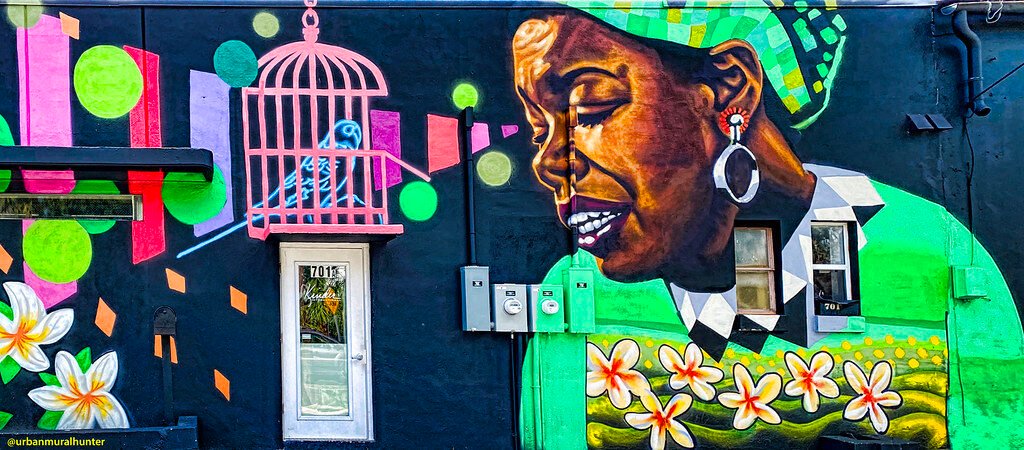
And that gives me pause.
Because Angelou was not writing pornography.
She was writing about what happened to her when she was a child.
1. 🔎 THERE IS A DIFFERENCE: Sexual abuse is present. It is not presented for sexual entertainment.
Angelou recounts being sexually abused and raped by her mother’s boyfriend when she was eight years old.
The material is painful. Some passages are understandably difficult to read.
But difficult is not the same thing as sexually titillating.
The emotional center of the account is the experience of a child: fear, confusion, physical pain, manipulation, secrecy, disclosure, consequences and silence.
That distinction changes the conversation.
A book can contain sexual violence without sexualizing the violence.
2. ⚠️ THE QUESTION ISN’T ONLY: “Does this book contain sexual material?”
We should ask another question:
What is the material doing there?
There is a tremendous difference between:
Sexual content → intended to arouse
and
Sexual violence → documented because someone survived it
Those categories should not automatically be treated as interchangeable.
When we collapse them together, testimony about sexual violence can become classified alongside material created for entirely different purposes.
3. 🧒🏾 MAYA ANGELOU WAS WRITING ABOUT A CHILD
This is where I sincerely disagree with removing the book simply because the story includes childhood sexual abuse.
Children unfortunately experience sexual abuse.
Children also experience grooming.
Children are threatened into silence.
Children sometimes love, trust or depend upon people who harm them.
Children can believe they caused what happened.
And children often lack the language to explain any of it.
Removing every serious depiction of childhood sexual abuse does not remove childhood sexual abuse from children’s lives.
It can remove one of the places where their reality has been named.
4. 📖 AGE APPROPRIATENESS IS STILL A LEGITIMATE CONVERSATION
This does not mean every book belongs in every classroom at every age.
A parent can reasonably decide:
“My child isn’t ready for this book yet.”
A teacher can consider the maturity of students before assigning it.
A school can have a legitimate discussion about whether a particular work belongs in seventh grade, ninth grade or twelfth grade.
Those are questions about placement and developmental readiness.
They are not necessarily arguments for removing the work altogether.
“Not yet” and “children should not have access to this story” are two very different positions.
5. 🤫 THERE IS ANOTHER CHILD WE HAVE TO REMEMBER
When adults discuss protecting children from books about sexual abuse, the imagined child is often a child who has never encountered sexual violence.
But that is not every child sitting in the classroom.
Somebody in that school may already know exactly what Angelou is describing.
Maybe nobody knows.
Maybe the child hasn’t told anyone.
Maybe she doesn’t have the vocabulary.
Maybe she thinks what happened was somehow her fault.
Maybe the person hurting her has already taught her the oldest lesson in abuse:
Don’t tell.
Now consider what it can mean for that child to discover that a respected, brilliant, accomplished woman once carried something terrible too.
Not because a book can replace counseling, protection or intervention.
It cannot.
But because recognition can interrupt isolation.
6. 🪞THIS CREATES AN UNCOMFORTABLE CONTRADICTION
We tell children:
Tell someone if somebody hurts you.
We tell Survivors:
Your story deserves to be heard.
We tell society:
We have to break the silence around sexual violence.
Then a Survivor writes about being sexually abused as a child, and one response becomes:
Children shouldn’t read about that.
There is a tension there that deserves examination.
Because silence has never been a particularly effective child-protection strategy.
7. 🚫 PROTECTING CHILDREN FROM ABUSE IS NOT THE SAME AS PROTECTING CHILDREN FROM KNOWLEDGE OF ABUSE
Those goals can sound similar while producing very different outcomes.
Protection from abuse can mean:
→ teaching body autonomy
→ recognizing grooming
→ knowing that adults can behave wrongly
→ understanding that threats should be disclosed
→ knowing where to seek help
→ believing children who report harm
Protection from knowledge of abuse can become:
→ don’t discuss it
→ don’t describe it
→ don’t write about it
→ don’t let children encounter Survivor testimony
→ don’t make adults uncomfortable
Those are not automatically the same project.
Sometimes they point in opposite directions.
8. 🌱 AND THIS IS WHY MAYA ANGELOU’S BOOK DESERVES A MORE CAREFUL CONVERSATION
We can discuss age.
We can discuss classroom context.
We can discuss how teachers prepare students for difficult material.
We can discuss parental involvement.
We can even disagree about exactly where the book belongs.
But I am deeply uncomfortable with treating the presence of childhood sexual abuse itself as sufficient reason to make a Survivor’s story disappear.
Maya Angelou did something Survivors are constantly encouraged to do.
She told.
She told what happened.
She told what fear did.
She told what silence did.
She told what surviving looked like.
And generations later, adults are still deciding whether children should be allowed to hear her.
Perhaps the better child-safety question isn’t simply:
“How do we keep children from reading disturbing things?”
Perhaps we also need to ask:
“What knowledge do children lose when we remove the stories of people who survived disturbing things?”
Because children deserve protection from sexual violence.
They also deserve language for recognizing it.
And Survivors should not have to disappear from the bookshelf in order for adults to call the shelf safe.