You see these movements getting furious with Black women for not asking "how high" because they snapped their fingers?Knowing your worth is not ab
You see these movements getting furious with Black women for not asking “how high” because they snapped their fingers?
Knowing your worth is not about believing you are better than somebody else.It is about refusing to live as though you are less. I don’t know who told people that, “Black women look ‘masculine’, so they should help” was sweet talk but they were WRONG. You can’t insult us into giving more. Especially when we are already huge givers and nurturers…directly from the heart and our soul.
When you come to us, you might want to make certain that your “sweet talk” is actually sweet. Black women are, after all, a receipt-driven community.
We have long been living in societies that have benefited from our labor while questioning our intelligence, borrowed from our beauty while insulting our features, leaned on our strength while neglecting our tenderness, and expected extraordinary giving without extraordinary care in return.
Knowing our worth does not solve every problem. It does something quieter and deeply practical.
It changes what we are willing to call normal.
1. Because people can benefit from you and still undervalue you.
This is one of the hardest lessons to learn.
Someone may depend on your work, ideas, emotional support, creativity, connections, loyalty, caregiving, leadership, or money and still fail to treat you as valuable.
Being needed is not the same thing as being valued.
Knowing your worth helps you notice the difference. You begin asking not only, “Do they need me?” but also, “How am I treated here?”
That question can change a life.
2. Because overgiving can disguise itself as love.
Black women are often praised for how much we can carry.
We can keep the family together. Help everybody through the crisis. Stay late. Fix what somebody else neglected. Remember birthdays. Raise children. Care for elders. Encourage friends. Hold communities together.
And sometimes we become so accustomed to being useful that exhaustion starts feeling like evidence that we are loving people well.
Knowing your worth allows you to love generously without treating yourself as an unlimited resource.
You are a person inside the circle of people deserving your care.
3. Because rejection does not establish your value.
You will not be chosen every time.
A relationship may end. Somebody may overlook your work. A publisher may say no. A job may go to someone else. A friendship may dissolve. An audience may fail to understand what you are building.
Rejection can hurt without becoming a verdict.
When you know your worth, disappointment gets to be disappointment. It does not get promoted into evidence against your entire existence.
You can grieve what did not happen without turning against yourself.
4. Because boundaries become easier when you stop believing access to you is owed.
Knowing your worth changes your understanding of access.
Everybody does not automatically deserve your time, body, home, personal history, emotional labor, forgiveness, attention, availability, or another chance.
You can be generous and still have a gate.
You can love people and still say no.
You can understand somebody’s circumstances and still decide that their behavior cannot continue in your life.
Your dignity does not require unanimous approval.
5. Because comparison will have you competing in contests you never entered.
There will always be somebody younger, richer, thinner, more connected, more visible, more credentialed, more fashionable, more followed, more celebrated, or apparently further ahead.
There is no finish line to that race.
Knowing your worth allows another Black woman’s beauty to remain her beauty without becoming evidence against yours. Her opportunity does not have to become your emergency. Her gifts do not cancel yours.
We have spent enough generations being ranked, graded, stereotyped, compared, selected, rejected, and measured against standards we did not create.
We do not have to continue that work inside ourselves.
6. Because knowing your worth helps you recognize disrespect earlier.
Disrespect rarely introduces itself properly.
It often arrives disguised as humor, concern, honesty, tradition, personality, romance, workplace culture, family obligation, or “just the way things are.”
When you are uncertain about your own value, you can spend years trying to determine whether you are allowed to be bothered.
Knowing your worth gives you a stronger internal reference point.
You notice when something repeatedly leaves you smaller.
You notice when reciprocity is missing.
You notice when someone only respects boundaries that cost them nothing.
You notice when peace always seems to require your silence.
And you can respond sooner.
7. Because your life should contain something that belongs to you.
Not everything Black women build must be for everybody else.
Your education can be for you. Your garden can be for you. Your business can enrich you. Your afternoon can belong to you. Your money can secure your future. Your art does not have to explain anybody. Your joy does not need to become a lesson. Your rest does not require a productivity argument.
Some choices are allowed to benefit you simply because you are one of the human beings your life is supposed to serve.
Knowing your worth means remembering that you did not come into this world solely to become useful to other people.
You are allowed to build a life in which you are cared for, protected, delighted, compensated, respected, rested, heard, and free.
And perhaps that is one of the most important things a Black woman can learn:
Your worth does not begin when somebody recognizes it.
Recognition is welcome.
Your worth was already there.
They didn’t build a 400-year-old machine to suppress something weak.
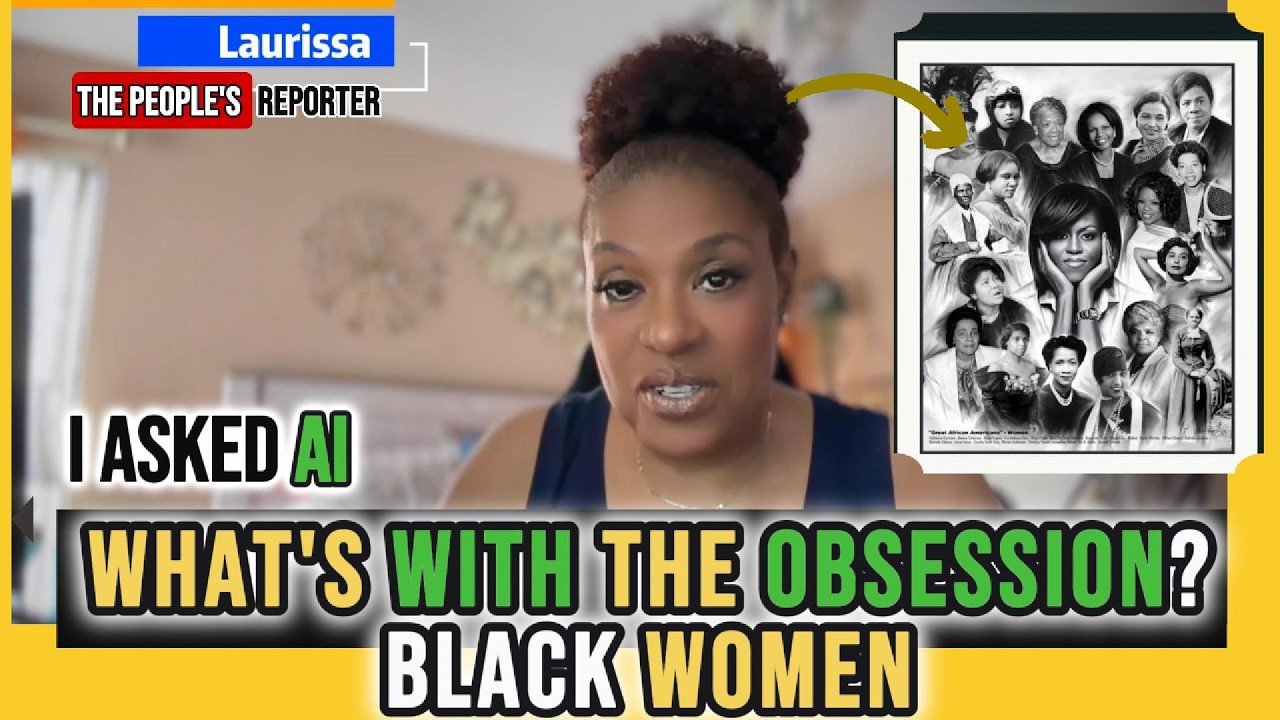
In this video we take the whole thing apart — where the “loud,” “ghetto,” “ugly,” “not smart” scripts actually came from, the specific job each one was built to do, the real (and largely hidden) role of white womanhood in the system, why the hate feels louder right now than ever, and the one thing they never figured out how to handle: a free Black woman. This is for Black women, worldwide. Because we’re worth it — and we deserve to live fully, unapologetically, and all our own.
CHAPTERS 00:00 — The fact they don’t want you to sit with 00:30 — Why this was never new 02:00 — How they built their worth on your back 04:00 — Every insult has a job (the receipts) 07:30 — The part history class skips 10:00 — We named it a long time ago 11:30 — Why it feels louder right now 14:30 — So what’s the threat? 18:00 — So what’s the solution? 22:00 — The version of you they were built to prevent
GO DEEPER (names & terms from this video to research yourself): • Combahee River Collective (1977) • Kimberlé Crenshaw — “intersectionality” (1989) • Patricia Hill Collins — “controlling images” • Moya Bailey — “misogynoir” • Stephanie Jones-Rogers — white women & slave-ownership • Sojourner Truth — “Ain’t I a Woman?” • Ida B. Wells — 1913 suffrage march
🔔 Subscribe for more — told unsoftened and all our own. The People’s Reporter is a Black woman-led channel at the intersection of politics, truth, and healing. We cover what this administration is doing to our communities — plainly, without spin — and we go deeper into what Black people, especially Gen X, are carrying and finally beginning to heal from.
From Reagan to right now, from the crack era to Jim Crow 2.0, from exhaustion to becoming whole — this is the report nobody else is giving us. For us. By us. No apologies. 📲 TikTok: @thepeoplesreporter 📸 Instagram: @thepeoplesreporter 🔔 Subscribe and hit the bell so you never miss a report.
Share this channel with somebody who needs to hear it. We move together.