We can defend someone’s right to wear the dress without pretending the dress is what makes a woman.There is a very simple place where many of us c
We can defend someone’s right to wear the dress without pretending the dress is what makes a woman.
There is a very simple place where many of us can meet.
Photo by Christian Agbede/Unsplash
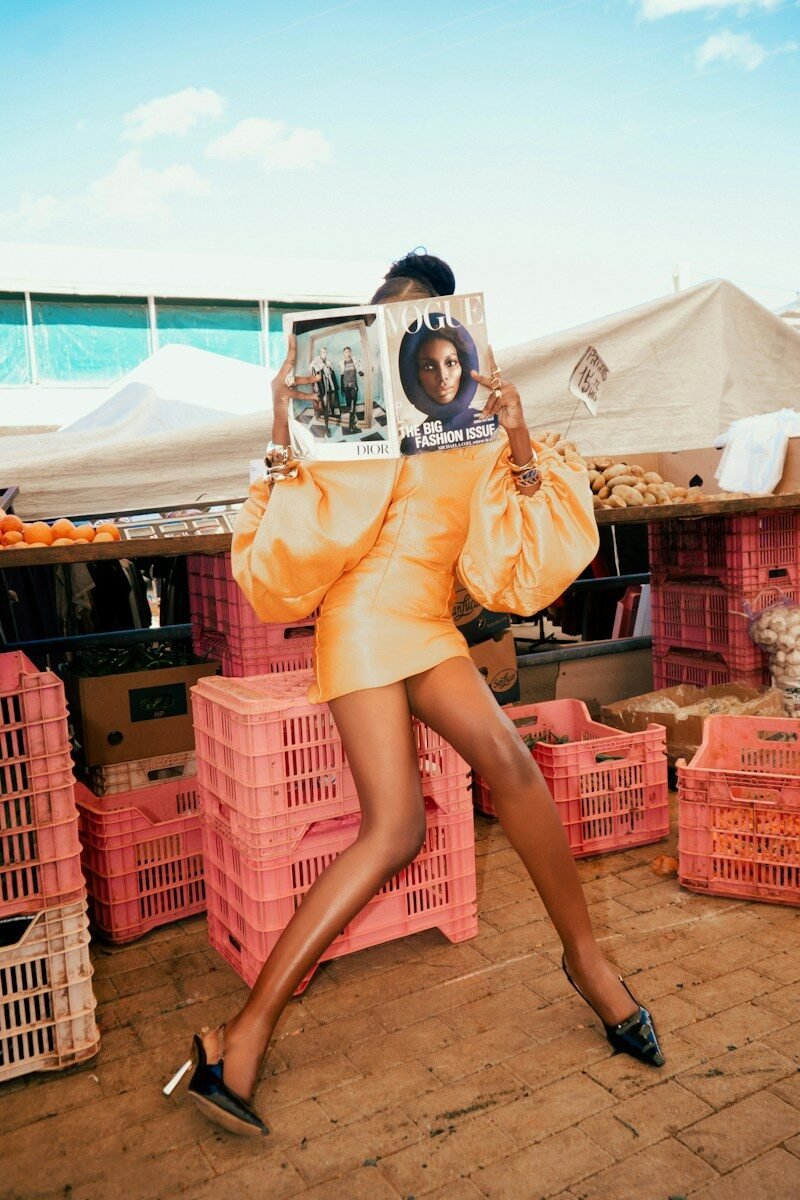
An adult male should be able to walk down the street wearing a dress without being beaten.
He should be able to wear lipstick, heels, a wig, a business suit, overalls, pearls, purple eyeshadow, or something so fabulous I do not have the vocabulary for it. He should be able to move through the world without somebody deciding that his clothing gives them permission to threaten, humiliate, stalk, assault, or kill him.
Wonderful.
Good.
Humane.
That is civil liberty. That is personal safety. Those principles are worth defending because nobody should have to perform masculinity correctly in order to earn protection from violence.
The feminine man does not need womanhood as permission to be feminine.
But then another question gets quietly slid across the table.
Does presenting oneself in ways culturally associated with women make someone a woman?
That is a classification question.
And classification is not the same thing as liberty.
The distinction becomes especially important when classification carries consequences for somebody else: sports categories, prisons, shelters, medical language, data collection, changing rooms, intimate searches, awards, scholarships, political representation, or any other setting created around sex.
At that point, we are no longer discussing whether someone should be free to wear a dress.
We are deciding what qualifies a person for membership in a category and whether other people must accept that classification when their own rights, privacy, safety, opportunities, language, records, or resources may be affected.
Those questions deserve more than slogans.
Fortunately, we already understand the difference between expression and classification in ordinary life. And we understand it beyond people constantly using Black culture and Black pain as the primary example. Black face not required. Black people do not always have to be the buzzer you slap to make your point.
1. The Jersey and the Team
You can wear the jersey.
Buy three of them. Paint your face. Know every player’s statistics. Defend your team against anybody foolish enough to insult them in your presence.
None of this puts your name on the roster.
That is not cruelty toward fans. Nobody is saying their devotion isn’t sincere. We simply understand that loving something, identifying strongly with it and qualifying as a member of its formal category are different things.
This distinction becomes especially important when membership brings consequences.
A fan cannot demand playing time by saying, “But this team is part of who I am.”
The roster has criteria because the roster does something.
So do many human categories.
2. The Chef’s Coat and the Chef
Imagine somebody wearing a beautiful white chef’s coat.
There is absolutely no reason to snatch it off them. There is no reason to mock them. Perhaps wearing it makes them happy. Perhaps cooking is central to their life.
Still, the coat does not create the professional classification.
We understand immediately that the outward signals associated with a category are not necessarily the characteristics that establish membership in it.
That distinction becomes especially useful when thinking about femininity.
Women can wear dresses.
Women can hate dresses.
Women can wear lipstick every morning or never own a tube. We can shave our heads, grow our hair to our waists, wear construction boots, become mothers, remain childless, repair engines, bake pies, curse magnificently, speak softly, lift weights, wear lace, refuse lace and spend our entire lives confusing people who thought they had figured out what women were supposed to be.
None of that makes us more or less female.
Women fought hard for that freedom.
We should be very careful about handing those stereotypes power again.
3. The Librarian With the Bun and Glasses
Ask somebody to draw a stereotypical librarian and you may get the whole production.
Glasses. Cardigan. Sensible shoes. Hair in a bun. Books tucked underneath one arm.
Cute picture.
Terrible definition.
A librarian looking at that drawing could reasonably say, “You have confused the cultural shorthand associated with us for what we actually are.”
There are librarians with locs. Librarians with tattoos. Librarians in wheelchairs. Librarians wearing sneakers. Librarians who wouldn’t be caught dead in a cardigan.
The stereotype points toward the category without defining the category.
That is an enormously useful lesson when talking about women.
Breasts exaggerated through clothing, long hair, makeup, high heels, certain gestures, softness, submissiveness, flirtation and feminine speech patterns may all be cultural shorthand associated with women.
But if we say those things establish womanhood, we have wandered into remarkably old territory.
Women know that territory.
We have spent centuries being told there was a correct way to look female, behave female, sit female, speak female and live female.
We did not fight our way out of that little room just to redecorate it.
4. The Map and the Land
A map can represent a place beautifully.
A skilled cartographer can show the rivers, mountains, borders and roads so accurately that you can navigate thousands of miles using the representation.
But the map isn’t the land.
This isn’t an insult to maps. Maps are extraordinarily useful precisely because we understand what they are.
Representation and reality do not have to become identical before representation can have meaning.
Human beings are capable of holding that distinction without hatred.
We do it all day.
5. The Actor and the Character
A brilliant actor can disappear into a role.
For two hours, we may laugh with the character, grieve for her and forget entirely about the person performing her.
Then the curtain comes down.
Recognizing the distinction between actor and character does not mean the performance was fraudulent. It means representation has its own category.
This is another place where our language has become unnecessarily frightened.
We have begun acting as though acknowledging differences automatically communicates contempt.
It doesn’t.
Sometimes a boundary is simply information.
Women and Survivors know how dangerous it can become when people are taught that recognizing a boundary is inherently unkind. Many of us have been trained to explain ourselves long after a perfectly adequate answer was already available.
No.
Not because the other person is evil.
Not because we wish them harm.
Not because their feelings are meaningless.
Because sometimes two things are different.
6. The Menu and the Meal
This may be my favorite metaphor because femininity really does operate like a cultural menu.
Every society puts different things on it.
Long hair. Short skirts. Covered hair. Makeup. No makeup. Jewelry. Certain colors. Certain jobs. Certain movements. Certain expectations about marriage, motherhood, sexuality and behavior.
And the menu changes.
What looks feminine in Lagos may not look exactly like femininity in Seoul. What signaled femininity in 1926 does not perfectly match what signals femininity in 2026.
Women themselves can order everything on the menu, order nothing from it, change their order tomorrow, or throw the whole menu across the room.
Woman is not an item on the femininity menu.
That distinction frees everybody.
A male does not have to become female before he is permitted to enjoy femininity.
And a female does not have to perform femininity before she is recognized as a woman.
Now that is freedom.
Why I Would Leave Blackface Out of This Argument
I understand why people reach for the blackface analogy.
They are trying to explain the difference between adopting characteristics associated with a group and actually being a member of that group.
But I think it is usually a poor tool for this particular conversation.
Blackface carries its own brutal American history. Minstrelsy wasn’t simply somebody changing their appearance. It developed within a culture that caricatured Black people, profited from degrading representations of us and helped circulate grotesque ideas about Black intelligence, sexuality, speech, morality and humanity.
That history deserves to be discussed on its own terms.
When blackface gets dropped into debates about sex and gender, Black people suddenly become the metaphor.
Again.
Our history gets hauled onto somebody else’s battlefield to settle somebody else’s dispute.
Then the original conversation disappears.
Now people are arguing about whether transgender identification and blackface are morally equivalent. Someone is explaining minstrelsy. Someone else is understandably furious about racism. Somebody produces an inflammatory photograph. Twenty minutes later nobody remembers that the original question was about the difference between expression and classification.
We don’t need it.
We have better metaphors.
And Black history does not have to provide the emotional explosives every time somebody wants to make an argument vivid.
The Question Gets Harder When Classification Has Consequences
A masculine-presenting woman does not move one inch away from the realities of womanhood by refusing femininity.
If this conversation were solely about clothing, names and personal style, much of the conflict would evaporate.
Wear what you want.
Live peacefully.
Be protected from violence.
Go home safely.
The disagreement becomes harder when one person’s classification creates obligations or consequences for somebody else.
A shelter has to decide whom it houses together.
A prison has to decide whom it confines together.
A sporting body has to determine eligibility.
Researchers need categories that allow them to measure health, violence and inequality accurately.
Doctors sometimes need sex-specific information.
Women changing clothes may have privacy interests.
Governments collecting crime statistics need to know what their categories actually measure.
Those aren’t questions about whether someone deserves dignity.
They are questions about how institutions classify human beings when classifications perform actual work.
Women are allowed to participate in those decisions.
We are allowed to ask what happens to us.
We are allowed to ask what information disappears.
We are allowed to notice competing interests.
We are allowed to say that kindness toward another population does not require making women conceptually homeless.
That lesson travels far beyond this debate.
A woman can understand somebody else’s pain without surrendering her own boundaries to prove that she understood it.
A Survivor can have compassion without turning compassion into automatic access.
You can recognize another person’s humanity without agreeing to every request that follows from it.
You can wish someone safety without promising them your space.
And you can disagree with a classification without wishing harm upon the person making the claim.
That is a grown people’s understanding of coexistence.
We Should Be Able to Hold Two Ideas at Once
Women did not spend generations escaping the rules of femininity only to be told those same rules now explain what a woman is. That is a looped knot.
A gender-nonconforming male should not be beaten for wearing women’s clothing.
A woman should not be told that clothing and other stereotypes associated with femininity define what a woman is.
Those positions do not contradict each other.
They actually share an important principle:
Human beings should not be imprisoned by sex stereotypes.
The feminine man should not have to become a woman to justify being feminine.
The masculine woman should never have to wonder whether failing femininity somehow makes her less of a woman.
Let people dress.
Let people create.
Let people be eccentric, glamorous, masculine, feminine, androgynous, unpredictable and gloriously difficult to sort by looking at them.
Protect them from violence.
Protect their civil liberties.
And then, when institutions need to classify people for reasons involving medicine, statistics, safeguarding, privacy, sport or sex equality, have that separate conversation clearly.
We do not have to purchase kindness by abandoning distinctions.
We can have both.
Freedom does not require confusion. And boundaries do not require cruelty.
Compassion is not a contract requiring women to abandon every boundary another person finds painful.
Affirmations
I refuse to measure womanhood by femininity. A woman in work boots is no less a woman than one in stilettos. We fought too hard to escape those little boxes to start calling the boxes liberation.
I can wish another person safety, freedom, happiness, and a beautiful life without agreeing with every belief they hold about themselves or the world. Human dignity was never supposed to require intellectual surrender.
Someone else’s feelings deserve consideration. They do not automatically outrank my privacy, safety, fairness, or boundaries. Caring about people does not require arranging every room around their comfort.
I am allowed to ask the second question. Who carries the consequence? Who loses privacy? Who is expected to adjust? Compassionate policies should survive compassionate questions.
When Men Encourage Boundary Violations, Women Pay the Price – WE Survive Abuse
Malcolm X Wisdom: When Lies Become the Environment, Safety Disappears – WE Survive Abuse
Called Out of Our Names: When Did Respect Become Too Much to Ask? (audio ep) – WE Survive Abuse