
Table of Contents
updated from April 4 2025
Generation X was not ready for this story, but we needed it! Our Boomer parents were not ready either, but they most definitely needed it.
In fact, every generation going forward needs the lessons from this story. We all need to listen more closely to Survivor’s of domestic violence. For all of our innovations, we still have not learned to do that yet.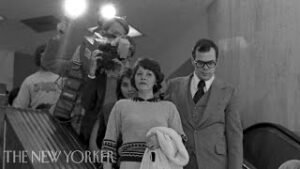
I was very young when I read The Burning Bed and watched Farrah Fawcett portray Francine Hughes in the television movie. I remember being interested in the story because of Farrah.
We followed Farrah Fawcett back then. She was one of those women everybody seemed to “know.” The beautiful hair, the smile, Charlie’s Angels, and the famous posters. She was part of American popular culture in a way that younger generations might find difficult to understand.
Farrah was everywhere. On posters, on lunch boxes, and t-shirts. She was an icon.
And then she left Charlie’s Angels. She began moving beyond the beautiful woman the entertainment industry had made famous. By the time she appeared in The Burning Bed, she was showing audiences something very different.
I remember watching her and feeling as though I were watching a woman live through a horror movie.Except there was no monster hiding beneath the bed. No stranger lurking in the woods. No supernatural force waiting in the darkness.
The danger was a man who lived in her home.And the most frightening part was knowing that the story was true. I literally couldn’t believe how evil this man was to his wife.
The woman behind the movie: Francine Hughes
The film, which aired on NBC on October 8, 1984, was based on Faith McNulty’s 1980 nonfiction book The Burning Bed.
It told the story of Francine Hughes, a Michigan woman whose husband, James “Mickey” Hughes, subjected her to years of physical violence, threats, humiliation, and control.
Francine tried to leave. She sought help. She tried to protect herself and her children. But her husband’s violence continued, and the institutions she turned to repeatedly failed to protect her.
On March 9, 1977, after another terrifying episode, Francine poured gasoline around the bed where Mickey slept and set it on fire. She took her children to the police station and told officers what she had done. Mickey died in the fire.
A jury subsequently found Francine not guilty by reason of temporary insanity. Her case became a major subject of public debate, particularly among women’s rights advocates who questioned why the law could recognize her desperation more readily as temporary insanity than as a response to years of violence and danger.
In 1984, America was still learning to call domestic violence a “crime.”
To understand what The Burning Bed meant, we have to remember the country in which it appeared.
Women had spent years organizing shelters, answering crisis calls, challenging police practices, and demanding that lawmakers take violence inside the home seriously.
But much of American society still treated a husband’s violence against his wife as a “private marital problem.”
Police officers often avoided making arrests unless they witnessed an assault. Families encouraged women to endure abusive marriages. Religious and community expectations sometimes placed preserving the marriage above protecting the woman.
Women heard advice about being better wives, keeping their homes together, and avoiding whatever supposedly provoked their husbands.
Meanwhile, men continued to hurt them.
The legal system offered uneven protection. Marital rape exemptions remained in many states. Protective orders were often difficult to obtain or enforce. Leaving an abusive husband did not necessarily end his access to his wife or his ability to terrorize her.
Francine Hughes experienced these failures firsthand.
And there was something particularly disturbing about watching her story unfold. The violence was not one isolated explosion of anger. It was a pattern. The intimidation, jealousy, degradation, assaults, apologies, and renewed violence formed the world in which she had to live.
The film asked viewers to see the entire pattern rather than judge a woman by one moment in her life. That was a significant departure from the way society often discussed abused women.
Farrah Fawcett made America look at a woman it had been taught to admire for her beauty
There is another reason this movie was so powerful. Farrah Fawcett was not an unfamiliar actress whom audiences encountered for the first time in a serious role.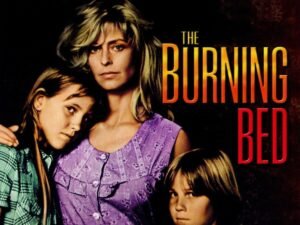
People had watched her become an international beauty icon. Her red swimsuit poster was practically a cultural landmark. Her hair inspired women everywhere. Her smile sold an image of youth, glamour, and effortless happiness.
Then audiences watched that same woman portray someone living with terror. Her character could not charm her way out of danger. Beauty did not protect her. Being a wife did not protect her. Being a mother did not protect her. Trying to do what others expected did not protect her.
The transformation was startling. Farrah did not play Francine as a glamorous woman having a difficult marriage. She portrayed a woman whose daily life revolved around anticipating another person’s violence.
She looked exhausted. Frightened. Cornered. At times, almost emptied of hope. Her performance helped viewers understand something that advocates had been trying to explain for years. An abused woman does not have to look a certain way, come from a certain background, or lack intelligence to find herself trapped in danger.
And the beautiful woman America thought it knew was now asking the country to see women it had spent generations overlooking.
Farrah’s performance earned her an Emmy nomination and helped establish her reputation as a serious dramatic actress. She had deliberately moved beyond the narrow expectations attached to her celebrity.
Seventy-five million people watched! 75 million Estimated viewers of the original 1984 broadcast
That figure is extraordinary.
There was no streaming service. No social media discussion unfolding in real time. No YouTube reaction channel.
Families gathered around their television sets and watched a story about domestic violence on a major American network.
The film aired at the beginning of Domestic Violence Awareness Week. Some stations displayed telephone numbers for shelters and crisis services. Thousands of viewers contacted services seeking help or information. Contemporary reporting documented a surge in calls to domestic violence organizations.
Some were watching beside husbands who frightened them. Some were watching with children who already knew the sounds of violence in their homes. Others may have been recognizing their own experiences in a story that the country had rarely allowed them to discuss openly.
And some viewers were children, like I was, encountering a terrible reality through an actress they already knew.For those of us who were young, The Burning Bed offered a disturbing education about adulthood.
We were learning that marriage did not guarantee safety. That grown women could ask for help and still be left in danger. That the people who were supposed to intervene might fail to do so.
Those were difficult things to understand at a young age. But they were things worth understanding.
The movie did not begin the domestic violence movement. It helped America hear it.
This distinction is important.
Long before Farrah Fawcett appeared in The Burning Bed, women were building shelters, organizing crisis services, researching battering, challenging laws, and confronting institutions that dismissed violence against wives.
Many were doing that work with very little money, public recognition, or institutional support. The film did not create their movement. It brought enormous national attention to what those women had already been saying.
Scholar Elayne Rapping later examined The Burning Bed as a major television event that helped reshape public discussion of domestic violence. Other researchers have described its influence on public awareness, police training, shelter advocacy, and legal reform.
That influence did not mean one movie single-handedly changed the law. Advocates, Survivors, attorneys, and organizers had fought for years, and they continued fighting afterward. But the film gave the public a story it could no longer easily dismiss.
There is a difference between hearing that a woman has an abusive husband and watching the ways his violence takes over her entire life. There is a difference between asking why she stayed and watching her attempts to leave.
And there is a difference between hearing that the police did not help and watching what happens after officers leave a woman alone with the man threatening her. The film made those differences painfully visible.
Even the verdict revealed how difficult it was to recognize women’s right to survive
Francine’s acquittal was a relief to many people who understood the years of abuse she had endured.
But the legal reasoning also raised uncomfortable questions.
The jury accepted a temporary insanity defense. Some feminists argued that the verdict reflected society’s difficulty understanding a woman’s actions as a response to sustained danger rather than a moment of mental incapacity.
Her case also challenged conventional ideas about self-defense, particularly the assumption that danger exists only during the exact moment an attacker is striking.
Those debates were significant in the development of legal arguments concerning battered women and self-defense.
We do not have to celebrate the taking of a human life to recognize the institutional failures that preceded it.
And we should not have to wait until a woman or her abuser dies before examining the danger she has been reporting.
Francine’s story demanded that Americans confront what had happened before the fire.
The assaults. The threats. The fear. The unanswered pleas.
The years.
The horror was not that Francine finally reached a breaking point. The horror was how long she had been left there.
This is what stays with me when I think about The Burning Bed.
People can become so focused on the shocking ending that they lose sight of everything that came before it.
But Francine did not wake up one morning inside a peaceful home and decide to burn it down.
She lived through years of violence.
Her children lived with that violence too.
And the systems that should have helped protect them did not provide the safety they needed.
In horror movies, audiences often wonder why someone does not run, call the police, or escape through the nearest door.
The Burning Bed showed a woman trying to do those things.
It showed how the danger followed her.
That is why describing the film as a horror movie feels so fitting to me. The story contained the terror, helplessness, anticipation, and dread of horror, but it did not need a fictional monster.
The violence was human. The failures were human. And the suffering was real.
What I understand differently looking back
When I was young, I came to The Burning Bed because of Farrah Fawcett.
I wanted to see the woman we knew from television, the woman with the beautiful hair and famous smile.
Instead, I encountered Francine Hughes.
I saw a woman whose life was consumed by another person’s violence. I saw how frightening a home could become. I saw the difference between what society expected women to endure and what any human being should ever have to endure.
I could not have understood every legal or historical implication then.
But I understood enough to recognize that something was terribly wrong.
Looking back, I appreciate Farrah’s decision to take the role. She could have continued relying on the image that made her famous. Instead, she used her visibility to bring a deeply uncomfortable story into millions of American homes.
And I appreciate the women whose work made that moment possible. The shelter workers, advocates, researchers, attorneys, and Survivors who insisted that domestic violence deserved public attention long before television executives recognized its importance.
Their work helped change the country.
Yet the question at the heart of The Burning Bed remains painfully relevant.
When women report threats, stalking, assaults, and escalating violence, will the people with the power to intervene act before tragedy?
Or will we continue asking women to survive what institutions refuse to stop?
I began with Farrah Fawcett.
But the woman whose story stayed with me was Francine Hughes.
And perhaps that is one of the greatest achievements of The Burning Bed. A famous actress brought us to the television, but an ordinary woman’s extraordinary suffering made us confront what was happening in homes all across America.
The fire was the ending of Francine’s ordeal with Mickey Hughes. It should never have taken a fire for America to recognize the horror that came before it.
Historical sources and further reading
The historical record behind this reflection includes The Washington Post’s original October 1984 review, Elayne Rapping’s scholarly examination of the film’s cultural impact, and Retro Report’s historical investigation of Francine Hughes’s case.
https://wesurviveabuse.com/2024/11/survivor-spotlight-katrina-cooke-brownlee/
https://wesurviveabuse.com/2025/03/hidden-hurt-domestic-violence-is-stealing-our-educators/
https://wesurviveabuse.com/2025/02/when-love-puts-you-in-danger-how-domestic-violence-impacts-friends/
https://wesurviveabuse.com/2025/02/unlocking-hope-ultimate-funding-resources-for-domestic-violence-support-and-survivor-empowerment/
https://wesurviveabuse.com/2025/04/%f0%9f%8e%93%f0%9f%92%a5-go-anyway-learn-anyway-grow-anyway/
