Table of Contents
Sometimes the earliest warning comes from the youngest person in the house.
Children notice things.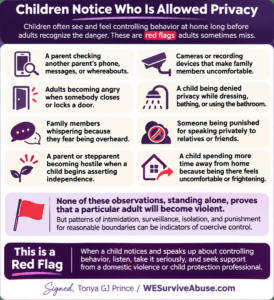
They notice when their mother lowers her voice before answering the phone. They notice when someone comes into a room and everybody suddenly gets quiet. They notice when a bedroom door cannot be closed without an argument.
And sometimes they notice something adults have spent years explaining away.
We teach children to recognize danger, trust their instincts, and tell a trusted adult when something makes them uncomfortable.
But what happens when they tell us?
These families have something important to teach us about domestic violence prevention. In several cases, children recognized controlling behavior, invasive surveillance, or frightening conduct before the violence that eventually made national headlines.
Their observations deserved attention long before anybody knew how these stories would end.
1. Dominique Leili: Her Daughter Left the House
Dominique “Nique” Leili lived in Lawrenceville, Georgia, with her husband, Matthew, who worked with computer and security technology.
Matthew installed approximately 21 surveillance cameras throughout their home. He also recorded private conversations and monitored Dominique’s activities.
Imagine living in a house where you cannot comfortably sit on your own couch without wondering who is watching.
Nique’s oldest daughter, Alex Peters, described feeling uncomfortable with her stepfather’s surveillance. She eventually moved out at 16.
A teenager leaving home because she feels watched is information adults should take seriously.
In July 2011, Dominique was found dead in a wooded area near her home. Matthew was later convicted of her murder.
Alex’s discomfort was not proof that a murder would happen. It was a warning that the household’s surveillance practices were affecting her sense of safety and privacy.
That alone warranted attention.
2. Olivia Jones: Her Daughter Noticed the Cameras
Olivia Jones was murdered in Beaumont, Texas, on Valentine’s Day 2019. Her husband, Christopher Ray Jones, was later convicted.
Her oldest daughter described feeling watched by cameras in the family home.
There is something important about that observation.
A child may not know the phrase technology-facilitated coercive control. She may not have studied domestic violence. She may not understand the legal difference between ordinary security monitoring and unlawful surveillance.
But she knows what it feels like when somebody is always watching.
And when a child says the cameras make her uncomfortable, the adult response should not begin with a lecture about how much the equipment costs or how the person who installed it means well.
Start by listening to the child.
A security system should help people feel safer. It should not become a tool for making family members feel trapped.
3. Macie Haight: She Told Authorities She Was Afraid
In Enoch, Utah, Michael Haight murdered his wife, Tausha, their five children, and his mother-in-law, Gail Earl, in January 2023. He then killed himself.
Years earlier, his oldest daughter, Macie, had reported serious physical abuse by her father.
She described frightening violence and expressed fear that he might kill her.
Investigators also later documented Michael’s controlling behavior toward Tausha, including monitoring her communications.
Tausha reportedly took precautions to keep conversations private because she feared being overheard.
Consider the environment that creates for children.
When adults must whisper, hide conversations, or worry about their devices being checked, children may learn that ordinary privacy is dangerous.
Macie had already spoken about abuse. Her concerns were documented.
A child should not have to wait until the danger becomes catastrophic before adults recognize that protection is needed.
The Haight case raises difficult questions about what happens after a child reports abuse, how authorities assess escalating danger, and whether protective measures are sufficient.
4. Vanessa Black Soyer: A Daughter’s Concern About Shower Privacy
Vanessa Black Soyer was murdered by her husband, Sheldon Soyer, in Georgia in November 2015. Their teenage son witnessed the shooting and was also threatened.
Her daughter had reportedly complained about feeling watched by her stepfather while showering.
That particular account deserves further verification against the original documentary or interview. But the concern it describes is one every adult should understand.
A girl should be able to bathe without fearing that an adult is watching her.
She should not have to explain why privacy is important. She should not have to defend her discomfort. And she should never be expected to investigate an adult’s intentions herself.
Adults can take immediate steps to protect a child’s privacy while an appropriate investigation determines what happened.
We must never confuse protecting a child’s boundaries with prejudging a criminal allegation.
5. The Hart Children: They Tried to Tell People
The Hart family tragedy offers another lesson.
Jennifer and Sarah Hart’s six adopted children lived under severe restrictions and experienced documented abuse.
Abigail disclosed physical abuse to a teacher. Hannah fled the family home and sought help from neighbors. Devonte sought food from neighbors.
In March 2018, Jennifer Hart deliberately drove the family’s vehicle off a California cliff, killing herself, Sarah, and their six children.
These children did more than display subtle signs of distress.
Some directly told adults that something was wrong.
Their story reminds us that recognizing warning signs is only the beginning.
The next question is what adults and institutions do with the information.
6. Sometimes the Child’s Behavior Is the Warning
Not every child will say, “I’m afraid.”
Some become unusually quiet when a particular adult enters the room. Some stop inviting friends home. Some ask to stay with relatives. Some become anxious about making ordinary mistakes.
And some leave as soon as they are old enough.
We should be careful about interpreting these behaviors. There can be many explanations, and children deserve to be heard without having assumptions placed upon them.
A child’s experience inside a household may be very different from the picture that household presents to the world.
7. What Adults Can Do When Children Speak
We cannot promise that every warning will reveal the full danger. We can promise children a better response.
Thank them for telling us. Listen without arguing or interrogating. Take reasonable steps to protect their immediate safety and privacy.
Document their words accurately, without adding interpretations. When abuse is suspected, involve appropriate child-protection professionals rather than conducting our own repeated interviews.
And do not confront a potentially dangerous adult in a way that increases the child’s risk.
A child’s desire for privacy is not always evidence of disrespect.
A closed bedroom door is not automatically a challenge to parental authority.
A girl wanting privacy while bathing is not asking for special treatment.
A teenager wanting to speak privately with a trusted relative is not necessarily hiding wrongdoing.
Privacy is a NORMAL human need, including for children. Children have a right to privacy. And, because it doesn’t seem that everyone understands this…Girls have a right to privacy.
8. The Question We Should Be Asking
When a girl tells us that she feels watched, that she cannot have privacy, or that she is afraid of somebody in her own home, what happens next?
Does someone listen?
Does someone make sure she is safe?
Does someone follow up?
Or does the conversation end because the adult being discussed has a good reputation?
We cannot build prevention around the idea that children must always find the perfect words, provide perfect evidence, and approach the perfect adult.
Children are still learning how the world works. The grown people are supposed to help.
We keep teaching children to tell someone. Now we need to become people worth telling.
And when a child says, “Something about this doesn’t feel right,” we do not have to know how the story ends to take her seriously.
We only have to recognize that she deserves to feel safe today.
Erin Justice: The Worst That Could Happen – WE Survive Abuse
When a Child’s Daily Life Is the First Warning – WE Survive Abuse
Red Flag #1: If They Won’t Let You Have Privacy, They Don’t See You as Human – WE Survive Abuse