Table of Contents
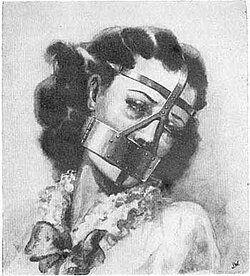
Source: Wikimedia
I do not owe anyone a smaller truth so they can maintain a larger lie.
Absolutely no woman deserves to be harmed because she spoke a truth somebody did not want to hear.
She does not deserve to be slapped because her words embarrassed someone. She does not deserve to be punched because she refused to agree. She does not deserve to be threatened because she named what happened, corrected the story, exposed wrongdoing, or would not help somebody maintain a lie.
There are plenty of ways to respond to words. Disagree. Answer. Correct the facts. Leave the room. End the conversation. End the relationship if necessary.
But violence is not an argument. And when we hear someone try to justify violence against a woman by telling us what she said beforehand, we should listen carefully. Because there is a very old idea hiding inside that explanation: that sometimes a woman can say something so unacceptable that punishment becomes “understandable.” Bodily safety is not a prize awarded to women for pleasant behavior.
Women have met that silly, immature justification before. For centuries.
Long Before They Said She “Talked Too Much”
My bodily safety is not a reward for being agreeable.
Long before somebody said a woman had “a mouth on her,” there were formal ways of describing women whose speech was considered troublesome.
Under English common law, there was an offense known as being a “common scold.” The label became strongly associated with women accused of habitually quarrelsome, disruptive, abusive, or troublesome behavior. The tradition eventually crossed the Atlantic and appeared in American law as well. (Not that enslaved people, white women, Native Americans, and people with disabilities weren’t already being subjected to such tortures. People just like shiny labels to justify bs.)
What makes this history so revealing is not simply that people objected to certain speech. Every society has rules concerning threats, harassment, defamation, and public disorder.
It is what could happen to the speaker. One punishment associated with scolding was the ducking stool. A person could be strapped into a chair, displayed publicly, and lowered into water. Public humiliation was part of the punishment. The community did not merely hear that someone had been disciplined. People could watch it happen.
In Britain, another notorious instrument associated with punishing troublesome speech was the scold’s bridle, also called the branks.
It was made of iron. It enclosed the head. And surviving examples include a metal mouthpiece designed to restrain the tongue. There is something chillingly literal about that object. A woman had become troublesome through her mouth, and so an apparatus was placed upon her body to control it.
That history is not exactly identical to what happens when a woman is assaulted by a partner today, but the justification can sound disturbingly familiar. We have heard these things before.
Look what she said.
Look how she spoke to him.
She embarrassed him.
She disrespected him.
She wouldn’t stop.
She knows how he gets.
She hurt his feelings.
And suddenly we are no longer talking about the person who chose violence. We are conducting an investigation into the woman’s mouth. Her words. His feelings. When violence against a woman is explained by what came out of her mouth, somebody has quietly put her speech on trial instead of the violence.
Women Learned What Speech Could Cost
Disagreement does not make me deserving of harm.
The public nature of those old punishments deserves attention because punishment rarely teaches only the person receiving it.
Other women were watching. Girls were watching. Families were watching. Communities were learning where the boundaries were.
That means the history of women’s silence cannot always be interpreted as evidence that women were naturally more agreeable, submissive, or content with the world around them. Sometimes silence was survival knowledge.
A woman could know something and understand perfectly well that saying it aloud would cost her.
And she could also know what would happen if she said so.
Sometimes the punishment was legal. Sometimes it was economic. Sometimes it came through religion or family. Sometimes it meant being called troublesome, wicked, disobedient, hysterical, unfeminine, immoral, bitter, or mad. Sometimes women survived by remaining quiet.
We should have compassion for them. Sometimes young Western women describe it as “tolerating” or “allowing” when it was surviving to see another day. Literally. Do you all not see these people killing their entire families and political leaders, law enforcement, and others moving on to another day? In the United States of America? In 2026? You can’t even imagine the level of threat and danger they faced.
This is what it is to be a woman in even a toxic relationship. Today. But let a man’s feelings be hurt. Nonstop coverage, meetings, PSAs, calls to be kind, change our speech, and “all hands on deck. ” Life as we all know it must stop and change.
Not when it comes to women and girls. Watch for yourself. See for yourself.
But understand that some women spoke anyway. That is where another inheritance begins. The only reason some truths even survived is because a woman whispered them to another woman when saying them publicly was too dangerous.
And to be clear, this isn’t against boys and men. You can love men and boys and see the difference. Call it out. And move for change. And because they love you, they’ll stand beside you and do the same. Because that’s what is healthy for all. A healthy society, community, and culture is loving for all.
Some Women Refused to Help the Lie
I refuse the old bargain that promises women safety only when we are sufficiently quiet.
In 1829, here in the United States, writer Anne Royall was prosecuted in Washington, D.C., on charges that included being a “common scold.”
Royall was outspoken, politically opinionated, and unusually willing for a woman of her era to confront powerful people. Historical records from the Library of Congress document that a ducking chair was prepared at the Washington Navy Yard, although the court ultimately treated the punishment as obsolete and fined her instead.
Think about the world contained inside that story. A woman speaks. Authorities decide her speech has become intolerable. Somebody builds a chair for putting her into water. She is fortunate enough not to end up in it. And nearly two hundred years later, we can still recognize the larger question underneath the spectacle:
What happens to a woman when people decide her voice has become a problem?
For Black American women, that question carries an additional history.
Black Women Were Expected to Carry Impossible Silences
History has a bad habit of cleaning up the room before admitting who was thrown out of it
Enslaved Black women lived inside a legal and economic system that treated human beings as property. They lived with the possibility of children being sold away from parents. They lived under extraordinary vulnerability to sexual coercion and violence, with little meaningful ability to demand protection or justice from the very system sustaining their enslavement.
Imagine how much truth existed inside women who were given so little authority to tell it.
They knew which respectable public faces concealed private cruelty.
They knew the enormous distance between what America said about itself and what America permitted to happen to them.
Not every woman could speak.
Not every woman survived by resisting publicly.
Sometimes a woman is quiet because she agrees. And sometimes a woman is quiet because she understands the price of speaking. Those are not the same thing.
Then Came Women Who Put the Truth in Print
I honor the women before me who found ways to warn, witness, testify, protect, and tell.
Generations later, Ida B. Wells confronted another enormous American lie.
The familiar justification for lynching presented mob violence as righteous protection of white women from sexually dangerous Black men. Wells investigated actual cases and discovered that this explanation frequently collapsed under scrutiny. Her journalism documented cases involving economic competition, consensual interracial relationships, racial domination, and allegations that did not withstand serious examination.
She did not merely say that she disagreed. She investigated. She gathered evidence. She published.
Because when Wells challenged the story America was telling itself about lynching, the response was not simply another newspaper editorial arguing that she was mistaken.
In 1892, while Wells was away from Memphis, a white mob destroyed the office of the newspaper she co-owned, The Free Speech and Headlight. Threats made returning dangerous.
Once again, consider the sequence.
A woman investigates. A woman speaks. A woman publishes what she finds. The place from which she speaks is destroyed.
The circumstances are profoundly different from the old scold’s bridle. We should not flatten history by pretending otherwise.
But something recognizable keeps appearing across these stories. When answering the woman’s evidence becomes difficult, attention turns toward stopping the woman.
Most of Our Truth-Tellers Never Became Famous
You may challenge a woman’s words. You may not answer them with violence.
Still, I do not want us to tell this history only through extraordinary women whose names survived.
Because most women who carried truth from one generation to another never had newspapers.
Nobody archived their papers. Nobody preserved their speeches. Nobody placed their portraits in museums.
Some cleaned houses. Some worked tobacco. Some cooked Some farmed. Some took in laundry. Some raised children. Some worked factories and hospitals and schools. Some stood over hot stoves after working all day and listened carefully when a daughter finally told them what had happened.Some opened doors in the middle of the night. Some hid money for another woman. Some quietly stopped allowing a certain man around the children.
Some told a niece, Don’t go over there by yourself. Some believed a girl, even though they believed her was going to disrupt the whole family.
Some said the sentence that can change the direction of a life:
You don’t have to stay there.
And some simply refused to repeat the official story.
Sometimes resistance survives history not in a courthouse document, but in something a woman remembers hearing in a kitchen.
That Is What I Mean by Ancestry
Sometimes we say this refusal to submit to lies feels as though it runs through our blood.History gives us an even richer way to describe it.
What traveled through generations was not some magical biological certainty that women would always recognize truth. Women are human beings. We can be mistaken. We can misunderstand. We can behave badly. We can even tell lies ourselves.
What traveled was knowledge.
Sometimes they simply said:
I believe you.
That is ancestry too.
May we become the women who listen while the warning is still a whisper, so no girl has to become the evidence that finally makes the world hear.
So When a Woman Says, “No. That Is Not What Happened.”
Listen to the weight inside those words.
No. That is not what happened.
No. You may not rewrite what I witnessed.
No. His reputation is not more valuable than her safety.
No. Family peace does not require one person to swallow reality.
No. Love does not require lying.
No. Respect does not require pretending.
And no, a woman’s words do not transform another person’s hand into a weapon.
She may be loud. She may be angry. She may be tactless. She may embarrass somebody. She may say something unfair. She may even be completely wrong.
None of those things make her beatable.
That principle cannot depend upon whether we like the woman.
Bodily safety is not a prize awarded to women for pleasant behavior.
There is something especially dangerous about explaining a woman’s assault by giving us a detailed inventory of everything irritating about her personality. Once we begin doing that, we have quietly made her behavior the subject of the trial.
And history has seen that trial before.
We Are Not Going Back to the Bridle
We cannot teach girls to trust their instincts while teaching them that another person’s feelings automatically outrank their boundaries.
There is an old piece of iron sitting in museum collections today that should make us think.
The scold’s bridle belongs to another world. We should be careful about drawing easy lines across centuries, countries, laws, races, and circumstances.
But we are allowed to learn from what it represents.
There have been times when societies considered troublesome female speech a problem requiring punishment.
Women lived through those worlds.
Millions did not. Yet something reached us anyway.
So teach our daughters to care about truth.
Teach them to check their facts.
Teach them to correct themselves when they are wrong.
Teach them that walking away can sometimes be wiser than winning an argument.
Teach them that silence can occasionally be a safety strategy rather than surrender.
But never teach our girls that another person’s violence proves she should have kept her mouth shut.
We cannot teach girls to trust their instincts while teaching them that another person’s feelings automatically outrank their boundaries.
Never teach her that safety belongs only to agreeable women.
Never teach her that somebody else’s inability to control himself becomes her responsibility because she found the words that angered him.
Our foremothers have already lived too much of that history.
Perhaps this is one of the things they managed to get across the generations to us, sometimes in books and testimony, sometimes through nothing more formal than women talking to women:
You do not have to help a lie become the truth by carrying it in silence.
There is ancestry in that refusal. There is memory in it.
And every time a woman discovers that she can tell the truth without surrendering her humanity, there is a little more freedom waiting for the women coming behind her.
I will leave the women coming behind me more language for truth than I was given. (This is what the women some people mock did. Please consider honoring them.)
What Does It Really Mean To Be Socialized As a Woman? – WE Survive Abuse
🚨 Signs of Harm Justification – WE Survive Abuse
Women Have Heard “Of Course We Mean You Too” Before – WE Survive Abuse