
Table of Contents
One side wants women to go back. The other has people telling women to move over. And somewhere in the middle, women are asking a perfectly reasonable question: When do we get to live our own lives for ourselves?
I grew up hearing about the battles women fought just to have choices. Education. Employment. Financial independence. Control over our bodies. The right to leave an abusive marriage.
Those weren’t little victories. Women paid dearly for them.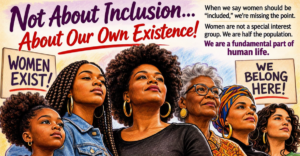
Now I look at American politics and see some familiar expectations dressed in different clothes.
The political extremes disagree about plenty. But both can become remarkably comfortable telling women what we ought to accept.
And I think women have had quite enough of that.
1. The Far Right Wants to Decide What a Woman’s Life Should Look Like
Marriage. Motherhood. Traditional femininity. Submission to male authority.
There are people on the far right who still speak about these things as though they are a woman’s natural assignment rather than choices she might freely make.
There is nothing wrong with a woman choosing marriage, motherhood, or a traditional household.
The problem begins when her choice becomes somebody else’s requirement.
Women fought for the freedom to build different kinds of lives. We shouldn’t have to keep defending that freedom every generation.
2. Parts of the Far Left Want to Decide What Women Must Accept
Some women question policies allowing males who identify as women to enter female sports, intimate facilities, or services originally established around sex.
They want to discuss privacy, fairness, safeguarding, and the reasons those boundaries existed.
Those questions deserve answers.
Yet some activists respond as though asking the question is itself an act of cruelty.
That doesn’t resolve a policy disagreement. It discourages discussion.
A woman should not have to prove that she is a good person before she is permitted to question a decision affecting her life.
3. Reproductive Freedom Is Still Being Negotiated Without Enough Regard for Women’s Lives
A woman can spend years building a life, supporting a family, and planning her future.
Then a pregnancy complication can put her health and decisions into the hands of laws she had no individual power to negotiate.
Since Dobbs v. Jackson Women’s Health Organization overturned Roe v. Wade in 2022, states have adopted sharply different abortion restrictions.
The consequences are especially serious for women with limited money, transportation, or access to medical specialists.
Read: KFF’s abortion policy tracker.
A woman’s medical circumstances should never become an afterthought in somebody else’s political victory.
4. Girls Should Not Have to Sacrifice Their Opportunities to Demonstrate Kindness
Girls’ sports were not created because girls lacked ambition.
They were created in recognition of unequal opportunities and the importance of meaningful female athletic participation.
Today, disagreements over transgender participation have become part of a much larger political conflict.
But girls are not political props.
Their athletic development, privacy, opportunities, and ability to compete deserve serious consideration. So do the circumstances of individual students affected by eligibility rules.
We can discuss those questions without demanding that girls remain silent or treating every disagreement as “hatred.”
A girl deserves to develop her abilities, not spend her childhood proving that she is sufficiently accommodating.
5. Working-Class Women Cannot Always Escape the Consequences
This is the part I wish received more attention.
A woman with money may be able to choose a different school, arrange private medical care, or leave a facility that doesn’t meet her needs.
A woman without those resources may have to accept whatever is available.
That makes institutional decisions especially consequential for women in shelters, hospitals, prisons, and other settings where choice is limited.
And it makes their participation in those decisions essential.
The fewer choices a woman has, the more carefully institutions should consider the consequences of the choices they make for her.
6. Women Are Still Being Told That Goodness Requires Sacrifice
This one sounds awfully familiar.
For generations, women were taught to put themselves last.
Be understanding. Keep the peace. Don’t embarrass anybody. Think about how everybody else feels.
Those expectations can appear in conservative religious settings, progressive activist spaces, workplaces, and families.
The language changes. The expectation remains recognizable.
A woman is praised for being generous until…….. she establishes a boundary somebody doesn’t like.
Then suddenly she’s “selfish.”
A woman’s kindness is not a public resource that everybody else gets to spend.
7. Survivors Know What Happens When Questions Become Unwelcome
Many Survivors remember being discouraged from asking questions.
Why did he do that?
Why am I being told to ignore what happened?
Why does everybody seem more concerned about his reputation than my safety?
Sometimes the pressure came from an individual. Sometimes it came from a family, workplace, religious community, or institution.
That experience can teach a painful lesson about what happens when preserving a preferred narrative becomes more important than examining the facts.
Political movements are not exempt from that danger.
When women ask reasonable questions about their rights and safety, the answer should not be a lecture about their character.
8. Women Do Not Owe Either Political Extreme Their Obedience
A woman can oppose restrictive abortion laws and still question gender-identity policies affecting female-only services.
She can support religious freedom without accepting religious rules as the governing standard for every woman’s life.
She can reject traditional sex stereotypes while maintaining that biological sex is relevant in certain circumstances.
And she can do all of that without joining a political team.
Women are human beings with interests, convictions, histories, and judgment of our own.
We don’t need somebody to hand us a complete package of approved beliefs. Keep your handbook.
Our rights should not come bundled with a political loyalty agreement.
9. Stop Asking Women to Choose WHICH Restrictions They Prefer
Here is what bothers me about the way these conversations are sometimes presented.
Women are expected to choose between political camps, even when neither camp fully represents their concerns.
But a woman who wants reproductive autonomy may also want sex-based privacy.
A woman who values family life may also want financial independence.
A woman who supports freedom of expression may also expect institutions to take safeguarding seriously.
None of those positions is inherently contradictory.
Women should be able to evaluate each issue on its merits.
Freedom isn’t much of a victory if women must surrender one part of it to protect another.
10. Girls Are Watching How We Treat Women Who Say No
Girls notice when a woman is called selfish for choosing not to have children.
They notice when women are ridiculed for raising concerns about their boundaries.
They notice when powerful people explain why women should accept decisions they had little role in making.
And they notice when women are expected to be agreeable, even when the conversation concerns their own lives.
What are we teaching them?
I hope we’re teaching them that they can listen without surrendering their judgment.
That they can care about other people without making themselves invisible.
And that being a decent person does not require automatic agreement.
A girl who learns that her voice deserves consideration is better prepared to recognize when somebody is trying to take that voice away.
A Final Word: Women Are Not Political Property
I don’t expect every woman to think alike.
We come from different families, faiths, communities, and experiences. We disagree about important things.
That’s life.
But I do expect political movements that claim to care about women to make room for women’s independent judgment.
Not just when we agree with them.
Especially when we don’t.
For Survivors who have worked hard to reclaim their voices, there is something important to remember here.
You are allowed to ask questions. You are allowed to disagree. You are allowed to decide that a proposed solution does not work for you.
You do not have to accept somebody else’s definition of a “good woman.”
And you do not have to choose between two sets of expectations simply because both sides insist they are “acting in your best interests.”
Women fought too hard to escape expectations of obedience for obedience to become the price of belonging.
Something to think about: When a political movement tells women what they must accept for the greater good, who gets to decide what that greater good requires, and who is expected to make the sacrifice?
