Table of Contents
Who has to report? Who needs permission? Who gets privacy? Whose feelings matter?Whose movements are recorded? Who must prove herself responsible? Who gets questioned about ordinary adult choices? Who can be confined? Who is presumed capable of making decisions without supervision?
We often recognize control when a man demands to know where a woman has been, checks her phone, controls her money, or requires an explanation before she leaves the house.
Institutional control can be harder to see because it comes dressed differently.
It may arrive as a form, a law, a medical rule, a case file, a guardian requirement, a welfare appointment, a religious institution, a police officer, a social worker, or an official asking a grown woman to give an account of herself.
Where are you going? Who is accompanying you? Are you married? Are you pregnant? Why do you want this procedure? Are you a suitable mother? Where are your children? Did your husband approve? Why were you there?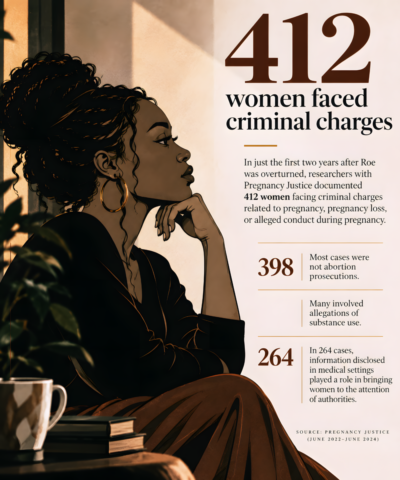
“You should not be alone.”
Women around the world have been required to explain decisions, movements, relationships, pregnancies, sexuality and motherhood in ways men often have not.
The histories below are not interchangeable. An Aboriginal child-removal policy in Australia is not the same institution as an American child-welfare system, an Irish Magdalene laundry, or Iranian restrictions on women’s movement. But we can study them together and we don’t even have to pretend that they are identical.
Because there is a question running through all of them:
Who decided that this woman had to give an account of herself?
And when permission, reporting, surveillance, confinement or punishment is used to restrict women’s ordinary freedom, we should be willing to name what we are looking at.
It is control.
Rabbit-Proof Fence (2002) — Australia
Three Aboriginal girls are forcibly removed from their families under Australian government policies that gave officials extraordinary authority over Indigenous children. They are taken to an institution and later pursued when they escape.
For this list, watch the machinery surrounding the girls and their mothers: racial classification, government records, removal, placement, confinement and pursuit. Aboriginal motherhood itself has been placed beneath government authority.
If These Walls Could Talk (1996) — United States
. Three women living in the same house during three different periods face unintended pregnancies under dramatically different legal and social circumstances.
1952. An adult woman cannot simply obtain the medical care she wants. Law, medicine, secrecy and social judgment narrow her choices. Across the three stories, the film lets us watch the institutions surrounding women’s reproductive decisions change over time.
It belongs on this list because pregnancy repeatedly raises a larger question: How much explaining should an adult woman have to do before making a decision about her own life?
Vera Drake (2004) — Britain
Set in 1950s England, Vera Drake follows a working-class woman who secretly helps women end unwanted pregnancies when abortion is illegal.
The film shows what criminalization creates around women: secrecy, medical gatekeeping, police investigation, interrogation and fear. Women with money may find different routes. Poor women face much narrower ones.
Here, institutional control enters through criminal law and the medical system.
The Magdalene Sisters (2002) — Ireland
Women and girls deemed sexually or socially unacceptable are confined in a Magdalene laundry operated by Catholic religious authorities.
Their movements, labor, relationships and contact with the outside world are controlled. Some women entered these institutions after pregnancy, sexual activity or simply being judged troublesome. Others had experienced sexual abuse themselves.
This is institutional control at its starkest: judgment becomes confinement.
Bush Mama (1975) — Black America
Haile Gerima’s film follows Dorothy, a pregnant Black woman in Watts navigating welfare bureaucracy, poverty and policing.
There is no single villain standing over Dorothy. That is precisely why the film belongs here. Forms, offices, government programs, police and economic power surround her life.
The institution can watch a woman without ever standing outside her window.
Earth Mama (2023) — Black America
Gia is a pregnant Black mother whose children are in foster care. To regain custody, she must move through a child-welfare system that evaluates her behavior, choices and fitness as a mother.
She attends required programs and submits to supervised drug testing. She understands that what she says and how she behaves may become part of how other people judge her motherhood.
Eventually surveillance can move inside a person. When you know you are constantly being evaluated, you begin evaluating yourself.
No Más Bebés (2015) — Mexican American Women
This documentary examines Mexican immigrant women who said they were pressured or misled into sterilization procedures while giving birth at Los Angeles County-USC Medical Center in the 1960s and 1970s.
Their stories eventually became part of the landmark Madrigal v. Quilligan litigation.
This film belongs here because hospitals are institutions of enormous trust. It asks what happens when language, immigration status, poverty, medical authority and reproductive decision-making meet inside a system where the woman lying in the hospital bed holds the least institutional power.
Dawnland (2018) — Native American Families
Dawnland examines the removal of Wabanaki children from their families through Maine’s child-welfare system and the later Truth and Reconciliation Commission established to investigate that history.
Behind child removal is an enormous institutional power: the ability to investigate a family, evaluate a mother, create a record and ultimately decide where her children should live.
For Indigenous women, that history cannot be separated from generations of outside authorities claiming to know what was best for Indigenous children.
Mustang (2015) — Turkey
Five sisters are seen playing with boys. Someone reports them to their family.
That small act sets an entire system of control in motion. Their movements become restricted, their access to the outside world shrinks, and the family increasingly confines them while preparing them for marriage.
Mustang is useful because it shows that monitoring does not always begin with government. A community can provide the eyes. A family can provide the enforcement.
The Circle (2000) — Iran
Jafar Panahi follows several women attempting to move through ordinary life in Tehran.
Identification, marital status, policing and restrictions on women’s movement repeatedly determine what the women can do and where they can go.
The brilliance of The Circle is its accumulation. One restriction may appear small. Then comes another. And another. Eventually the audience understands that the women are navigating an environment built around the expectation that female movement can legitimately be questioned.
Offside (2006) — Iran
Young women disguise themselves as boys to enter a football stadium where women are prohibited.
When discovered, they are detained and guarded by soldiers.
The film makes institutional control almost absurdly visible. These young women want to watch a football match. Yet their sex transforms an ordinary recreational activity into something requiring disguise, enforcement, detention and supervision.
Permission / Cold Sweat (2018) — Iran
Afruz is captain of Iran’s women’s national futsal team and is preparing to compete internationally. Her estranged husband uses his legal authority to prevent her from leaving the country.
That makes Permission one of the clearest films on this list.
She is an accomplished adult woman representing her country, yet another adult possesses legal power capable of stopping her movement.
Achievement does not cancel institutional dependency.
Osama (2003) — Afghanistan
Under Taliban rule, a widowed mother and her daughter face restrictions that make earning money and moving through public life extraordinarily difficult without a male presence. The girl is disguised as a boy so the family can survive.
The film demonstrates what happens when control is no longer merely interpersonal.
The environment itself enforces it.
Kandahar (2001) — Afghanistan
Kandahar depicts women’s lives under Taliban rule, including restrictions surrounding movement and medical treatment.
One striking medical encounter shows how even communication between an adult female patient and a male physician is mediated through sex-segregated rules.
A doctor’s appointment, something easily understood as private communication between patient and physician, becomes another place where a woman’s presence and body are institutionally regulated.
These films come from different countries, races, religions, political systems and periods of history. We should respect those differences.
But we should also resist an easy escape: “Those people do that to women.”
Look again.
Government offices can monitor women. Hospitals can monitor women. Religious institutions can monitor women. Families can monitor women. Welfare and child-protection systems can monitor women. Laws can require women to obtain permission. Communities can report women. Authorities can confine women. Records can follow women long after the person who originally wrote them has disappeared.
Sometimes the cage has bars. Sometimes it has paperwork. Both deserve our attention.
And when a system requires women to surrender ordinary adult autonomy through surveillance, permission, reporting or confinement, we should not be afraid to name the mechanism.
Control is still control when an institution is doing it.
When the Help Hurts: Understanding Institutional Betrayal – WE Survive Abuse
The Burden of Blindness: How Systems Force Us to Ignore Our Own Reality – WE Survive Abuse
Some of Us Can’t Pretend Institutions Are Harmless – WE Survive Abuse
✅ False Solidarity: When Institutions Use Guilt to Silence Women and Families – WE Survive Abuse
We Keep Asking Women to Be Kinder. Who Is Asking Why Men Are Not Kinder? – WE Survive Abuse
American Violet and the Fight to Remain the Expert on Your Own Life – WE Survive Abuse