Table of Contents
Women and girls make up half of humanity.Yet across the world, millions still face systems that limit their safety, freedom, economic independence, education, health, and ownership of their own lives.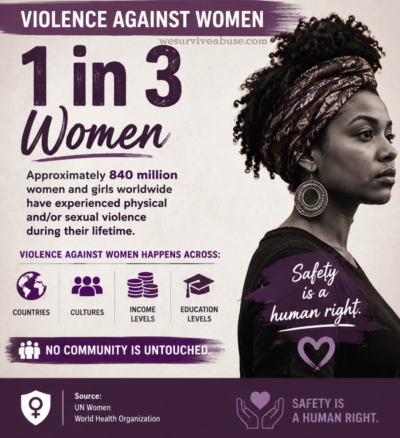
These are not isolated stories.
They are global patterns.
1. Nearly 1 in 3 women worldwide have experienced physical or sexual violence
An estimated 840 million women and girls have experienced physical and/or sexual violence at least once in their lifetime. This includes violence by intimate partners and sexual violence by non-partners.
Behind this number are mothers, daughters, sisters, coworkers, neighbors, and friends whose lives have been shaped by fear, trauma, and survival.
2. Women continue to carry a disproportionate burden of poverty
About 1 in 10 women globally live in extreme poverty. If current trends continue, hundreds of millions of women and girls will remain in extreme poverty in the coming years.
Poverty is not only about money.
It affects:
-
where women can live
-
whether they can leave unsafe relationships
-
access to healthcare
-
education opportunities
-
protection from exploitation
Economic dependence can become a cage.
3. Women have less access to land ownership and control
Land is one of the world’s oldest forms of security.
It provides:
-
housing
-
food production
-
inheritance
-
wealth
-
financial independence
Yet women’s land ownership remains far below men’s in many parts of the world. Available data show major gaps, with many countries reporting that women own land at much lower rates than men.
A woman without property rights often has fewer choices.
4. Women perform far more unpaid caregiving work
Around the world, women spend substantially more time than men on unpaid care and domestic labor.
This includes:
-
caring for children
-
caring for elders
-
cooking
-
cleaning
-
managing households
This labor keeps families and economies functioning, yet it often receives no wage, no retirement benefits, and no social recognition.
5. Millions of girls are still denied childhood
Child marriage remains a global human rights issue.
Girls who marry young are more likely to experience:
-
interrupted education
-
early pregnancy risks
-
economic dependence
-
increased vulnerability to violence
A childhood should not be traded away.
6. Women remain underrepresented in positions of power
Across many countries, women remain a minority in:
-
government leadership
-
corporate leadership
-
peace negotiations
-
decision-making institutions
When women are absent from decisions, the people most affected by those decisions often have the least influence over them.
7. Women face unequal access to economic opportunity
Women around the world continue to face barriers involving:
-
employment opportunities
-
wages
-
entrepreneurship
-
financial services
-
legal protections
The World Bank has found that women often have fewer legal protections and economic opportunities than men globally.
8. Women experience greater food insecurity in many regions
Women are more likely than men to experience food insecurity globally.
Data show a persistent gender gap, with women reporting higher rates of moderate or severe food insecurity.
A world that depends on women’s labor should not leave women hungry.
9. Women and girls face restrictions on movement, education, and independence
Across the world, laws, customs, and social systems still restrict women’s:
-
ability to travel freely
-
access to education
-
employment choices
-
financial independence
-
participation in public life
Freedom is not fully realized when half of humanity must negotiate permission to exist.
10. Women carry the biological realities of reproduction while societies often undervalue the labor surrounding it
Women’s bodies carry pregnancy, childbirth, and many of the physical consequences of reproduction.
At the same time, societies often undervalue:
-
maternal labor
-
caregiving
-
reproductive health needs
-
the unpaid work that follows birth
The ability to create life has never meant women should lose ownership of their own lives.
The bigger picture
The question is not whether women contribute.
Women have always contributed.
They have built families, communities, economies, movements, farms, businesses, institutions, and nations.
The question is why so much of the world has benefited from women’s labor while too often denying women equal safety, ownership, authority, and freedom.
A society cannot call itself advanced while asking women to carry the weight of the world and then treating their needs as secondary.
A woman is not a resource.
She is a human being.
Her life, labor, body, and future belong to her.