
"Nobody is telling you whom you must sleep with.” “But if you exclude certain people from your sexual or dating pool, your exclusion may reveal preju
“Nobody is telling you whom you must sleep with.”
“But if you exclude certain people from your sexual or dating pool, your exclusion may reveal prejudice, bigotry, or a phobia.”
Just, stop.
There is something deeply disingenuous about telling young women, “Nobody is telling you who to sleep with,” immediately after warning them that refusing certain people may make them prejudiced, hateful, or some form of “phobic.”
No, you did not issue an order. But you attached a moral penalty to one answer and social approval to the other. That is pressure, and we should be honest enough to call it pressure.
Consent is not protected merely because nobody said the words, “You have to.”
We already teach young women that coercion can work through guilt, shame, persistence, emotional manipulation, fear of rejection, and threats to their reputation. So we cannot suddenly pretend those pressures become harmless when they are attached to a cause somebody considers socially important.
Human dignity is universal. Sexual access is not.
Young women especially need to hear this clearly. Your sexual boundaries do not become public property because somebody has a political, social, religious, or moral argument for why you “should” reconsider them.
You may examine your own preferences. You may change them. You may discover things about yourself over time. But that exploration belongs to you. There is a profound difference between self-reflection freely chosen and self-interrogation demanded because somebody else dislikes your answer.
If a culture is willing to use shame as a behavioral tool, we should pay attention to where it chooses to concentrate that shame.
Women and girls can encounter moral scrutiny around whom they date, whom they reject, how selective they are, whether their boundaries are sufficiently inclusive, and what their sexual preferences supposedly reveal about their character.
Meanwhile, there are enormous social problems involving male responsibility that deserve sustained attention: fathers abandoning children, intimate-partner violence, sexual violence, coercion, and men failing to intervene in the harmful behavior of other men.
Why spend moral energy teaching young women to reconsider whom they will permit into their intimate lives instead of teaching people, especially men and boys, to accept sexual rejection without resentment, argument, punishment, or negotiation?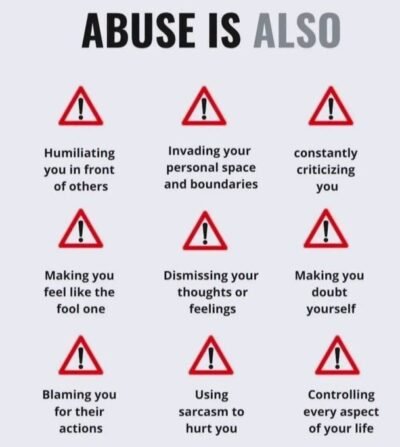
We should be teaching them the opposite lesson: another person’s dignity deserves respect,
but another person’s desire does not create an obligation to reconsider your own.
If “no” is truly an acceptable answer, people must be willing to accept it even when they do not approve of the reason behind it.
Otherwise, stop pretending the choice was neutral.
*Note: “But what if a white person says they won’t date you because you are a ghetto Black woman”
- I noticed the addition of “ghetto.” You ain’t slick.
- I. Do. NOT. Care. Never have. It has never crossed my mind to care about whether I was preferred by certain groups of people. Not even when I was an angst-filled teenager crushing on New Edition members, actors, and hip hop & R&B artists. I go where I am appreciated as the beautifully divinely created being that I am. Most Black women are not having conversations about this in our circles because…… we don’t care.
Find yourself and then love that human being with genuine fierceness.
No Predator Has the Authority to Rename Violence As a “Right.” – WE Survive Abuse
🚨 Control of Language Is a Red Flag for Abuse—And Many Miss It – WE Survive Abuse
‘Go Along to Get Along’ Is How They Silence You—Here’s Why You Must Speak Anyway – WE Survive Abuse
🖤 12 Ways Black Women Are Harmed When Men Weaponize Oppressive Systems – WE Survive Abuse