For decades, the murder of Kitty Genovese was told as a chilling lesson about human indifference: a young woman screamed for help while 38 neighbors w
For decades, the murder of Kitty Genovese was told as a chilling lesson about human indifference: a young woman screamed for help while 38 neighbors watched from their windows and did nothing.
There is one serious problem.
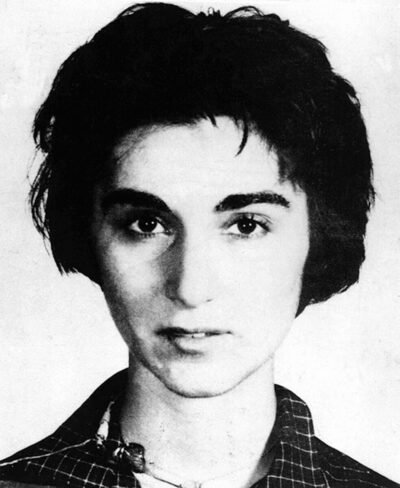
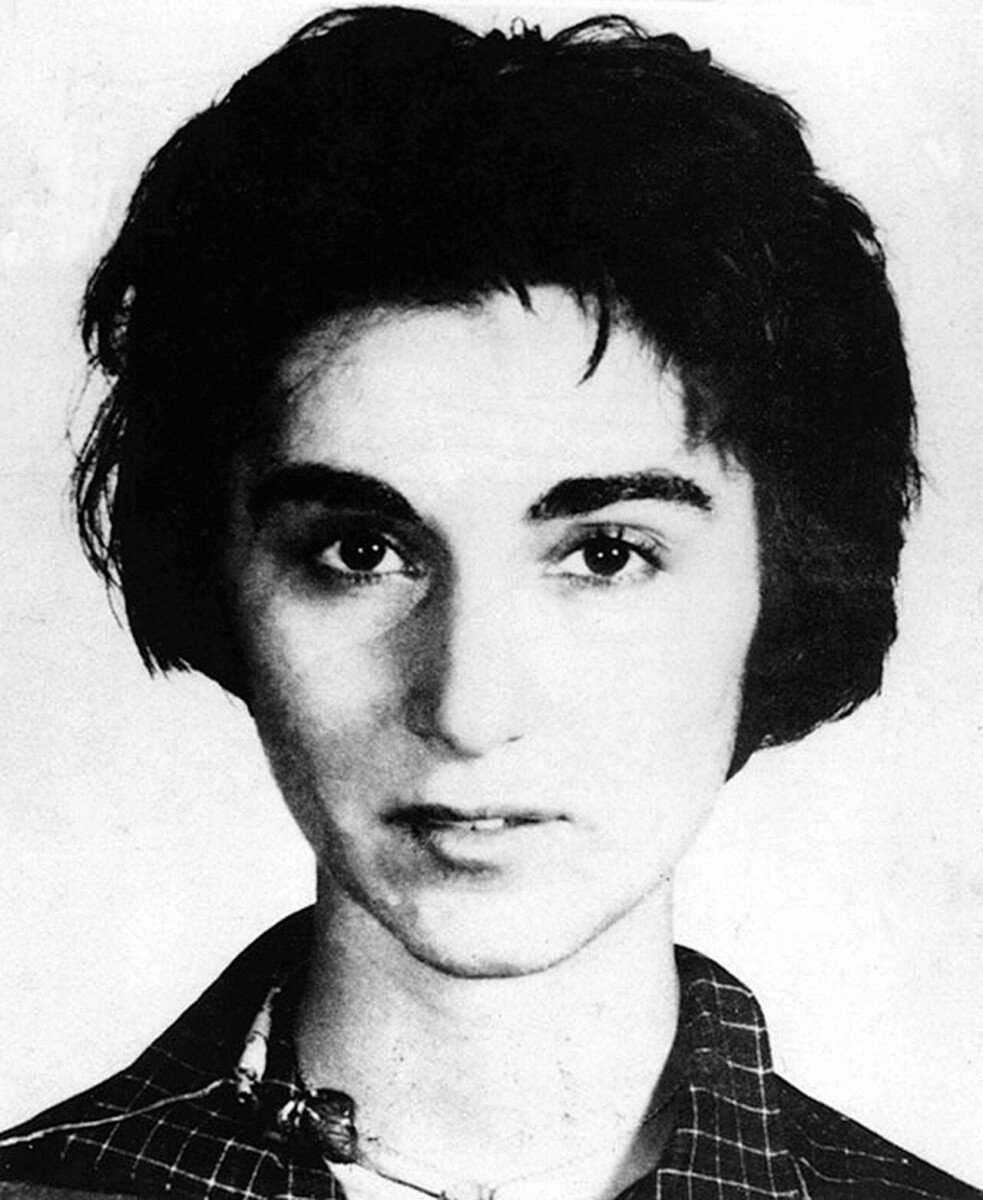
Mug shot created by the Queens, New York police department/ Wikimedia
That is not what happened.
On March 13, 1964, 28-year-old Catherine “Kitty” Genovese was attacked and murdered near her home in Kew Gardens, Queens. Her death was horrific. But the famous story that grew around her death was also deeply flawed. Later reporting, court records, scholarship, witness accounts, and an extraordinary investigation by Kitty’s own brother have changed what we know about that night.
There were not 38 people calmly watching an uninterrupted murder. At least one neighbor shouted at Kitty’s attacker and temporarily frightened him away. The final attack occurred largely out of public view. Someone did attempt to contact police. And when Kitty was finally found, her neighbor and friend Sophia Farrar came to her, held her, and remained with her until help arrived.
Kitty Genovese did not die entirely alone.
In this episode of the We Survive Abuse Podcast, Tonya GJ Prince revisits the Kitty Genovese story with the benefit of what we know now. We look beyond the famous “bystander effect” story to examine what witnesses actually saw and heard, how an enormously influential media narrative took hold, and what can happen when a complicated human tragedy gets compressed into a lesson tidy enough for textbooks.
We also return Kitty to the center of her own story.
She was not merely “the woman nobody helped.” She was a 28-year-old woman with a life, work, relationships, people who loved her, and a future that was violently stolen.
This is a story about violence against women, public memory, journalism, the bystander effect, historical myths, and something just as important: our responsibility to go back and correct the record when better evidence becomes available.
Because sometimes history does not need another retelling.
Sometimes it needs a correction.
Mugshot?
If you are wondering why we were never told about the public photo being a mugshot
Kitty Genovese, 1961. This familiar photograph is actually a police booking photograph taken after a minor gambling arrest, a detail often omitted when the image was reproduced.
You hear it in crime stories when someone makes the distinction that a woman was a “truly innocent victim.” But even alleged “non innocent victims” don’t deserve to be murdered either.
Historian Marcia Gallo points out that The New York Times repeatedly used the photograph without telling readers that it came from Kitty’s earlier arrest.
Kitty was turned into a symbol so thoroughly that pieces of the actual woman disappeared. She wasn’t simply the solemn young murder victim we’ve inherited from textbooks. She was a Brooklyn-born woman who bartended, managed a neighborhood bar, drove a red Fiat, had relationships, made mistakes, took some horse-racing bets, and apparently had quite a personality. Gallo describes how the public narrative essentially flattened this much more vivid woman into a figure useful for teaching a lesson about urban apathy.
Correcting her story should mean giving her back her whole humanity, not replacing one simplified Kitty with another. She sounds like a pretty socially rebellious and brave woman…..who deserved to grow old being herself.
Keep Exploring: Read, Watch, Question, and Follow the Evidence
We hope this episode is not the end of your exploration.
For decades, the story of Kitty Genovese was repeated in newspapers, classrooms, psychology textbooks, documentaries, sermons, speeches, and everyday conversations. The familiar version was simple: 38 people watched a woman being murdered and nobody helped.
But history is rarely served well by refusing to revisit it.
Researchers who returned to the records found that key parts of that famous account were not supported by the available evidence. The 2007 American Psychologist examination by Rachel Manning, Mark Levine, and Alan Collins found no evidence establishing that 38 people witnessed the murder, that 38 people watched it happen, or that everyone who became aware of the attack failed to act.
We encourage you to explore the evidence for yourself.
Begin Here: The 38-Witness Story
Rachel Manning, Mark Levine & Alan Collins, “The Kitty Genovese Murder and the Social Psychology of Helping: The Parable of the 38 Witnesses”
If you have ever learned about Kitty Genovese in a psychology class, start here. Published in American Psychologist in 2007, this scholarly examination went back to archival material and directly questioned the story that had become a foundation for countless discussions of the “bystander effect.”
The authors make an important distinction: questioning the accuracy of the Kitty Genovese story does not mean that decades of research into bystander behavior should simply be discarded. Their concern was with using an inaccurate historical account as though every part of it had been established as fact.
Read the PubMed record and abstract
Read: “No One Helped”: Kitty Genovese, New York City, and the Myth of Urban Apathy
Historian Marcia M. Gallo
This is one of the resources we especially recommend for readers who want to understand how a murder became an American parable.
Historian Marcia M. Gallo examines not only what happened to Kitty, but what happened to Kitty’s story afterward. She explores the inaccurate portrayal of dozens of indifferent witnesses, the changing New York City surrounding the case, the response of Kitty’s neighbors, and the parts of Kitty’s own life that disappeared as she was transformed into a symbol.
Gallo also restores attention to Kitty as a young woman with an actual life, including her relationship with Mary Ann Zielonko, rather than allowing her identity to begin and end with the violence committed against her.
Explore “No One Helped” through JSTOR
Gallo also wrote an accessible essay, “A New York Story: Kitty Genovese,” for the Gotham Center for New York City History. It is an excellent next stop if you aren’t ready to pick up an entire book.
Read “A New York Story: Kitty Genovese”
Watch: The Witness
If you watch only one documentary after listening to this episode, put The Witness on your list.
The film follows Bill Genovese, Kitty’s younger brother, as he investigates the story that became attached to his sister’s death. Rather than treating Kitty as merely a famous murder victim, the documentary asks what actually happened, who knew what, who tried to help, and how the story of the supposedly indifferent witnesses became so powerful.
It is also something rarer than another piece of true-crime entertainment. It is a family member trying to recover his sister from a story that had come to belong to everybody else.
Read Two Full-Length Investigations
For readers who want to go deeper into the crime itself, consider reading more than one reconstruction.
Kevin Cook’s Kitty Genovese: The Murder, the Bystanders, the Crime That Changed America and Catherine Pelonero’s Kitty Genovese: A True Account of a Public Murder and Its Private Consequences both investigate the case at book length.
Pelonero’s account draws upon police reports, archival materials, court documents and interviews.
Reading more than one serious account is useful here. The entire reason we are revisiting Kitty’s story is that repeating one authoritative-sounding version for decades helped turn disputed claims into cultural “facts.”
Go Wider: Black Historians, Scholars and Storytellers
These next resources are not being presented as sources for the facts of the Kitty Genovese murder.
We include them because responsible historical reading sometimes requires widening the lens.
Kitty was murdered in New York City in 1964. The story Americans subsequently constructed around her emerged during enormous struggles over race, gender, sexuality, crime, policing, urban life and whose experiences were considered worthy of public attention.
If we want to become better readers of American stories about crime and violence, these scholars give us additional tools.
Khalil Gibran Muhammad — The Condemnation of Blackness
Muhammad’s scholarship examines the history behind America’s association of Blackness with criminality and the ways statistics, politics and ideas about crime helped build that association. His work is especially useful when thinking critically about how American crime stories are framed and who gets imagined as dangerous.
Kellie Carter Jackson — Force and Freedom and We Refuse
Historian Kellie Carter Jackson studies Black resistance, violence, freedom and the historical narratives built around them. Her work is useful far beyond this particular case because she asks readers to reconsider familiar historical categories and pay attention to people whose choices and resistance have been flattened in conventional accounts.
Imani Perry
Perry’s work across African American history, culture, law and storytelling offers another way of thinking about historical memory: who becomes symbolic, whose complexity survives, and what America chooses to remember.
Jelani Cobb
Cobb’s writing on race, journalism and American history is valuable for readers interested in another question raised by the Genovese case: what happens when journalism doesn’t merely report an event but helps create the version of that event that future generations inherit?
One Last Recommendation: Read the Old Story Too
There is value in reading the original reporting alongside the later scholarship.
Notice the certainty of the language. Notice what information is emphasized. Notice what disappears. Then compare those accounts with later investigations and the underlying evidence.
That exercise is larger than Kitty Genovese.
It teaches us something about consuming history itself.
A story can be repeated in classrooms for decades and still deserve another look. A claim can appear in respected publications and still require scrutiny. New evidence can complicate something we thought we understood.
And correcting history does not dishonor the past.
Sometimes it is one of the most respectful things we can do for the people who lived it.
We Survive Abuse encourages you not to stop with us. Follow the citations. Read historians. Compare accounts. Watch the documentary. Look for primary records when they are available. Listen to people who challenge the familiar version.
We hope to be one trustworthy resource among many.
Because Kitty Genovese deserves more than a legend built around the way she died.
She deserves the truth.
She Who Prioritizes Her Own Safety Is Strong (audio/video) – WE Survive Abuse
She Didn’t Need Better Boundaries. She Needed Him to Respect Them. – WE Survive Abuse
How Audre Lorde Taught Us to See Women Fully – WE Survive Abuse
Less Policing Women’s Relationships. More Recognizing the Patterns Around Us. – WE Survive Abuse
Alley Greening: A Safety Solution Rooted in Justice – WE Survive Abuse