There is something strange about repeatedly telling women and girls that they need to be kinder.Because when we look at what women and girls a
There is something strange about repeatedly telling women and girls that they need to be kinder.
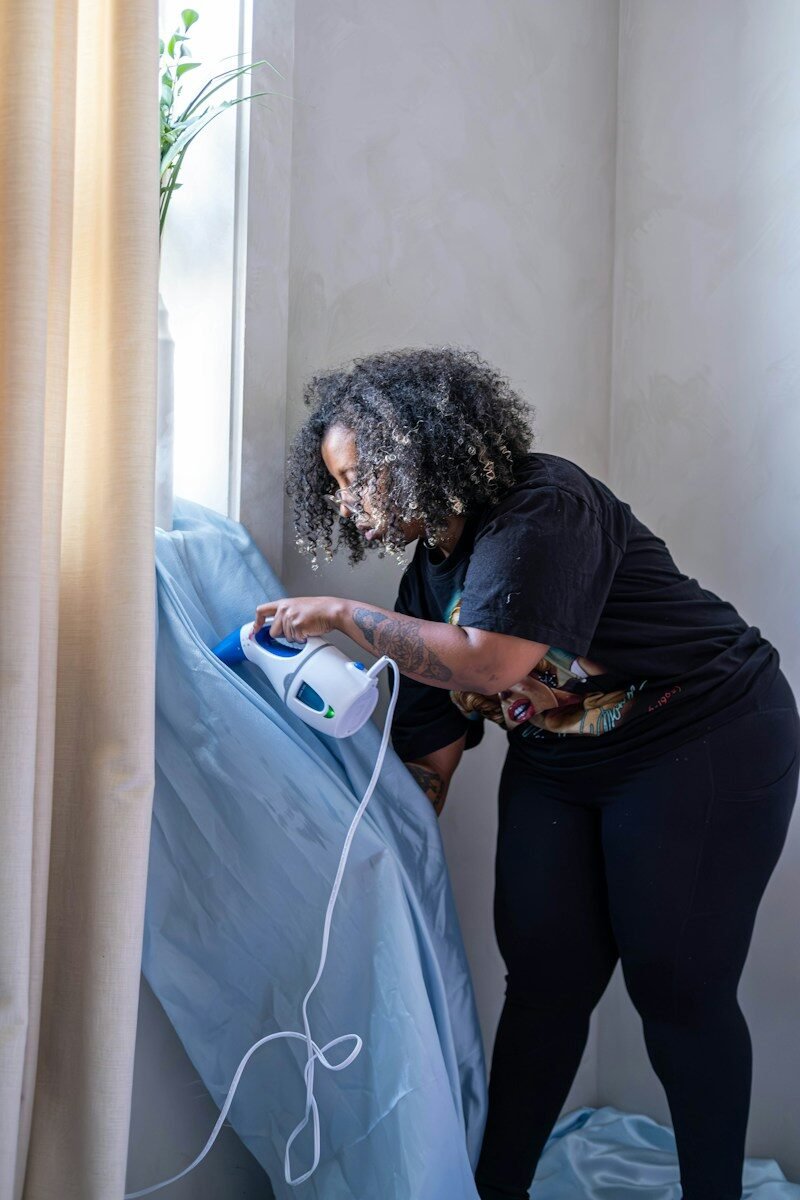
Photo by Cord Allman
Because when we look at what women and girls are already doing, we do not find a population suffering from some great shortage of generosity. We find women giving organs, raising children, caring for aging parents, tending sick relatives, cooking meals, cleaning homes, remembering birthdays, checking on neighbors, comforting friends and performing enormous amounts of work that keeps other human beings alive, connected and cared for.
Girls often begin learning their part in this arrangement long before adulthood.
1. Girls Are Often Introduced to Care Work Early
In many families and cultures, girls are taught to cook, clean, watch younger children and help care for relatives from a young age. Sometimes these are healthy family responsibilities shared among children. But sometimes the expectations fall differently on daughters.
A girl may learn to prepare food while her brother is still being served. She may be expected to notice that the baby needs changing, Grandma needs something brought to her, the kitchen needs cleaning or somebody needs watching.
By adulthood, what looks like women’s natural inclination toward caregiving may contain years of practice, expectation and social training.
2. Women Are Already Caring for Children
The American Time Use Survey gives us a way to see some of this labor.
In 2024, among adults living with children under 18, women averaged about 1.79 hours a day providing primary childcare, compared with 1.11 hours for men. Among adults living with children under six, women averaged approximately 3 hours of primary childcare per day, compared with 2 hours for men.
And “primary childcare” does not capture every moment in which a parent is simultaneously cooking dinner, supervising homework, listening for the toddler in the next room and planning tomorrow morning.
Kindness is already happening.
3. Women Are Already Doing More Work Around the Home
Women also continue to spend more time on household activities.
In 2024, women averaged approximately 2.34 hours per day on household activities, compared with 1.67 hours for men.
That category includes work such as cooking, cleaning, household management, maintenance and other tasks necessary to keep a household functioning.
One day’s difference may not look enormous until we remember that homes have to be maintained again tomorrow. And the next day. And the day after that.
4. Women Are Already Caring for Aging and Disabled Family Members
According to Caregiving in the U.S. 2025, approximately 61% of family caregivers were women, compared with 38% who were men.
That work can mean helping someone bathe, dress or eat. It can mean arranging medical appointments, picking up prescriptions, managing paperwork, providing transportation, coordinating with doctors or simply making sure somebody is not alone.
Caregiving can be beautiful. It can also be exhausting.
Recognizing the second truth does not diminish the first.
5. Women Are Already Giving Parts of Their Own Bodies to Keep Other People Alive
Women are disproportionately represented among living organ donors.
In 2024, approximately 65% of living kidney donors in the United States were female.
Think about what living donation actually means. A healthy human being undergoes medical testing, surgery, recovery and accepts physical risk so another human being may live longer or live better.
We should be very careful about describing women collectively as insufficiently generous.
6. Women Often Become the People Who Notice
There is another kind of labor that does not fit neatly into a time-use chart.
Someone notices that Dad has stopped eating normally. Someone remembers that Mom’s appointment is Tuesday. Someone realizes the child’s shoes have become too small. Someone checks whether an elderly relative has groceries. Someone knows which medication has to be refilled.
In many families, women become repositories of information about everybody else’s needs.
That is work too.
7. Girls Can Learn That Being “Good” Means Being Useful
A girl may receive praise because she is “such a little helper.” She may be called mature because she rarely complains. Adults may admire how wonderfully she takes care of younger siblings.
Some of that praise is loving and deserved.
But adults should also pay attention to what she is learning underneath it. A child should never have to conclude that her goodness is measured by how convenient she makes herself for everybody else.
Girls deserve childhood too.
8. Women Are Often Expected to Provide Emotional Care Alongside Physical Care
Care does not stop when the dishes are washed.
Women frequently remember family rituals, maintain relationships, comfort distressed relatives, check on friends, smooth disagreements and create the little traditions that make a collection of people feel like a family.
Not every woman performs this role, of course. Women differ enormously.
But when women do this work, we should call it what it is instead of treating it like something that simply appears.
9. Sometimes “Be Kind” Quietly Becomes “Do Not Make Anyone Uncomfortable”
This is where kindness can become dangerous.
Kindness is helping your neighbor. Kindness is sitting beside somebody who is grieving. Kindness is bringing food to a sick friend.
Kindness is not surrendering every boundary someone dislikes.
Those are different things.
A woman can be generous and still refuse someone access to her body, home, money, time or private space. A girl can be compassionate and still move away from an adult who makes her uncomfortable. Neither one becomes cruel because somebody disliked hearing no.
10. We Should Be Teaching Boys the Full Curriculum of Care Too
Cooking is a life skill. Cleaning is a life skill. Caring for children is a life skill. Knowing how to tend a sick relative is a life skill.
These abilities should not be treated as preparation for girlhood becoming service.
A boy who learns to cook dinner, wash clothes, comfort a crying child, care for his grandfather and notice when another person needs help is not being feminized. He is being prepared to participate fully in human relationships.
Imagine how much lighter family life becomes when everybody is trained to see the work.
11. Girls Need Lessons in Receiving, Not Only Giving
Teach her to help.
But also teach her that other people should help her.
Teach her generosity while teaching reciprocity. Teach compassion alongside discernment. Teach hospitality alongside privacy. Teach her to care about another person’s feelings without making those feelings sovereign over her safety.
And when she says she is tired, uncomfortable, frightened or simply does not want to do something, let those words carry weight.
12. Perhaps the Question Isn’t Whether Women Can Become Kinder
Women are already raising children. Women are already caring for elderly relatives. Women are already doing disproportionate amounts of household and caregiving labor. Women are even disproportionately undergoing surgery to give living organs to other human beings.
Girls are often introduced to this culture of care while they are still children themselves.
So when society reaches for women and girls yet again and tells them to accommodate more, understand more, tolerate more, give more and be kinder, another question belongs in the room:
How much kindness are women already providing, and why is so much of it treated as though it costs them nothing?
Kindness should remain one of our human virtues. But kindness without boundaries can become an instruction to disappear inside other people’s needs.
Girls do not need to become less caring. They need to know that care includes themselves.
Women do not need permission to become cruel. They need freedom from the idea that saying no somehow cancels every generous thing they have ever done.
A woman can cook for her family, sit beside a dying parent, raise children, tend a sick friend, donate an organ, comfort someone who is grieving and still have boundaries that nobody gets to negotiate away.
She was already being kind.
She simply included herself among the human beings worthy of her care.
The New Rules of Manipulation: 12 Things Every Woman and Girl Should Know – WE Survive Abuse
What Happens When the Woman We Call Strong Tells Us She Was Hurt? – WE Survive Abuse
If Stereotypes About Women Became Law, What Would Those Laws Look Like? – WE Survive Abuse
🚨 25 Items & Systems That Risk Women’s Lives Because They Don’t Accommodate Women – WE Survive Abuse