Table of Contents
I happened upon a story on social media recently about a long marriage.
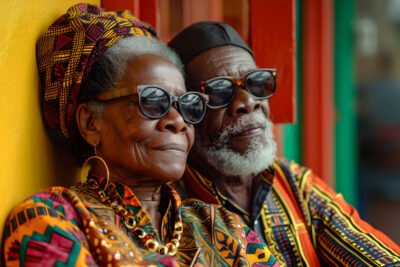
It was the kind of family story many of us recognize. Two people loved each other, disagreed, grew older, developed stronger convictions, irritated one another, raised children, and accumulated the sort of stories that children remember long after their parents are gone.
One incident in the story involved a husband doing something I would absolutely describe as wrong. His wife responded with considerable determination of her own. There was disagreement. There were shenanigans. And eventually, behind a closed door, there was laughter.
Some readers called what happened abuse. I understood why.
We have spent years teaching people to recognize unhealthy behavior that previous generations were expected to overlook. That education has saved lives. Women should not have to accept controlling behavior simply because they are married. A wedding ring is not permission to frighten, isolate, dominate, humiliate, assault, financially trap, sexually coerce, stalk, monitor, or silence another human being.
I am glad that people care about healthy relationships. I am especially glad that people care about women’s safety within relationships. But caring deeply about abuse also requires us to become increasingly precise about what we are seeing.
Sometimes we are getting this equation wrong:
Person does objectionable thing → abuse → abusive marriage → abuser.
Let me explain.
A Bad Action Tells Us Something. It Doesn’t Always Tell Us Everything.
Imagine that somebody tells a lie.
We can say:
“That was a lie.”
But from one lie, we may not know:
“This person lies about everything.”
Those are two different conclusions.
Relationships work the same way.
A spouse can behave selfishly.
A spouse can be inconsiderate.
A spouse can lose their temper.
A spouse can sulk.
A spouse can say something unfair.
A spouse can become jealous.
A spouse can do something controlling.
A spouse can even do something that needs a serious apology and a real change in behavior. We should name the behavior accurately.
But identifying a troubling behavior is not necessarily the same as having enough evidence to describe the entire relationship. That requires more information. And this distinction isn’t about giving harmful people excuses. It is about becoming better at recognizing abuse.
Why Putting Everything Into the Same Box Can Make Abuse Harder to Describe
Imagine having one word for every kind of bad weather.
A light drizzle?
Storm.
Heavy rain?
Storm.
A hurricane?
Storm.
A tornado?
Storm.
Now imagine someone is trying to warn you that a tornado is coming.
They need more words.
They need to be able to tell you what is happening, how dangerous it is, what direction it is moving, and what you need to do.
Survivors need that kind of language too.
A woman may be trying to explain:
“He doesn’t just get angry. He punishes me when I disagree.”
“He doesn’t just dislike my friends. Every friendship I have eventually becomes a problem.”
“He doesn’t just worry about money. I am not allowed access to our accounts.”
“We don’t simply argue about where I go. I have learned that going somewhere without his approval will cost me later.”
“He isn’t merely jealous. He monitors me.”
“I can technically say no. But I know what happens afterward.”
Those details matter.
When every ugly relationship moment is immediately pushed into one large box called ABUSE, we can accidentally lose the language necessary to describe what makes coercive and violent relationships so dangerous.
Survivors often need more nuance, not less.
One Question I Keep Coming Back To: What Happens When She Resists?
One detail in the social-media story stayed with me.
The wife resisted. She solved the immediate problem herself and continued on with her evening.
What happened afterward was revealing. Eventually, the couple laughed. That doesn’t retroactively make the husband’s original behavior acceptable. Something can be wrong even when everyone laughs about it later. But the laughter gives us another piece of information.
Because imagine another ending. Imagine she resisted and he became furious because she had dared to defy him. Imagine there were threats. Imagine retaliation.
Imagine her religious activities were restricted afterward.
Imagine the children learned never to help their mother challenge their father.
Imagine she slowly stopped doing things she loved because resistance always came with consequences.
Imagine that eventually she stopped resisting altogether.
Now we would be learning something very different about power within that home.
This is one reason I encourage people learning about abuse to ask:
What happens when she says no?
What happens when she disagrees?
What happens when she succeeds?
What happens when she has relationships outside of him?
What happens when she develops interests of her own?
What happens when she becomes stronger?
What happens when she resists?
The answers can tell us much more than one argument ever could.
Her Voice Belongs in the Story Too
There is another question we shouldn’t skip:
What did she think was happening? Women are sometimes strangely erased even from conversations supposedly being held for our benefit.
Did she experience this as part of an ongoing pattern of being silenced, controlled, frightened, or punished?
Was she becoming smaller inside this relationship?
Was she changing her behavior to prevent his reactions?
Was she afraid of him?
Or would she have described this particular incident as one ridiculous episode in a long, complicated marriage between two strong-willed people?
We don’t know. And “we don’t know” is sometimes the most responsible answer available to us.
Her interpretation would not be the only evidence we would consider if there were serious indications of violence or coercion. People can normalize harmful circumstances. But neither should her voice become irrelevant while strangers construct an entire identity for her marriage.
A woman’s experience of her own life belongs in the evidence.
Another Interesting Clue: Did Both People Have Room to Become More of Themselves?
Something else about the story caught my attention. Over the years, both husband and wife apparently grew more deeply into something that mattered enormously to each of them. They followed different religious paths. Neither appears, from the limited story we were given, to have been required to abandon that development so the other person could remain comfortable.
That doesn’t prove the relationship was healthy.
But it is meaningful information. In controlling relationships, one person’s growth can become threatening.
Education becomes a problem.
A promotion becomes a problem.
New friendships become a problem.
Therapy becomes a problem.
Going back to church becomes a problem.
Starting a business becomes a problem.
Getting healthier becomes a problem.
Finding your voice becomes a problem.
Anything that increases independence can provoke efforts to restore control.
So when I hear that two people had enough room inside a marriage to continue developing strong identities of their own, I pay attention to that too.
We May Have Idealized Healthy Relationships Until They No Longer Contain Human Beings
There is a strange perfectionism creeping into some relationship conversations.
Healthy couples supposedly communicate correctly at all times.
Healthy people never become petty.
Healthy people never misread one another.
Healthy people never have an argument that looks ridiculous the next morning.
Healthy people never say something they regret.
Healthy people never need to apologize.
Healthy people certainly never engage in shenanigans. Of course not. Right?
But have you met us? Human beings can create conflict while living completely alone.
Those of us on healing journeys know this particularly well.
Sometimes the person I am learning to treat better is myself.
If we are not careful and intentional:
I can neglect myself.
Overwork myself.
Talk to myself harshly.
Ignore my own boundaries.
Fail to eat to live and just obey my cravings or taste buds.
Indulge in substances or activities to excess or to my own detriment.
Avoid something I need to confront.
Tell myself “no” and no one else said a damn thing. Block my own blessings.
Fail to follow all of my health team’s instructions. Fail to go to the doctor.
Actively make choices that I know do not serve me.
Then tomorrow I have to try to treat myself a little better than I did yesterday. If individual human beings are works in progress, relationships made from human beings will be works in progress too.
Marriage doesn’t remove our unfinished places. Sometimes it exposes them.
Healthy Does Not Mean Beautiful Every Minute
There will be ugly.
There will be foolishness.
There will occasionally be shenanigans.
There may be arguments that nobody handles particularly well.
There may be a night when two grown people behave in ways that make their adult children laugh twenty years later.
The goal isn’t to create relationships in which nobody ever does anything wrong.
The goal is to build relationships where wrong can be recognized, repaired, apologized for, changed, and prevented from becoming a system of domination.
That’s a much higher standard than perfection because it requires actual growth.
Perhaps We Can Hold Two Truths at Once
We can want safer relationships for women without expecting perfect relationships from human beings.
We can teach young women to recognize warning signs without teaching them that every human failing reveals an abuser.
We can tell a husband, “You were wrong,” without pretending we therefore know everything about his marriage.
We can listen carefully when a woman describes coercion without forcing her story into whatever narrative we expected to hear.
And we can remain curious about what happens next.
Does she still have a voice?
Can she disagree?
Can she grow?
Can she laugh?
Can she leave the room?
Can she maintain friendships?
Can she develop spiritually, intellectually, professionally and personally?
Can she say no without calculating the price?
Can she become more herself as the years pass?
Those questions bring us closer to understanding the life of a relationship.
Because relationships aren’t perfect. Because people aren’t perfect. The fantasy of getting into a relationship and becoming perfect belongs in fairytales. (Again, we are NOT talking about violence and abuse. That’s different)
Even people committed to healing wake up some mornings realizing there is another thing to learn, another habit to change, another apology to make, another way to become kinder to themselves and the people they love.
We aren’t weakening our understanding of abuse by acknowledging that.
We are fine-tuning it.
And the better we become at hearing the difference between human imperfection and human domination, the better equipped we become to hear the woman who is trying desperately to tell us:
“No. This isn’t just a bad night. This is how I have to live.”
(64) Sylvie’s Love (Full Movie) – YouTube
Are You Making Choices, or Managing His Reactions? – WE Survive Abuse
Before You Can Recognize Safety, Maybe You Need to Know What Safety Feels Like – WE Survive Abuse