https://www.youtube.com/watch?v=hsk8VmR4KCANow streaming on Amazon PrimeThere is something very familiar happening around Is God Is. (The C
Now streaming on Amazon Prime
There is something very familiar happening around Is God Is. (The Color Purple? Eve’s Bayou? Is that you?)
A Black woman creates a story about violence, rage, survival, family harm, and what happens when people are pushed past every polite doorway society left open for them. And instead of sitting with the violence being named, some people turn their attention toward the woman who dared to name it.
That pattern is cobwebs on it old.
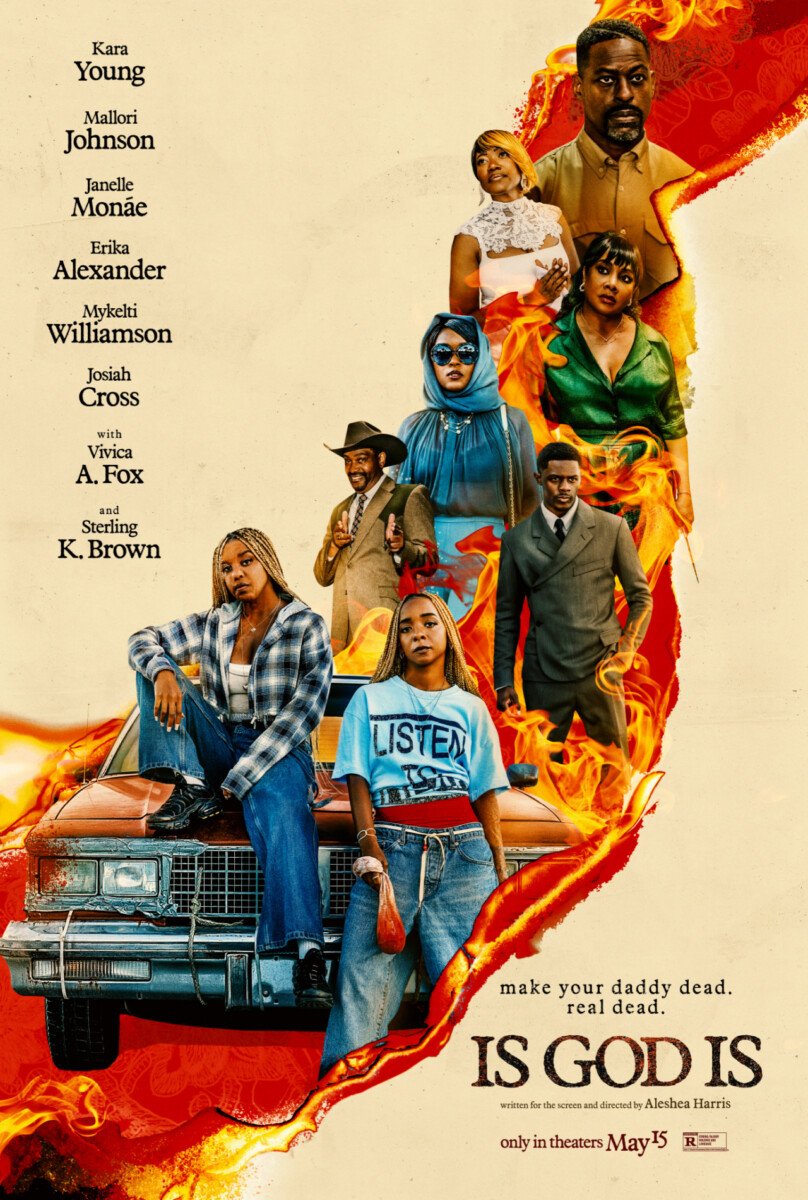
Is God Is was written and directed for film by Aleshea Harris, adapted from her own acclaimed play. The story follows twin sisters who survived horrific violence from their father and are sent on a brutal journey shaped by trauma, revenge, and the hunger for justice. It is not a soft story. It is not trying to be. It belongs to the tradition of revenge tragedy, Westerns, horror, myth, and Black Southern gothic storytelling.
And that is part of what makes the reaction so revealing.
Because when Quentin Tarantino builds whole worlds out of blood, vengeance, stylized violence, revenge fantasy, and human cruelty, people know how to discuss “art.” They know how to discuss “genre.” They know how to discuss “influence.” They know how to discuss “cinema.”
When Taken turns a father’s rage into an action fantasy, people understand the premise. A loved one has been harmed. Someone goes after the harm-doers. The audience may not agree with every act, but they understand the emotional engine.
But when a Black woman’s art gives Black women room to rage, suddenly everybody finds their moral clipboard.
Suddenly the concern is “violence.”
Suddenly the concern is “tone.”
Suddenly the concern is “what message does this send?”
And I want to ask: where was all this careful concern when Black women were being harmed?
Where was this nervous moral energy when the abuse was happening?
Where was this outrage when the harm-doer was still charming people, moving through families, communities, churches, stages, screens, and neighborhoods like nothing happened?
You could watch a film like Is God Is and come away denouncing the harm-doer.
You could come away talking about father violence.
You could come away talking about the abandonment of Black girls.
You could come away talking about how Black women are expected to swallow injury, bury rage, keep families looking respectable, and never let the wound speak too loudly.
You could come away asking why so many stories allow Black women to be harmed quietly, but not furious loudly.
Instead, too many people come away scolding the storyteller.
That is not new either.
Black people know this pattern.
Racism is not treated as the problem. Speaking about racism is treated as the problem.
Police brutality is not treated as the problem. Recording it, protesting it, naming it, teaching about it, and refusing to “move on” become the problem.
A workplace can discriminate, a school can mistreat Black children, a neighborhood can remain shaped by redlining, a hospital can dismiss Black pain, and somehow the person who names the harm is told they are “divisive.”
This is the same old trick wearing different shoes.
The harm happens.
The harmed speak.
Then everybody gathers around the speaker with questions.
“Why did you say it like that?”
“Why are you so angry?”
“Why bring race into it?”
“Why bring gender into it?”
“Why can’t you be more balanced?”
“Why does your pain make us uncomfortable?”
But comfort is not the highest moral good.
Sometimes discomfort is the first honest witness in the room.
Black women need platforms to speak about violence. Not just polite violence. Not just violence that has already been approved for public sympathy. Not just violence softened by inspirational music and a forgiveness ending.
Black women need room to tell the ugly truth.
Black women need room to create myth, horror, satire, revenge fantasy, testimony, fable, comedy, Southern gothic, courtroom drama, street prophecy, porch wisdom, church basement warning, and every other form our people have used to survive what polite society refused to stop.
No one has to like every film.
No one has to agree with every artistic choice.
But we should be honest about the double standard.
If a Black woman’s story about violence makes you angrier than the violence that inspired the story, something has gone wrong.
If the imagined revenge disturbs you more than the real harm, something has gone wrong.
If the woman speaking is treated as more dangerous than the man who harmed, something has gone wrong.
And if Black women are only allowed to tell stories of suffering when we do it quietly, beautifully, patiently, and in a way that protects everyone else’s comfort, then that is not support.
That is control.
Is God Is does not have to be everybody’s movie.
But Black women’s right to speak about violence should not be up for debate.
Because silence has never saved us.
And when the room gets louder about the telling than the harming, we already know what spirit has entered the conversation.