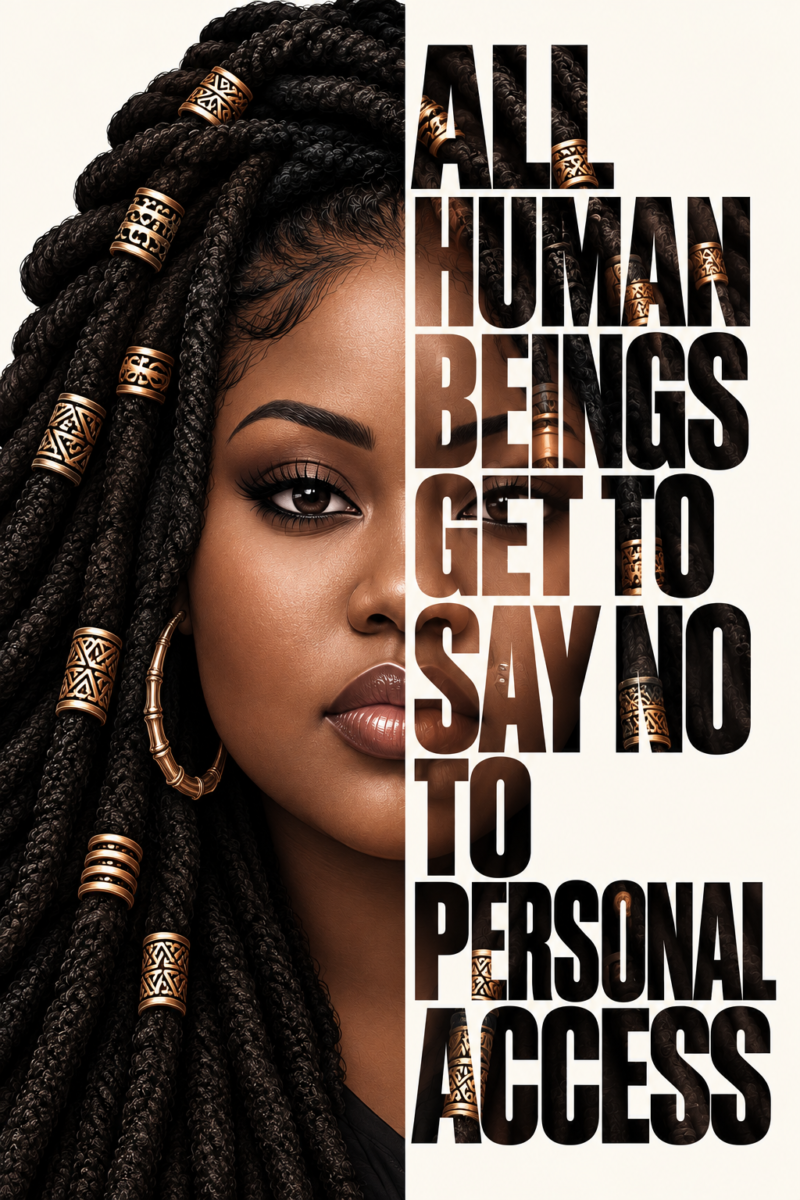
Why women's refusal, independence, and desire for safety are so often treated as offenses against men.There is something deeply troubling about a
Why women’s refusal, independence, and desire for safety are so often treated as offenses against men.
There is something deeply troubling about a man hearing a woman say no and deciding that her refusal means she hates men.
A woman says she doesn’t want to date him. She doesn’t want him touching her. She doesn’t want to share a private space with him. She doesn’t want to explain her personal decisions, entertain his advances, or make exceptions to her boundaries.
And somehow, the conversation becomes about whether she has something against men.
How did her decision about herself become an accusation against her character?
Women and girls have spent generations being taught to consider how their decisions affect men. Be polite. Be understanding. Don’t embarrass him. Don’t hurt his feelings. Give him a chance. Don’t make him feel unwanted.
But somewhere in all that teaching, society neglected a much more necessary lesson: Men and boys must learn that women and girls are separate human beings whose decisions do not require male approval.
Let’s examine what happens when women’s boundaries are mistaken for hatred, and what that misunderstanding asks women to surrender.
1. 🚩 When a Woman’s No Is Heard as an Insult
A woman can say no without being angry. She can decline an invitation without disliking the person who offered it. She can establish a safety boundary without making a statement about the worth of every man alive.
Yet some men interpret these decisions as personal attacks.
PATTERN TO RECOGNIZE
A woman establishes a boundary → A man feels rejected → Her refusal is described as hostility → She is pressured to defend her character.
Notice what has disappeared from the conversation: her original decision.
She is now expected to explain why she isn’t cruel, hateful, prejudiced, unreasonable, or unfair.
Affirmation: My refusal does not require a character defense. I am allowed to make decisions about my own life without accepting responsibility for someone else’s interpretation of them.
2. ⚖️ When Access to Women Is Confused With Fair Treatment
Fair treatment does not mean unlimited access to another human being.
A man can deserve dignity, courtesy, and protection under the law without being entitled to a woman’s attention, affection, body, companionship, or personal space.
These are different things, and confusing them places an unreasonable burden on women.
LOOK AT THE DIFFERENCE
| Respecting a man | Granting a man access |
|---|---|
| Treating him with basic dignity | Agreeing to spend time with him |
| Recognizing his legal rights | Accepting his romantic interest |
| Refraining from harassment | Allowing unwanted physical contact |
| Treating him fairly | Making exceptions to personal boundaries |
A woman can do everything in the first column while declining everything in the second.
No one is entitled to another person’s personal participation as proof that they are being treated fairly.
3. 🧠 When Male Disappointment Becomes a Woman’s Moral Responsibility
Consider how early girls learn to manage other people’s disappointment.
A little girl doesn’t want to hug someone. An adult tells her not to be rude. A teenage girl declines a boy’s attention. Someone suggests she should give him a chance because he seems nice.
A grown woman refuses a date, and suddenly she is accused of thinking she’s better than somebody.
Different ages. Different circumstances. A familiar lesson.
Girls are taught that saying no may require an apology, while boys are not always taught that hearing no requires acceptance.
That is not healthy preparation for adulthood. It leaves girls practicing accommodation while some boys grow accustomed to expecting it.
Affirmation: I will not teach a girl that someone else’s disappointment is an emergency she must solve by surrendering her comfort.
4. 🔄 When the Woman Setting the Boundary Becomes the Problem
There is a familiar reversal in conversations about women’s safety.
A woman expresses concern about harassment, violence, or unwanted access to female spaces. Rather than examining the conditions that produced her concern, someone questions whether her boundaries are motivated by hatred.
The person seeking protection becomes the person under suspicion.
MYTH: If a woman wants distance from men, she must dislike men.
REALITY: Women can make decisions based on privacy, comfort, past experiences, personal preference, risk assessment, or simple unwillingness. None of those reasons automatically establishes hatred.
And women should not have to disclose traumatic experiences to make their boundaries respectable.
A woman who has never been harmed has the same right to refuse unwanted contact as a woman who has survived terrible violence.
A woman’s right to say no is not something she earns through suffering.
5. 🪞 What Does a Man Believe He Is Owed?
Here is a question that deserves more attention.
What does a man believe women owe him if he experiences their freedom to refuse as hatred toward him?
Not every disappointed man believes he is entitled to access. Disappointment is human. Hurt feelings are human.
But disappointment does not give anyone authority over another person’s decisions.
When a man insists that a woman’s refusal makes her hateful, the issue may no longer be disappointment alone. It may involve expectations about women’s availability, obedience, or responsibility for male approval.
A boundary can expose expectations that were never openly stated.
TRANSLATION
“You’re being unfair because you won’t give me a chance.”
May sometimes mean:
“I believe my desire for an opportunity should carry more weight than your decision not to offer one.”
A woman is not obligated to accept that arrangement.
6. 🛑 Women’s Safety Is Not an Expression of Male Hatred
Women take precautions that many men never have to consider in the same way.
They plan routes home, watch their drinks, assess unfamiliar surroundings, think carefully about whom they trust, and make decisions about where they feel comfortable being alone.
Some precautions are individual. Others involve advocating for safer institutions, stronger policies, and appropriate privacy protections.
Yet women’s efforts to prevent harm can be recast as accusations against men.
PATTERN TO RECOGNIZE
Woman identifies a safety concern → Woman proposes a protective boundary → Discussion shifts to whether men feel excluded → Woman is asked to soften the boundary.
Meanwhile, the original safety concern remains unresolved.
We can examine whether a particular safety measure is effective, lawful, and fair without treating women’s desire for protection as a moral defect.
Women’s safety is a legitimate public concern. It does not become less legitimate because a man dislikes a proposed solution.
7. 👧🏾 Girls Are Watching How Adults Respond to Women’s No
Children learn more than what adults explicitly teach.
They watch what happens when a woman refuses. They hear the jokes about women who are difficult, stuck-up, unfriendly, or too independent. They observe whether a woman’s discomfort receives consideration or becomes an inconvenience everyone wants her to overcome.
A girl who repeatedly sees women punished socially for setting boundaries may begin to associate self-protection with selfishness.
And a boy who repeatedly sees women’s refusals challenged may learn that no is merely the beginning of a negotiation.
We cannot teach consent effectively while treating female refusal as a social offense.
Girls deserve to grow up knowing that kindness does not require compliance. Boys deserve clear instruction that another person’s freedom remains intact even when their own wishes are disappointed.
Affirmation: A girl’s no is not a rehearsal for surrender. It is a complete human decision, worthy of respect from the beginning.
8. 💬 The Accusation of Hatred Can Become a Tool of Pressure
Words such as hateful, cruel, selfish, and prejudiced carry moral weight.
When used carelessly against women who establish ordinary boundaries, those accusations can pressure women to demonstrate that they are good people.
And how are they expected to demonstrate it?
Sometimes by doing the very thing they already declined.
LOOK AT THE DIFFERENCE
Genuine reflection: “I disagree with your reasoning. Can we discuss the policy and its consequences?”
Coercive pressure: “If you were really a good person, you would let me cross the boundary you established.”
One invites discussion. The other makes a woman’s moral worth conditional on her compliance.
Women can consider criticism, reconsider decisions, and engage in good-faith disagreement without surrendering authority over their own bodies and personal relationships.
Affirmation: I can listen without obeying. I can be compassionate without becoming available. I can disagree without becoming cruel.
9. 🌿 Women Do Not Have to Prove They Love Men to Deserve Freedom
There is an expectation that women must repeatedly reassure men that their boundaries are not personal.
She must explain that she has a father, brothers, sons, male friends, or a husband. She must offer evidence of her affection for men before her position can be considered reasonable.
But women’s rights do not depend on how warmly women feel toward men.
A woman who loves men has the right to refuse them. A woman who is indifferent to men has the right to refuse them. A woman who distrusts a particular man has the right to refuse him.
Her freedom does not rise or fall with her ability to demonstrate male approval.
And her personal boundaries do not need a public relations campaign.
10. 🔥 We Need to Stop Teaching Women That Being Good Means Being Available
Think about how often women’s goodness is measured through what they are willing to tolerate.
She is praised for being understanding when someone pushes her boundaries. She is called mature when she overlooks disrespect. She is encouraged to be gracious when she receives unwanted attention.
But a woman who refuses to participate may be called difficult.
We have confused accommodation with virtue for far too long.
A woman’s kindness should be recognized in how she treats others, not in how much access she allows them to have to her life.
Being a good woman is not the same thing as being an accessible woman.
And being a good girl is certainly not the same thing as being an obedient girl who never disappoints anyone.
Affirmation: My goodness is not measured by how much discomfort I can absorb. My dignity is not negotiable, and my boundaries are not evidence of a defective heart.
11. 🕊️ Men Can Respect Women Without Agreeing With Every Decision They Make
Respecting women’s autonomy does not require men to celebrate every refusal, understand every preference, or agree with every argument women make.
It requires recognizing that women have the authority to make personal decisions even when those decisions disappoint them.
A man can feel rejected and remain respectful. He can disagree with a woman without attempting to shame her into compliance. He can hear no without turning it into a referendum on whether women appreciate men.
That is what genuine respect looks like when it is tested.
Respect is not proven only when someone says yes to you. It is also demonstrated in how you respond when they say no.
🌺 The Truth We Must Reclaim: Women’s Boundaries Are Not Acts of Hatred
We need to challenge the social conditioning that teaches women to explain themselves endlessly and teaches girls that someone else’s disappointment is a warning that they have done something wrong.
A woman is not committing an offense by deciding who enters her life, who touches her body, who receives her affection, or where she feels comfortable.
She is exercising ordinary human freedom.
And if a man interprets that freedom as hatred, his interpretation does not automatically become her responsibility to correct.
We must stop confusing men’s disappointment with women’s wrongdoing. We must stop asking women to demonstrate compassion by making themselves available. We must stop teaching girls that their boundaries are acceptable only when nobody objects.
Women and girls are not here to spend their lives proving they are harmless to men who resent hearing no.
They are here to live. To learn. To love where they choose. To protect themselves. To pursue their ambitions. To enjoy their privacy, friendships, independence, and peace.
And to say no without being placed on trial for it.
Affirmations for Women and Girls
🌸 My no does not make me hateful. It makes my decision known. Other people are responsible for respecting it, even when they wish I had chosen differently.
🌸 I am not responsible for making every man feel chosen. I can treat people with dignity without offering them a place in my personal life.
🌸 I will not confuse guilt with goodness. Disappointing someone does not mean I have mistreated them. I am allowed to protect my peace without apologizing for having boundaries.
🌸 My daughter deserves a world where her no is heard the first time. She should not have to become frightened, angry, or harmed before adults take her wishes seriously.
🌸 I can be kind without becoming unprotected. My compassion belongs to me, and I decide how to express it without surrendering my safety or independence.
🌸 I am not required to prove my love for humanity by giving up my freedom. I am part of humanity, too. My wishes, comfort, dignity, and safety deserve consideration.
A Final Thought
Perhaps the question we should be asking is not why some women are unwilling to accommodate men.
Perhaps we should ask why a woman’s freedom to refuse is still so difficult for some people to accept.
A woman’s no is not hatred. Her boundaries are not cruelty. Her independence is not an insult.
And the measure of a society that respects women is not how warmly it praises them when they say yes.
It is how faithfully it respects them when they say no.