"They ask why she stayed. They never ask why the world made it so hard for her to leave."When a Black woman is being harmed, the world often w
“They ask why she stayed. They never ask why the world made it so hard for her to leave.”
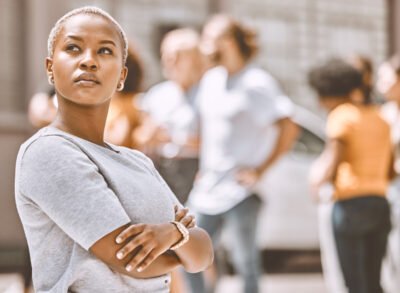
When a Black woman is being harmed, the world often waits for her to scream loud enough, bleed publicly enough, or die tragically enough before it takes her pain seriously.
But silence isn’t always a choice. Sometimes it’s a survival strategy. Sometimes it’s a legacy. And far too often, it’s what the world demands of her.
🧱 What Makes Help So Much Harder for Black Women?
1. Not Being Believed
When Black women report abuse, many are met with doubt, minimization, or outright dismissal—by police, doctors, even therapists.
She’s labeled “angry,” “dramatic,” or “hard to deal with,” rather than seen as wounded and worthy of care.
2. Cultural Pressure to Protect the Community
Many Black women are taught to protect Black men, even when those men harm them—because racist systems target Black men so violently.
But who protects Black women when we’re harmed in private, in secret, in silence?
3. Historical Mistrust of Systems
The legal system, healthcare system, and even social services have long criminalized, sterilized, ignored, or exploited Black women. To this day, in the US time has passed but there has not been a real effort to deal with this reality. Some stuff is not healed by the passage of time and hoping that people forget.
That mistrust is not paranoia. It is ancestral memory coupled with lived experience. I have chosen to be open about seeking help for child sexual abuse. I have done this since the age of 13. Some experiences with helping and healing professionals have been transformative in the most beautiful ways. And some encounters that were supposed to be healing have been deeply harmful, terrifying, and dangerous. Threats. People are not wrong to be deeply suspicious and hesitant.
4. The Strong Black Woman Myth
Society celebrates our strength but never asks what it cost us.
When you’re taught that being vulnerable makes you “weak” or “a problem,” asking for help can feel like betrayal—of your family, your culture, your image, your ancestors.
5. Economic Insecurity
Abuse thrives in conditions where money is intentionally made tight and policies make options few.
Many Black women face wage gaps, housing discrimination, and caregiving burdens, making escape or independence feel impossible.
6. Isolation and Silence from Others
Family and community members may say:
“You know how the system treats us (not a myth)—keep that in the house.”
“You picked him, so stay with him.”
“Just pray about it.”
This silence is not always cruelty. Sometimes it’s fear. Sometimes it’s habit. Sometimes it’s pain passed down and never named.
But silence is not safety.
💔 The Consequences Are Deadly
Black women in the U.S. face some of the highest rates of domestic violence homicide. And in many African and Afro-diasporic countries, violence is rising while justice remains out of reach.
But what the numbers don’t show is the everyday soul injury—the exhaustion, the self-blame, the shame, the quiet deaths women die while still alive.
🖤 What We Must Remember
Her silence may not be permission—it may be protection.
Her absence from court or shelters may not mean she’s okay—it may mean she has nowhere safe to go.
Her ability to smile, lead, or speak eloquently does not mean she isn’t hurting.
“When a Black woman stands in a storm without crying, it’s not because the wind doesn’t hurt. It’s because she learned a long time ago that no one listens when she screams.”
🕯️ To Black Women Reading This:
You don’t have to be perfect to be believed.
You don’t have to be strong to deserve help.
You don’t have to stay silent to keep the peace.
You don’t have to wait for the world to care.
Your story matters. Your pain matters. Your life matters.
And help should not be a luxury.