It's dating. Cuts WILL be made. But too many people have a problem with women being the ones doing the cutting. People are having a difficult time ad
It’s dating. Cuts WILL be made. But too many people have a problem with women being the ones doing the cutting. People are having a difficult time adjusting. The time when women sat by the landline phone at home waiting for the man to call. Waited for him to ask her out because women “weren’t supposed to.” Fretted about being ‘chosen’ before “it is too late.” (Oh, those poor “old maids”) Agonized over whether he would pop the question. Women being chosen and not doing as much of the choosing.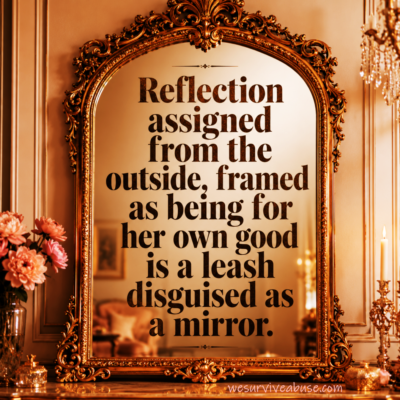
Gratitude to our fighting foremothers; times have changed. People are having a very difficult time with this change in times.
A reminder too that this isn’t just about women’s heterosexual choices. Lesbians and gay men have had this position pushed upon them in violent ways. Some in their childhood years. It is important that we remember that many Survivors were pushed to “interrogate their dating choices” in harmful and violent ways that, if they survived, they may never forget.
Sakia Gunn was a 15-year-old African American lesbian murdered in a hate crime in Newark, New Jersey, in May 2003. While waiting for a bus with friends, she and her friends were propositioned by two men; the girls rejected their advances and declared themselves to be lesbians, and the men attacked. One of the men, Richard McCullough, stabbed her in the chest, and both men fled the scene. She died after being taken to University Hospital. McCullough was ultimately sentenced to 20 years in prison after pleading guilty to aggravated manslaughter, aggravated assault, and bias intimidation.
The demand that a woman explain, soften, or reconsider who she’s attracted to isn’t hypothetical pressure — for some women it’s been backed by literal violence when the answer wasn’t what men wanted to hear. “Interrogate your choices” and “you’d better justify your rejection to me” sit on the same spectrum, just at different points of intensity.
There’s a phrase that gets handed to women, usually about the men they date, sometimes about the life they’re building: you should interrogate your choices.
It sounds responsible. Almost clinical. Like something a good therapist would say. But look closer at the word itself. You don’t interrogate something you consider sound. You interrogate a suspect. The word carries its verdict before any actual reflection has happened — it tells her, before she’s looked at anything, that something is probably wrong.
Compare it to a phrase that does the same job without the built-in suspicion: notice what you’re drawn to. Same territory — attraction, pattern, self-awareness — but no accusation folded into the grammar. One invites looking. The other assigns guilt and calls it looking.
Who Gets Told to Interrogate
Here’s the detail that gives the game away: men are almost never told to interrogate their attraction to certain women with this same tone of concern. No aunt pulls a young man aside to ask if he’s “really thought about” why he’s drawn to someone. No article circulates telling him to examine what’s “broken” in him that he wants what he wants.
The interrogation is not evenly distributed. It’s aimed. And anything aimed that precisely isn’t really about self-knowledge — it’s about who gets permission to trust themselves and who has to keep asking permission from someone else.
What Self-Doubt Actually Produces
A woman who trusts her own read on a situation is hard to manage. Not impossible — hard. She doesn’t need to check with her mother, her friend group, the comment section, or a stranger’s article before she can be sure of what she wants. She just knows, the way people generally know things about their own lives.
Persistent low-grade doubt breaks that. Not through one big confrontation, but through repetition — a habit of “wait, but have you really thought about this” installed so early and so often that she starts running the interrogation on herself, unprompted, forever. At that point nobody even has to say it out loud anymore. She’s doing the work for them.
That’s the quiet efficiency of the phrase. It doesn’t need to win the argument. It just needs to become a reflex.
What Actually Doesn’t Need Interrogating
“I’m not like those other men, so you owe me (empathy) dates.”
“He’s not like those other men; you should date him.”
Both of these are just as incel-like and predatory as men and women who assert that men are entitled to dates from women no matter what. It is the duty of every man—no matter what his station is in life or how he chooses to present himself—to make himself an attractive option to the partner that he seeks.
Men who push this kind of thing make it very clear that their concern only goes one way. Just ask them if they are equally concerned about women who “aren’t like other women.” You will likely get something like, “I think it is more “gendered” because women are “hung up on” finding a “real man.” And men aren’t looking for their ideal in a female dating partner?
Such people are not concerned about people like Karen Pannell, who was murdered by her boyfriend in 2003. At the time of her death, she had recently been diagnosed with Multiple Sclerosis (MS), a chronic neurological condition. In one televised true crime telling of her relationship, Karen’s friends talk about the fact that Karen grew less discerning in her dating choices after reflecting on her diagnosis and what it meant for her future.
Who among us can’t empathize with this?
My point here is that Karen’s friends seemed to express concern about her dating choices. They were concerned for her safety, future, and well-being. They were concerned for their friend Karen. Strangers and people you may have toxic connections with are concerned about a guy getting a date with you. They want their friend (or whatever male they are concerned about) to “get a turn.” These two things aren’t remotely similar.
It Doesn’t Have to Make Sense to Others
A woman deciding who to date already knows her own family, her values, her beliefs, what she wants her career to look like, what kind of life she’s building toward. She may not have said all of that out loud to the person she’s dating yet. That doesn’t mean she doesn’t know it. Knowing something and having disclosed it are not the same thing, and a habit of “interrogating her choices” treats the first as if it depends on the second.
None of that is served by breaking down her confidence in what she already knows. Self-doubt installed from outside doesn’t produce better decisions. It just produces a woman who checks in more and trusts herself less — and that generally doesn’t work out well for anyone, including the people who wanted her to doubt herself in the first place.
The Real Difference
There’s a version of this that’s fine — even good. A woman noticing, unprompted, on her own timeline: something about this doesn’t sit right, and I want to understand why. That’s just being a person who reflects.
What’s being described here is the opposite of that. It’s reflection assigned to her from the outside, framed as being for her own good, that in practice functions as a leash disguised as a mirror.
We are not far removed from an era when men chose the woman and decided the shape of both their lives. Women get to make that choice for themselves now. Not everyone is thrilled about that. “Interrogate your choices” is one of the quieter ways that discomfort gets dressed up as concern.
FYI, dating can still be dangerous these days. A single date. But the people pushing “interrogation” aren’t interrogating safety in dating. Whether or not you keep making it back from the date seems less concerning for them. We might just need to go back to the time of group courting until marriage. Watch how fast the interest in dating women declines.
Because I Don’t Want To: The Power of Women’s Final Answer – WE Survive Abuse
Ignored Crimes Become Generational Crises: A Tale As Old As Time – WE Survive Abuse