Discouragement is part of the battle. It always has been. But defeatist language can become dangerous when it stops people from seeking help, making plans, or naming what they truly need.
Phrases like “we are cooked” may sound casual online and in conversation but can train the spirit toward surrender. More importantly, they are not help-seeking language. “We are cooked” does not say, “I am scared.” It does not say, “We need support.” It does not say, “This is unsafe.”
It does not say, “Who can help us?” “What can help us?” “What do I do now?”
It does not plan or strategize. It does not get back up. It does not refuse to stay down. It does not refuse defeat.
It simply declares the ending before the living have finished fighting.
That’s dangerous for people in toxic situations.
That’s dangerous for people dealing with fragile physical and mental health conditions.
“Checking on our strong people” sometimes means we have to be careful with our word choices.
Helping people to use help-seeking language and behavior is more important than ever for such a time as this.
Change the sentence, not the truth.
Instead of saying, “We are cooked,” say:
“This is serious, and I need steadiness.”
“This is dangerous, and we need a plan.”
“I am overwhelmed, not defeated.”
“My fear is giving me information, not instructions.”
This matters because crisis language should open doors, not close them. The right words help the body look for options.
What people experience in this life is no laughing matter. We have to make sure that we make sure that people understand that we understand that.
Build a “reach before collapse” list.
Do not wait until you are at the edge to figure out who is safe.
Write down:
One person who can listen.
One person who is practical.
One person who will not shame you.
One hotline, agency, faith leader, advocate, or professional resource if needed.
Stress gets worse when the brain believes, “Nobody can be called.” Give yourself proof before the storm peaks.
Ask: “What would help-seeking sound like right now?”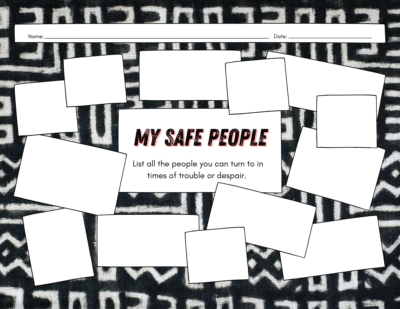
This is the strongest one.
“I am not done. I am dysregulated. Those are not the same thing.”
Instead of saying, “I can’t take this,” translate it into a request:
“Can you sit with me for ten minutes?”
“Can you help me think through next steps?”
“Can you check on me tomorrow?”
“Can you help me find a resource?”
“Can you remind me not to make a fear-based decision tonight?”
“Can you help me make a safety plan?”
That is the shift. Stress wants to isolate. Help-seeking language builds a bridge.
Affirmations
I do not speak defeat over myself.
I do not speak defeat over my people.
I do not call the battle lost while breath still lives in the body.
I come from people who prayed and planned.
People who sang and resisted.
People who endured and fought.
People who knew when to wait and when to move.
People who carried tenderness without becoming targets.
People who loved God without becoming pushovers.
I am allowed to be kind without being easy to harm.
I am allowed to seek justice.
I am allowed to protect my life.
I am allowed to win.
Today, I reject every phrase that crowns despair.
I will not say, “We are cooked.”
I will say, “We are called.”
I will say, “We are sharpening.”
I will say, “We are gathering.”
I will say, “We are not done.”
The flame did not bow.
Neither will I.