
Table of Contents
Some people try to control women by frightening us.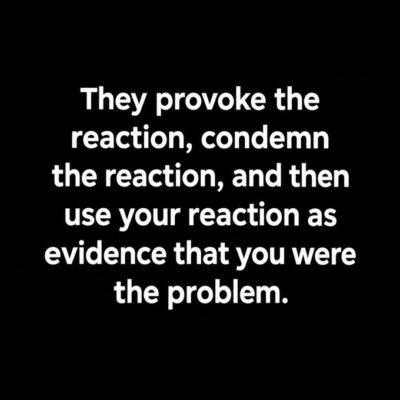
Others discover they can control a room by humiliating us.
Humiliation can look like “joking,” teasing, embarrassing you in public, exposing private information, mocking your body, attacking your intelligence, bringing up painful experiences, or making sure other people laugh at your expense.
When it becomes a pattern, pay attention to what the behavior is doing.
1. 😏 He Humiliates You → Calls It a Joke
You tell him it hurts.
He says:
“You can’t take a joke.”
Now his behavior has disappeared from the conversation.
Suddenly, your reaction is the problem.
2. 👥 He Uses an Audience
Some humiliation is meant to have witnesses.
Friends. Family. Children. Coworkers. Social media.
The audience can become part of the punishment because now you aren’t only dealing with what was said.
You’re dealing with everybody who heard it.
3. 🎯 He Learns Where It Hurts
Your weight.
Your hair.
Your age.
Your education.
Your disability.
Your childhood.
Your sexual history.
Your family.
Something you told him when you trusted him.
💡 Watch what happens to information you once gave someone in tenderness.
Love doesn’t keep a file of your vulnerabilities for future ammunition.
4. 🔄 Your Reaction Becomes Bigger Than What He Did
He humiliates you.
You get angry.
Now everybody wants to discuss your anger.
🗣️ “Why are you yelling?”
🗣️ “You’re doing too much.”
🗣️ “Calm down.”
🗣️ “You’re embarrassing yourself.”
Interesting.
Where was all this concern about respectful behavior before you reacted?
5. 🤐 Humiliation Can Teach You to Become Quiet
Eventually, you may start editing yourself.
You don’t tell the story.
You don’t wear the outfit.
You don’t give your opinion.
You don’t correct him.
You don’t tell anybody what happened.
Not because you suddenly have nothing to say.
Because you’ve learned what speaking can cost you.
6. 🪞 He Tries to Become the Authority on Who You Are
“You’re stupid.”
“You’re crazy.”
“Nobody likes you.”
“Nobody will believe you.”
“Nobody else would want you.”
Repeated humiliation can sound like someone giving you information about yourself.
🚨 But cruelty is not expertise.
Someone repeating an insult does not turn the insult into evidence.
7. 🔐 Your Secrets Become Weapons
This one cuts differently.
You trusted someone with something painful.
Then one day, during an argument, there it is.
Something about your childhood.
Something about your body.
Something about abuse you survived.
Something sexual.
Something you never wanted anyone else to know.
What you offered in vulnerability has been converted into ammunition.
That betrayal belongs to the person who weaponized your trust.
The shame does not belong to you.
8. 🚪 Humiliation Can Continue After You Leave
Sometimes leaving changes the battlefield.
Now come the rumors.
The embarrassing stories.
The private information.
The screenshots.
The sexual accusations.
The attempts to make other people see you differently.
The message underneath can be:
“You thought you could leave me and still keep your dignity.”
Yes.
You can.
9. 👀 Other People Can Help Humiliation Work
Somebody laughs.
Somebody shares the post.
Somebody repeats the rumor.
Somebody says:
“That’s just how he is.”
And somebody tells you to keep the peace.
Translation:
You are being asked to absorb the humiliation so everybody else can remain comfortable.
No.
10. 👑 Your Dignity Was Never His to Take
Someone can embarrass you without defining you.
Someone can expose something private without owning your story.
Someone can insult your body without becoming an authority on its worth.
Someone can laugh at your pain without making your pain funny.
And someone can spend years trying to make you feel small without ever establishing that you are.
💛 Your dignity is non-negotiable.
🌿 I do not have to laugh when someone is hurting me.
🌿 My vulnerability is not ammunition.
🌿 Embarrassing me does not make you an authority over me.
🌿 I can leave spaces where disrespect is the price of belonging.
🌿 What someone used to humiliate me does not become my shame.
The Subtle Signs a Man Likes Women’s Labor More Than Women Themselves – WE Survive Abuse
🚨 Control of Language Is a Red Flag for Abuse—And Many Miss It – WE Survive Abuse
Misogynist Gaslighting: The Reversal That Keeps Women Unsafe – WE Survive Abuse